

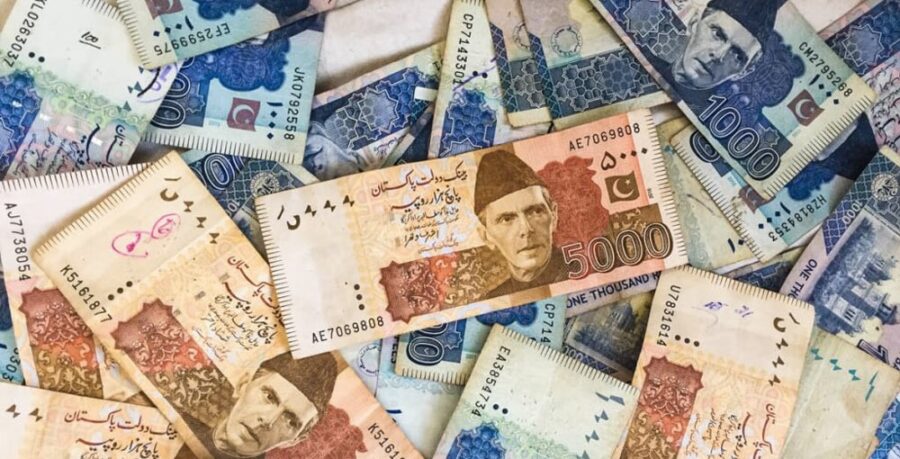
Karachi : December 15, 2025: A monetary policy statement issued here in Karachi by the State Bank of Pakistan (SBP) said
the Monetary Policy Committee (MPC) decided to decrease the policy rate by 50 bps w.e.f. December 16, 2025, in its meeting today (Monday). The Committee noted that inflation on average remained within the target range of 5 – 7 percent during July-November FY26, though core inflation is proving to be relatively sticky. On balance, the inflation outlook remains broadly unchanged, mainly owing to the relatively benign global commodity prices and anchored inflation expectations, amidst prudent monetary policy stance. The committee also assessed that economic activity continues to gain traction, based on robust improvement in key high frequency indicators, including higher than anticipated increase in large-scale manufacturing in Q1-FY26. Nonetheless, the Committee noted that the global environment remains challenging, particularly for exports, which may have some implications for the macroeconomic outlook. In this backdrop, while ensuring the ongoing price stability, the MPC noted the available space to reduce the policy rate to support sustainable economic growth.
The Committee noted the following key developments since its last meeting. First, the Labor Force Survey 2024-25 points to an increase in the unemployment rate from 2020-21, notwithstanding the faster growth in employment as compared to the previous survey. Second, despite sizable ongoing debt repayments, SBP’s FX reserves continued to increase, reaching above $15.8 billion with the receipt of $1.2 billion from IMF after the successful completion of the EFF and RSF reviews. Third, as per the latest SBP-IBA surveys, consumer confidence improved, while business confidence – though remaining positive – moderated slightly.
Fourth, led by sizable SBP profit transfer, the overall and primary fiscal balances recorded surpluses during
Q1-FY26. Lastly, the global environment remains fluid, characterized by generally supportive commodity
prices, but also evolving tariff-related dynamics and challenging financial conditions.
In view of these developments, the Committee assessed that the real policy rate remains adequately positive to stabilize inflation within the target range of 5 – 7 percent over the medium term and contribute towards sustainable economic growth. In this regard, the MPC reemphasized the need for continuing the
coordinated and prudent monetary and fiscal policies, and undertaking structural reforms, to put the economy on a durable and higher growth trajectory.
Real Sector
The latest high-frequency indicators reinforce the earlier assessment of ongoing robust momentum across key sectors. Industrial performance remains strong, with LSM registering 4.1 percent y/y growth in Q1-FY26 and most of the sectors posting increase in output. Further, sales of automobiles, fertilizer and cement, and imports of machinery and intermediate goods, all signal a positive outlook for industrial activity.
At the same time, the ongoing challenging export environment poses some risks for the industrial outlook. In the agriculture sector, incoming information about major crops also support the previous assessment. The
latest information on area under wheat crop, input conditions and government-backed incentive schemesindicates that wheat production may surpass the target. These positive developments in commodity-producing sectors are likely to support services sector activity as well. In this backdrop, real GDP growth for FY26 is expected to remain in the upper half of the earlier projected range of 3.25 – 4.25 percent.
External Sector
The current account posted a cumulative deficit of $0.7 billion during July-October FY26, in line with
the MPC’s anticipation. Imports continued to grow in line with improving economic workers’ remittances remained resilient. However, exports came under pressure, largely owing to a sharp
decline in food exports, particularly rice. On the financing side, net inflows remained tepid. Despite this, SBP’s FX reserves have crossed the December 2025 target of $15.5 billion, led by continued FX purchases by the central bank. Going forward, global headwinds, especially from evolving trade dynamics, are likely to constrain exports, though lower global oil prices may contain import growth. On balance, the assessment for the current account is broadly unchanged, and the deficit is projected to remain within 0 to 1 percent of GDP in FY26. Moreover, with the realization of planned official inflows, SBP’s FX reserves are projected to strengthen to $17.8 billion by June 2026.
Fiscal Sector
In Q1-FY26, both the overall and primary balances recorded surpluses, led by transfer of sizeable SBP profit. At the same time, the expenditure to GDP ratio remained lower than last year’comparable level, which also contributed to this fiscal performance. Meanwhile, the FBR collection slowed down considerably
to 10.2 percent y/y during July-November FY26, implying significant acceleration required to achieve the budgeted tax collection target in the remaining seven months of FY26. Moreover, interest payments are expected to remain lower than the budgeted amount for the full year, which may help the government to
contain the fiscal deficit.Nevertheless, achieving the targeted primary surplus would be challenging. In this backdrop, the MPC underscored the importance of structural reforms, especially to broaden the tax base and privatization of loss making SOEs, to strengthen fiscal buffers while creating space for public investment and needed spending for socioeconomic uplift.
Money and Credit
Since the last MPC meeting, broad money (M2) growth accelerated to 14.9 percent as of November 28, driven by an increase in net budgetary borrowing from the banking system. Private sector credit expanded by Rs187 billion during July-November, amidst borrowing by key sectors like textile, wholesale & retail, and chemicals. Consumer financing, particularly automobile loans, remained strong in the wake of easing financial conditions, improved consumer sentiments and a stable macroeconomic environment. However, on y/y basis, PSC was down 0.3 percent, mainly due to high base effect stemming from the ADR-driven extraordinary credit expansion in Q2-FY25. On the liability side, currency in circulation broadly remained unchanged, whereas an increase in deposits led to a moderate decline in the currency-to-deposits ratio.
Inflation
The MPC noted that headline inflation remained within its medium-term target range over the past three months. Moreover, all three components of inflation – food, energy and core – are converging, broadly in line with the MPC’s anticipation. In this context, the prudent monetary policy stance, complemented by fiscal discipline, is helping stabilize inflation within the target range, despite recent supply-side frictions and relatively sticky core inflation. Moreover, inflation expectations also remain anchored. However, the MPC continues to expect that inflation may rise above its target range towards the end of FY26 due to low base-effect from last year, before reverting to the target range in FY27. The Committee noted that this outlook is
subject to risks from volatile global commodity prices, magnitude and timing of energy price adjustments,
fiscal slippages, and uncertainty around prices of wheat and allied products and perishable food items.
SBP’s decision to cut policy rate is too late and too small , but its going to give a positive signal to the market that that era of higher policy rate was over. Pakistan’s economy was destroyed by higher rather unbelievable policy rate by mid 2024 . It was none other institution but SBP which in some specific agenda took the policy rate as high as 22 % for years. Those who wanted to destroy Pakistan’s economy might have achieved their goal , but it for sure brought Pakistan’s economy down to the knees . After sinking down Pakistan’s economy through killing policy rate , finally , in June 2024!the powerful circles asked SBP top decision makers what was their agenda and what they were getting out of indigestible policy rate . Deadly policy rate helped banking mafia trillions of rupee at the cost of Pakistan’s very economic survival. As a result of intervention of powerful circles , SBP unwillingly brought the policy rate down to half , but that took around one year to complete.
It seems again the same intervention has resulted in cut down in the policy rate though not as should it has been . It is imperative for the powerful circles to keep a vigilant eye on SBP to make sure that it does not repeat the same dirty game to damage Pakistan’s economy to pass on undue benefit to the banking mafia through jacking up the policy rate.

