

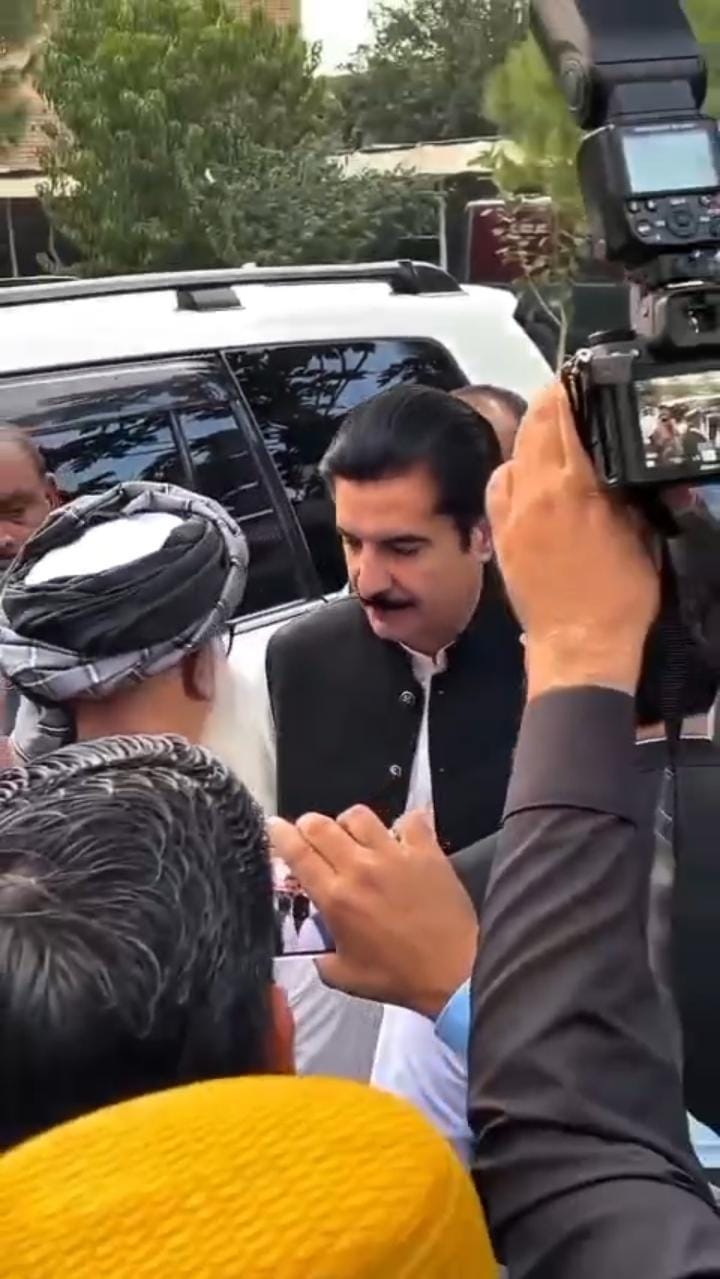
PESHAWAR – Jumaat-e-Islami Khyber Pakhtunkhwa has rejected the imposition of Governor’s Rule and emergency in the province, describing the move as unconstitutional and undemocratic and calling for the restoration of the elected provincial government through political dialogue and consensus.
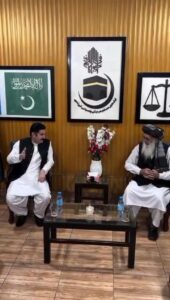
The party expressed its position during a meeting between Khyber Pakhtunkhwa Governor Faisal Karim Kundi and the provincial leadership of Jumaat-e-Islami at the party’s provincial headquarters, Al-Markaz-ul-Islami, Peshawar, where the prevailing political situation, law and order, and the challenges facing the province were discussed in detail.
According to the party’s position, Jumaat-e-Islami considers the restoration of peace, the elimination of terrorism, and the protection of citizens’ lives and property indispensable.However, it maintains that the security situation had not deteriorated to such an extent as to justify the federal government’s invocation of Articles 232 and 234 of the Constitution to suspend the elected provincial government and impose emergency and Governor’s Rule.
The party said that maintaining law and order and eliminating terrorism were joint responsibilities of the federal and provincial governments.If the federal government had reservations about the provincial government’s performance in these areas, the differences could have been resolved through dialogue and mutual consultation rather than extraordinary constitutional measures.
Jumaat-e-Islami stressed that consultation among all political parties and relevant stakeholders was essential to resolving the ongoing political crisis, restoring peace, and combating terrorism.It attributed the present situation to political tensions between the federal government and Pakistan Tehreek-e-Insaf (PTI), arguing that the rigid and uncompromising attitudes of both sides had contributed to the crisis.
The party said the ongoing political confrontation had adversely affected fundamental public rights and deprived the people of Khyber Pakhtunkhwa of their right to elected representation.It called for an end to Governor’s Rule and the emergency, urging both sides to demonstrate seriousness and flexibility to facilitate the restoration of the elected provincial government.
The party also expressed concern over what it described as two parallel administrative arrangements in Khyber Pakhtunkhwa, with emergency measures in 12 districts and Governor’s Rule in the remaining parts of the province.It argued that this arrangement had undermined the province’s constitutional and administrative unity.
Reaffirming its position on the former tribal areas, Jumaat-e-Islami maintained that the merged tribal districts were an integral constitutional part of Khyber Pakhtunkhwa and opposed any move that could lead to the division of the province’s constitutional unity against the wishes of its people.
On counterterrorism policy, the party opposed military operations that resulted in large scale displacement of civilians and the destruction of homes, properties, businesses and livelihoods.It argued that numerous military operations conducted over the past 25 years had failed to eliminate terrorism, while millions of people had suffered displacement and economic losses.
The party called for the presentation of a comprehensive account of previous military operations, asking why terrorism had persisted despite the enormous human and financial sacrifices made by the nation.It said the findings should be presented to the public to establish the reasons behind the continued security challenges.
Jumaat-e-Islami further maintained that the armed forces should concentrate their efforts on protecting the country’s borders and withdraw from civilian affairs and internal security responsibilities.It identified the continuation of policies introduced during former military ruler Pervez Musharraf’s tenure, particularly the military’s involvement in civilian affairs and internal security, as one of the underlying factors contributing to terrorism in Khyber Pakhtunkhwa.
The party reiterated its commitment to playing a positive, constructive and political role in strengthening constitutional supremacy, establishing democracy and ensuring its continuity in Pakistan.It emphasized that dialogue, political engagement and adherence to constitutional principles were essential to resolving the province’s current crisis and safeguarding democratic institutions.

