


Pakistan’s political system has become a closed club, dominated by a parasitic elite that has monopolised power, wealth and privilege for generations. While the country struggles with economic stagnation, institutional decay and an increasingly disillusioned population, its political leadership remains largely unchanged. The same families, political dynasties and privileged groups continue to occupy the corridors of power, treating the state as an inherited possession rather than a public trust. In this arrangement, one segment of society has been systematically marginalised: the middle class.
The absence of meaningful middle-class representation in Pakistan’s political system is not merely a democratic deficiency; it is one of the fundamental reasons behind the country’s persistent failure to evolve into a modern, productive and accountable state. A political system that excludes its most educated, professionally capable and economically productive citizens cannot hope to deliver meaningful transformation.
Pakistan’s political elite has perfected a peculiar model of electoral politics. Instead of developing policies that create economic opportunities, strengthen institutions and improve the quality of life for the entire population, politicians have built a direct relationship with the poorest segments of society through handouts, subsidies and populist schemes. Their political survival depends less on performance and more on cultivating economic dependence.
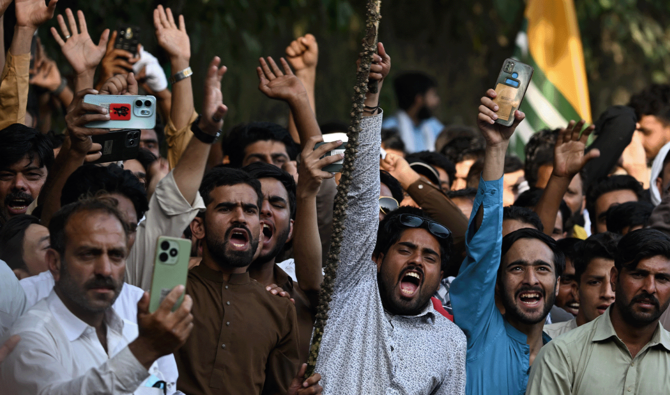
The Benazir Income Support Programme (BISP), for instance, has become a prominent instrument of this approach. Social protection for vulnerable citizens is undoubtedly necessary, particularly in a country where millions struggle to meet basic needs. However, there is a fundamental difference between providing temporary relief and building a system that enables people to escape poverty. Successive governments have increasingly relied on cash transfers, petroleum subsidies and electricity concessions as political instruments rather than addressing the structural causes of poverty. These measures may provide short-term relief, but they do little to create sustainable employment, improve productivity or empower citizens economically.
The political elite understands that a financially vulnerable electorate can be approached through immediate incentives. A cash transfer, a subsidized electricity bill or a reduction in petroleum prices can become more politically rewarding than investing in education, industrial development, healthcare or institutional reform. The result is a political economy in which poverty is not eliminated but managed, because a population struggling for economic survival remains an easier electoral constituency to influence.
Meanwhile, the middle class is left outside this arrangement. It is neither sufficiently powerful to influence policymaking nor economically vulnerable enough to qualify for the benefits distributed through populist programmes. It pays taxes, bears the burden of inflation, struggles with expensive electricity and fuel, and receives little in return. Its members are expected to finance a dysfunctional state without having any meaningful say in how that state is governed.
This is perhaps the greatest irony of Pakistan’s political landscape. The very segment that possesses the potential to transform the country has virtually no institutional space in its political system.
Pakistan’s middle class is not short of talent, creativity or ambition. It includes entrepreneurs, engineers, doctors, academics, journalists, technologists, professionals and young graduates who have the capacity to introduce innovative ideas, build competitive businesses and modernise public institutions. Many have demonstrated their abilities internationally, while others are creating opportunities despite operating in an environment characterised by bureaucratic obstruction, political interference and economic uncertainty.
Yet the political system offers them little incentive to participate. Contesting elections requires enormous financial resources, access to influential networks and, frequently, the backing of established political groups.

The cost of entering mainstream politics is beyond the reach of an ordinary professional or a talented young entrepreneur. Even those who possess the intellectual capacity and public commitment to contribute are discouraged by a system in which money, family connections, patronage and electability often matter more than competence.
Consequently, politics has become a preserve of hereditary influence. The children and grandchildren of established political families are groomed to inherit constituencies, party positions and parliamentary seats. Public office has increasingly become a family enterprise, with political power serving as a means of accumulating wealth, protecting vested interests and preparing the next generation for succession.
The country’s military establishment also bears considerable responsibility for this political stagnation. For decades, military leadership has played a decisive role in shaping political outcomes, determining which political forces are accommodated and which are weakened. Rather than encouraging the emergence of a new political generation, successive military interventions and political engineering have frequently reinforced the very class of politicians whose performance and credibility are now in question.
It is time for the military leadership to recognise that perpetuating this arrangement is neither in the national interest nor a sustainable strategy for political stability. However, the answer cannot be another experiment in selecting favourites, engineering electoral outcomes or imposing an alternative political arrangement. That would simply reproduce the same problem under a different name.
The military leadership must instead end its political patronage of the existing elite and facilitate a constitutional and democratic transition that opens the political system to new talent. Pakistan cannot afford another four decades under a political arrangement in which the same class continues to recycle itself, while the country’s most capable citizens remain spectators. Nor can it build a modern economy on the foundations of patronage, subsidies and political dependency.
The middle class must become an active stakeholder in governance, not merely a taxpayer financing the privileges of others. Its participation is essential to creating a political culture that values productivity over patronage, merit over inheritance and institutional development over short-term electoral gains.
The question Pakistan must now confront is simple: how long can a country continue to exclude the very people who have the potential to transform it?
A political system that survives by keeping its citizens dependent, while protecting the wealth and privileges of a small ruling class, is not serving democracy. It is exploiting it. Pakistan needs a new political compact, one that breaks the monopoly of hereditary power and gives its middle class a meaningful place in determining the country’s future. Without that transformation, the promise of democracy will remain little more than a slogan used by an entrenched elite to perpetuate its rule.
Zalmay Azad. The author is an Islamabad based senior journalist and regular contributor for NEWSMAN

