

Let’s be clear: the Economic Survey is not a lie. But it is not the truth most Pakistanis live. The numbers are methodologically defensible. The poverty line is official. The unemployment rate follows global definitions. The growth figures come through established statistical processes. None of that is invented. But an economy can look stable on paper and still feel broken in real life.
For a family crushed by food bills, a graduate hunting for work, an exporter squeezed by costs, or an investor scanning for risk, FY2027 does not look like recovery. It looks like survival with better headlines.
Pakistan has stepped back from the brink. That is real. The crisis years of 2022-24 are no longer the immediate frame. Reserves are steadier. Inflation has fallen sharply from its peak. The exchange rate has largely stabilised. Fiscal discipline has improved. That is important. But stabilisation is not recovery. And confusing the two is where the danger begins.
Poverty Without a Poverty Line That Means Anything. The official poverty rate of 28.9 per cent may be technically sound. It is also too narrow to describe the country most people inhabit. Use the World Bank’s lower middle income benchmark of $3.65 a day and the picture darkens fast. By that measure, 40 to 45 per cent of Pakistanis may be living below the poverty line.

That is not a statistical quibble. It is the difference between a government reporting progress and a public feeling none of it.
Headline growth tells the same half truth. Growth of around 4 per cent sounds respectable until it is set against population growth of nearly 2 per cent a year and inflation expected to climb again toward 7 to 8 per cent. Strip away the headline and the reality is plain: for millions of households, purchasing power is not recovering in any meaningful way. Living standards are barely holding ground.
A Labour Market That Cannot Absorb Its Own Growth
The labour market is even worse.
The official unemployment rate of 7.1 per cent is not false. It is simply far too flattering. By international definition, anyone who works even one hour in a reference week counts as employed. That may satisfy a spreadsheet. It does not describe economic life in Pakistan.
The graduate driving a rickshaw is counted as employed. The engineer working outside his field is counted as employed. The degree holder scraping together irregular informal work is counted as employed. Statistically, all are fine. Economically, none are where they should be.
Once underemployment, discouraged workers and labour force quality are factored in, some independent analysts put effective unemployment closer to 18 to 22 per cent.
And the pressure is building. Pakistan adds roughly two million people to its labour force every year. At current growth rates, the economy may create only 600,000 to 800,000 formal jobs annually. The rest will spill into informal work, precarious employment, migration or joblessness.
That is not a side issue. It is the issue.
No budget deserves to be called successful if it has no credible answer to that math.
Pakistan Is Not in the Investment Race
Foreign investment tells a similar story. Pakistan is expected to attract roughly $2 billion to $2.5 billion in FDI during FY2027. That may sound decent in a local briefing. In global terms, it is weak.
Vietnam attracted around $27.6 billion in realised FDI in 2025 alone, more than ten times Pakistan’s level, and kept that momentum into 2026. Pakistan is not in the same race.
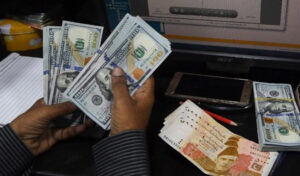
Why not? Investors keep giving the same answer: policy uncertainty, erratic taxation, high energy costs, weak contract enforcement and regulatory complexity. Until those problems are fixed, Pakistan will struggle to reach the $5 billion to $10 billion in annual FDI needed to materially change its trajectory.
The Real Number Nobody Talks About
The deeper problem, however, is growth itself.
The key number is not this year’s growth rate. It is the gap between actual growth and possible growth.
Pakistan should be able to grow at 6 to 7 per cent on a sustained basis. Its demographics, labour force, urbanisation and resource base all point in that direction. Instead, growth is stuck around 4 per cent.
That gap may look small. It is not.
A shortfall of 2 to 3 percentage points every year compounds brutally over time. Over a decade, it can mark the difference between rising prosperity and managed stagnation, between a country that lifts living standards and one that merely runs to stand still.
That is the hidden price of low growth. It does not always make the front page. It does far more damage than most budget speeches admit.
Exports: Standing Still While the World Moves
Exports remain another long running failure.
Pakistan’s export base is still narrow, low value and underpowered. Exports hover around $32 billion despite years of promises and policy talk. The country can do far more than that. With more value addition in textiles, deeper integration into global supply chains, stronger IT services, modernised agriculture and better logistics, exports of $45 billion to $50 billion within a few years are entirely plausible. Instead, FY2027 is likely to bring only modest growth. In real terms, Pakistan’s share of global trade keeps shrinking. The world is moving. Pakistan is trailing. A Data Problem Nobody Wants to Discuss.
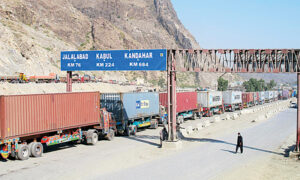
Then there is the data problem, not because official figures are fake, but because they are often too slow and too thin to guide policy well.
Pakistan’s statistical institutions do essential work under difficult conditions. Most published figures follow accepted methods. But major datasets remain infrequent, revised later and released with long delays. Large scale manufacturing, agriculture, labour force and poverty data often arrive well after policy choices have already been made. That matters. Good policy cannot run on lagging signals and congratulatory snapshots.
What This Budget Refuses to Change
The central weakness of the budget, though, is simpler. The question is not how much the government plans to spend. The question is what it plans to change.
And here the answer is disappointing .There is no serious industrial strategy to reverse two decades of manufacturing decline. There is no credible path to widen the tax base by bringing retail, real estate and agricultural income properly into the net. The state still prefers squeezing the already compliant over reforming the system. Most glaringly, there is no meaningful employment strategy. For a country adding two million workers a year, that is not a minor omission. It is an extraordinary one.
Education remains underfunded. Skills remain underdeveloped. Healthcare and human capital investment remain far below what a young and growing population requires. This budget works as a stabilisation document. It does not yet work as a growth document.
Debt Is Eating the Future
Debt is a major reason why. A large share of federal spending is still consumed by interest payments on accumulated public debt. Every rupee spent servicing debt is a rupee not spent on schools, hospitals, water systems, technology, research or jobs.
That is why development spending remains so limited despite such obvious need. Without faster growth and a broader tax base, the state will remain trapped, too burdened to invest properly in the future.
Water: Pakistan’s Quiet Emergency
Then comes water, perhaps the most underestimated economic risk of all.
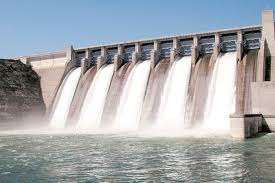
Water is not just an environmental issue. It is an agriculture issue, a food security issue, an energy issue, a climate issue and a growth issue. The federal PSDP allocation for water projects has increased for FY2027 to roughly Rs140 billion, or around Rs179 billion including hydropower. That is better than before. It is still not enough. The agencies responsible for major dams and water storage projects have repeatedly argued that much larger annual allocations are needed to keep timelines intact. In a water stressed country of more than 250 million people, underfunding storage and water management is not delay. It is self harm.
What Recovery Would Actually Require
So what would a real recovery strategy look like?
Not another decade of stabilisation. A decade of expansion.
Investment must rise from roughly 13 per cent of GDP toward 20 per cent. Industrial policy must become competitive and export focused. Manufacturing has to be rebuilt. Annual employment targets should be measurable, public and taken seriously. The tax base must widen instead of punishing the same formal sector repeatedly. Water storage, irrigation modernisation and energy infrastructure must move faster. Education, skills and workforce productivity need sustained investment. Local governments need real capacity. And above all, policy needs consistency that survives elections and changes of government.
None of this is easy. None of it is optional.
The Bottom Line
Pakistan deserves credit for moving away from the cliff edge. Stability is better than chaos. Falling inflation is better than spiraling prices. Fiscal discipline is better than fiscal drift. Those gains are real and they matter. But they are not recovery.
For millions of Pakistanis, FY2027 will still feel harsher than the official narrative suggests. Poverty may still be closer to 40 to 45 per cent on broader measures. Effective unemployment may still sit near 18 to 22 per cent. Foreign investment remains too low. Export performance remains too weak. Water infrastructure remains underfunded for the scale of the challenge.
The government can argue, with some justification, that the emergency has passed.
What it still cannot argue is that the economy is producing enough jobs, enough income, enough investment and enough opportunity. That is the real test. And by that test, recovery has not arrived.

Fazeel Asif –
Senior leader with 30+ years across public and private sectors. Former Chairman of Punjab CBD, PBIT, and CM’s Taskforce on Governance & Reforms.
Expertise: He can be reached out at : [email protected]

