

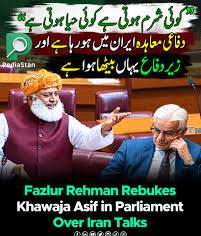
The recent verbal sparring between Pakistan’s Defence Minister Khawaja Asif and JUI-F chief Maulana Fazlur Rehman was widely dissected by local pundits as a moment of rare civility—or perhaps a symptom of a deeply fractured state. Yet, the truth is far less ominous. This confrontation has absolutely no bearing on Pakistan’s already polarized state of politics, nor does it disrupt the actual machinery of government. Instead, it belongs to a much older, universal tradition: the grand theatre of the parliamentary floor.
Every robust democracy, from the raucous Prime Minister’s Questions in the UK to the fiery debates in the parliaments of India, Japan, and the United States, relies on this performance. When politicians stand up to slam each other, they are doing what politicians have always done—showing their teeth to achieve very specific, calculated goals.
For the government and the opposition, the floor is an arena to trade taunts, test boundaries, and occasionally give birth to incredibly healthy, sharp-witted debates. At its best, parliamentary sparring isn’t just noise; it is a canvas for historical references, sharp jokes, spontaneous poetry, and rhetorical brilliance.
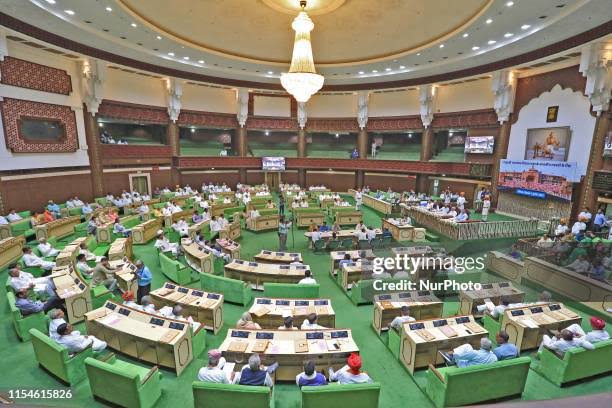
More importantly, it serves as a vital mirror and a psychological pressure valve. The masses, watching from the gallery or on their screens, find a sense of collective catharsis when their representatives voice their rawest frustrations. When a politician lands a punch on the floor, they are letting off steam on behalf of millions who cannot speak.In Pakistan’s case, this specific matchup highlights a fascinating clash of styles. Take Maulana Fazlur Rehman, whose traditional political capital in the tribal areas and Khyber Pakhtunkhwa has been squeezed in recent years by the populist rise of Imran Khan’s base. For the Maulana, showing his teeth on the floor is a masterclass in demonstrating nuisance value—a witty, sharp display of relevance designed to remind everyone that he cannot be sidelined.
On the other side stands Khawaja Asif, representing the entrenched, urban elite through his long alliance with the Sharif dynasty. Backed by wealth and decades of influence, Asif spars with the quiet confidence of a class that believes its managerial wisdom holds superior value. When these two titans lock horns, it isn’t an institutional crisis. It is a timeless democratic ritual. They are shouting, joking, and posturing not to break the system, but to carve out their own space within it.
Though sadly, the Maulana’s sharp reference to Khawaja Asif’s infamous, proverbial taunt to Shireen Mazari—”koi sharam hoti hai, koi haya hoti hai”—was laced with a deeper irony. While delivered as a witty, teeth-showing blow in the spirit of classic parliamentary sparring, the underlying argument was ultimately about the loss of parliamentary supremacy. It serves as a bittersweet reminder that the very power and institutional sovereignty they were so passionately debating had actually left the building decades ago.
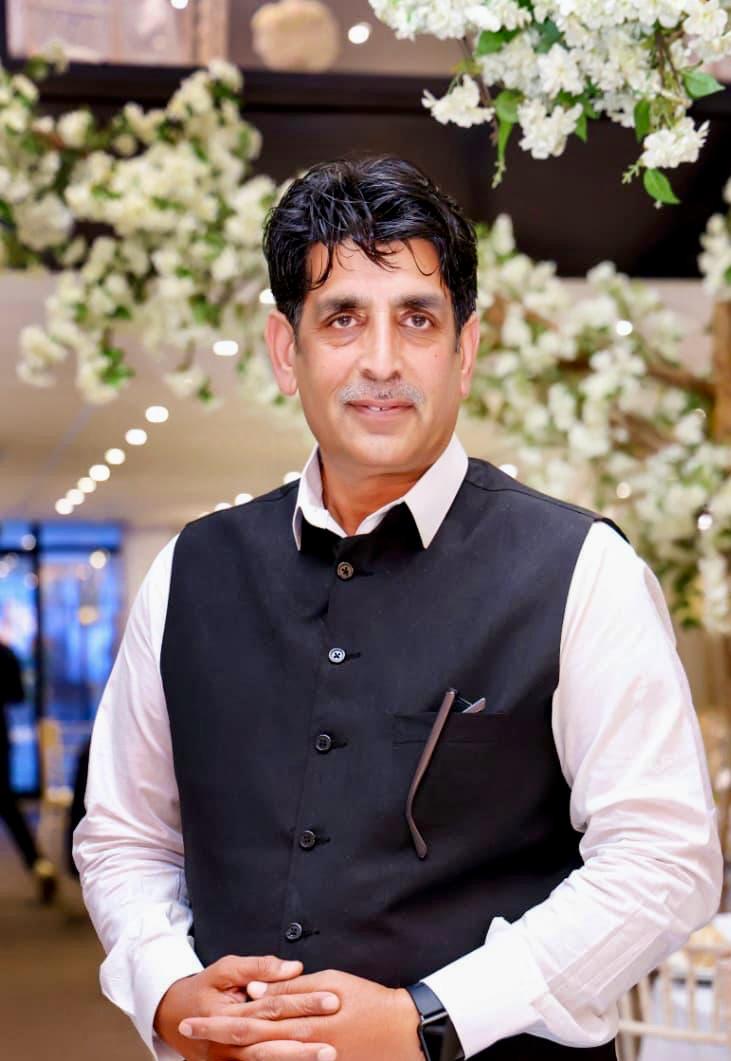
Inamullah Khan : Inam Ullah Khan : The author is currently pursuing an LLM at BPP University, London. He holds an LLB from the University of the Punjab and a Master’s degree in Journalism from the University of Peshawar. He can be reached out at : [email protected]

