

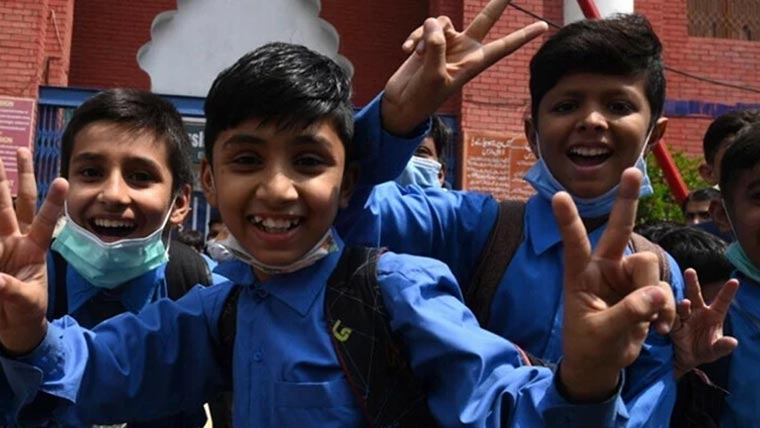
The Islamabad High Court has sent us back to a question we keep dodging: what is a constitutional right worth if millions of children never see a classroom?
Quaid once said “There is no doubt that the future of our State will and must greatly depend on the type of education we give to our children and the way in which we bring them up as future citizens of Pakistan.”
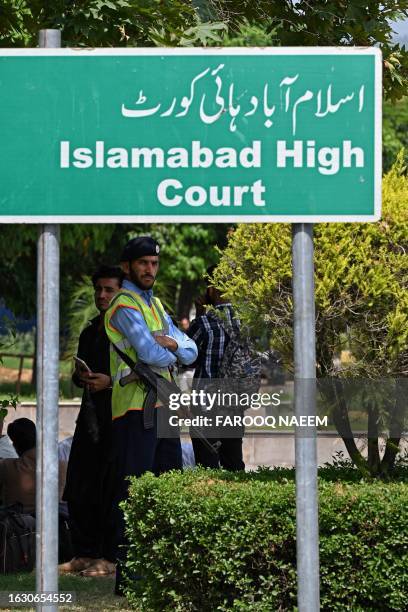
On 4 November 2026 the Islamabad High Court decided a writ petition filed by the Centre for Rule of Law Islamabad –CROLI. The petitioner, Muhammad Majid Bashir, Advocate, who heads the Centre, wanted the Right to Free and Compulsory Education Act, 2012 enforced in the Islamabad Capital Territory.
The Court directed the Federal Government to constitute the Education Advisory Council under Section 22 of the Act and to file a report on the state of schools and the facilities children actually have. No child, the directions say, should be left without education.
How modest that demand is deserves a moment. Nobody asked the Court to invent a policy. Parliament passed this law fourteen years ago, and the constitutional guarantee behind it dates to 2010. The Court was asked, in effect, to make the Government do what it had already promised.
The Council matters more than it sounds. Section 22 envisages people who know education, child rights and child development, and gives them a real job: making sure every child who must attend school does attend, and taking the steps needed to get there. Enrolment drives and new buildings cannot do that. Someone has to find the missing children, ask why, and chase the officials responsible.
Even so, one question reaches well beyond Islamabad. How long is it acceptable to wait between a right being written into law and a child being able to use it? Parliament legislating is not success. Success is a girl from a poor household, in a village with no paved road, getting into a school, studying without going broke, and finishing. By that standard the IHC case is a useful reminder: the right to education is a duty the State carries every year, and cannot tick off once. The burden sits on the government and not on the family, and because the Article belongs to the Fundamental Rights, no minister can treat it as a gift.
Section 3 of the Islamabad Act gives every child a right to free and compulsory education in a neighborhood school, whatever their sex, nationality or race, and makes the Government answerable for provision, admission and attendance. Its idea of “free” is realistic. Section 2 defines free education as education without education-related costs, naming stationery, school bags and transport. Anyone who has watched a poor family count its rupees knows why. Tuition may be waived, but if a child can’t afford books or the bus fare, the child stays home. Section 20 provides for monitoring and complaints, and Section 25 requires inspection of registered schools.
Pakistan is far from alone. UNESCO’s 2026 Global Education Monitoring Report estimates that about 273 million children, adolescents and young people were out of school in 2024: 79 million of primary age, 64 million of lower-secondary age and 130 million of upper-secondary age.
The world has been promising universal schooling for decades. Sustainable Development Goal 4 commits countries to inclusive and equitable quality education for all by 2030. Yet UNESCO says the number out of school has risen by roughly three per cent since 2015, after falling steeply between 2000 and 2015. That 130 million at upper-secondary level carries its own message. Getting a child through the gate is the easy part. Keeping them there is where systems fail.
Literacy tells the same story. Among people aged ten and above the national rate is 63 per cent: 73 per cent for men, 54 per cent for women, 74 per cent in cities and 55 per cent in rural areas. Behind each figure is a person shut out of jobs, health information and the ability to understand a legal right. No country competes in a knowledge economy while more than a quarter of its children sit outside school.
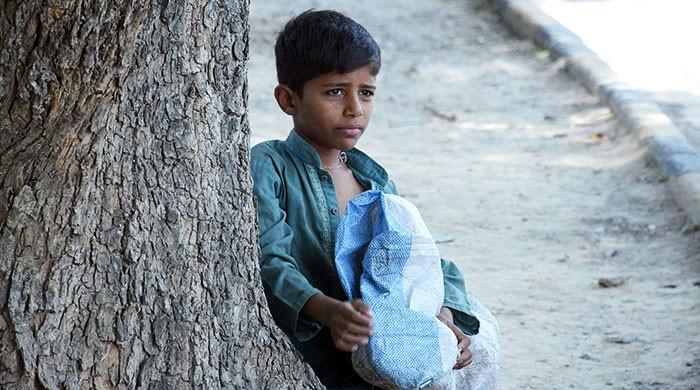
The Federal Government now has to move forward in compliance of court orders, education advisory council will remain under surveillance of general public and EDC will make sure that every child will be facilitated with right of education and no child will be found begging in the streets and parents will be responsible along with the state, if a child is not enrolled in the schools
The Government has to provide, free books, food, Uniform, safe transport, playgrounds and sports gears, classrooms, water, sanitation, electricity and access for children. Girls need particular attention: more girls’ schools, qualified female teachers, proper sanitation, and secondary schools nearby so a girl who finishes primary has somewhere to go. Quality belongs inside Article 25A too. Sitting in a classroom is not the same as learning, so teachers should be hired on qualifications, trained regularly and judged partly by whether children can read, write and do arithmetic.
The 2012 Act provides for School Management Committees, at least two-thirds parents and one-third women. They should be active, informed and able to monitor schools and grants. Section 10 puts free-education duties on private schools, including admitting disadvantaged children up to ten per cent of each class, and those duties need enforcing. The Education Advisory Council should meet regularly and publish reports on where the Act is not being followed, and provincial bodies should do the same. Parents also need an easy way to report refused admissions, absent teachers or unlawful charges, with prompt replies.
Non-formal education and accelerated learning programmes can bring older children back without forcing them into age-based grades. A child who spent years working or caring for relatives shouldn’t be shut out for ever. What counts is completion, not a name in the admission register.
At the national level, the Federal Government should work with the provinces through the Inter-Provincial Education Ministers’ Conference toward comparable minimum standards and common indicators, without cutting into provincial authority over local curricula.
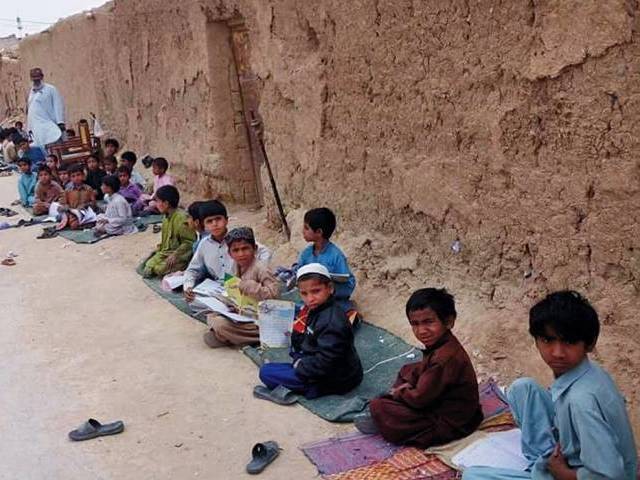
The IHC’s reported direction to obtain a report on school conditions is a chance to build real monitoring. The report should go beyond counting schools and rupees and say whether every child in the age group has a working school, and what must be fixed where not. The judiciary has its own role in stopping fundamental rights from being hollowed out by administrative neglect. Courts cannot replace competent school administration, but they can require authorities to perform duties the law already imposes.
Pakistan’s education crisis is about more than government schools, curriculum or annual budgets. It is about what kind of country this will be. A child denied schooling today becomes a citizen short of opportunity tomorrow, and the loss spreads into the labour market, the economy, public institutions and social mobility.
The Constitution has recognized the right. Parliament has passed the law. The provinces have written their own statutes. Islamic teaching puts knowledge at the center of human development, and the country’s founder tied the quality of education to the future of the State. What is missing is the will and the institutional capacity to deliver what was promised. Neither a proud history nor a constitutional clause can make up for failing the generation in school right now.
The Islamabad High Court’s order shouldn’t be filed away as one more closed case. It is an occasion to check whether the mechanisms created in 2012 Act are working and whether children in Islamabad are really being served. The same check is needed across Pakistan.
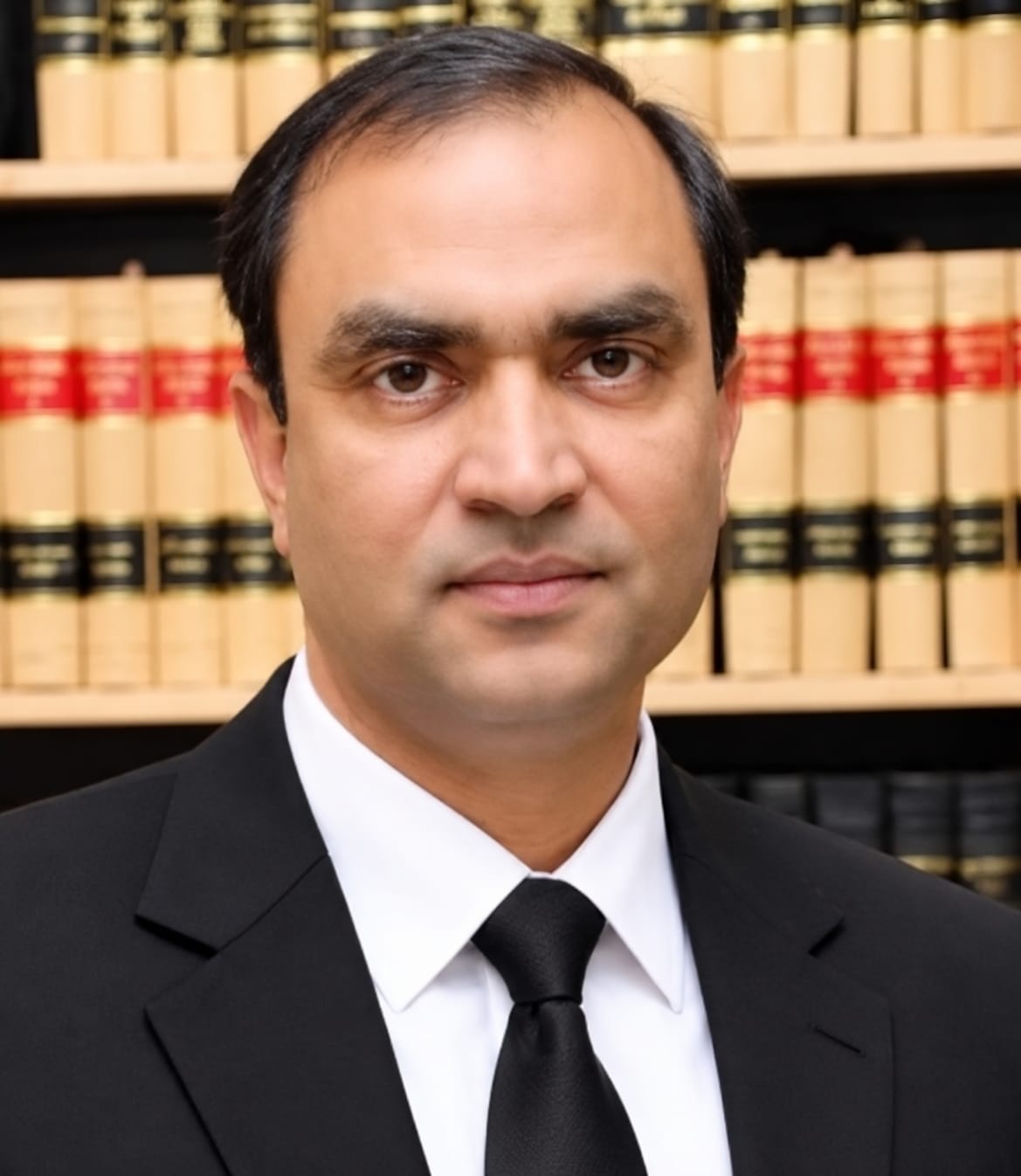
Majid Bashir
The writer is a former Judge and President of Centre for Rule of law-CROLI and was petitioner in this writ.
Email: [email protected]

