

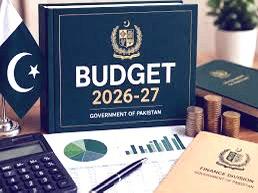
As Pakistan approaches another federal budget, the familiar debate has once again begun. Political parties are preparing their talking points, economists are debating fiscal targets, businesses are anxiously watching taxation measures and ordinary citizens are hoping for some relief from the pressures of inflation and economic uncertainty.
Yet amid the annual spectacle of budget-making, a more fundamental question deserves our attention,Will this budget merely manage decline or will it become a roadmap for national transformation?This is not simply a question of numbers. It is a question of national direction.
For decades, Pakistan’s budgets have largely been just exercises in crisis management. Governments, regardless of political affiliation have often found themselves trapped in a cycle of firefighting—balancing deficits, negotiating external financing, servicing debt obligations, containing inflationary pressures and satisfying immediate political constituencies.
The result has been a succession of budgets focused on survival rather than progress.
A nation cannot indefinitely borrow its way to prosperity. Nor can it tax its way out of structural weakness. Economic resilience is built through productivity, innovation, human capital, institutional strength and long-term strategic planning. Yet these pillars have too often remained secondary considerations in the budgetary process.
Pakistan’s demographic profile presents a remarkable opportunity. Nearly two-thirds of the population is under the age of thirty. This youth bulge could become one of the greatest economic assets in the region. However, if not equipped with skills, education, opportunities and pathways to entrepreneurship, it risks becoming a source of frustration and instability.
The budget must therefore answer a critical question: Are public resources being directed toward long-term national competitiveness and workforce development, or are they largely absorbed by recurring operational commitments?
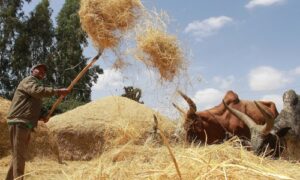
Similarly, Pakistan’s agricultural sector continues to employ millions, yet productivity remains significantly below its potential ,farmers facing storm of challenges.rising input costs, expensive fertilizers and pesticides, compromised quality of inputs , escalating energy prices, climate-induced disasters, water shortages etc.outdated farming practices and weak value chains continue to constrain growth. A transformative budget would prioritize agricultural modernization, agri-tech adoption, water efficiency, food processing, and export-oriented value addition.The same principle applies to the industry.
Pakistan can no longer rely solely on low-value exports and consumption-driven growth. The future belongs to economies that create knowledge, technology, intellectual property and innovation. Countries that were once behind Pakistan in development indicators have surged ahead because they made deliberate investments in education, research, digital infrastructure and industrial competitiveness.
The question is not whether Pakistan can afford such investments.The real question is whether Pakistan can afford not to make them.Equally important is the issue of governance. Every year development projects are announced with great fanfare, yet implementation deficits continue to undermine outcomes. Roads can be built, funds can be allocated and programs can be launched, but without institutional reform, transparency, accountability and effective delivery mechanisms, public expenditure often fails to generate meaningful public value.
A transformative budget must therefore look beyond spending allocations and focus on state capacity itself.
-Can government institutions deliver services more efficiently?
-Can technology reduce leakages and corruption?
-Can public-sector performance become measurable and accountable?
-Can citizens receive better outcomes for every rupee spent?
These are governance questions, but they are also budget questions.

The challenge of debt further sharpens the urgency of reform. An increasing share of public resources is consumed by debt servicing, leaving limited fiscal space for development and social investment. Unless economic growth consistently outpaces debt accumulation, future budgets will become increasingly constrained by obligations incurred in the past.
This is why fiscal discipline alone is insufficient.Pakistan requires growth-oriented discipline,one that simultaneously restores macroeconomic stability while creating new engines of economic expansion.
Most importantly, the budget must inspire confidence.Nations progress when citizens, investors, entrepreneurs and institutions believe they are moving toward a better future. Confidence emerges when there is a credible national strategy, clear priorities, and consistency of execution.People can endure temporary hardship when they see a destination worth reaching.What they cannot endure indefinitely is uncertainty without purpose.

This year’s budget should therefore be judged not merely by the size of its deficit, the level of taxation or the volume of expenditure. Those metrics matter but they are not sufficient.
The deeper test is whether the budget reflects a coherent vision for Pakistan’s future.
-Does it encourage productivity over patronage?
-Does it reward innovation over rent-seeking?
-Does it prioritize the development of human capital as much as the maintenance of institutions?
-Does it prepare Pakistan for the economy of the twenty-first century rather than the politics of the twentieth?
Ultimately budgets are more than financial documents,They are statements of national intent. They reveal what a country values, what it fears and what it hopes to become.
The real question before Pakistan today is not whether the budget balances the books.
The real question is whether it balances the future.
Will it continue to manage decline? OR will it finally become a roadmap for transformation?

