

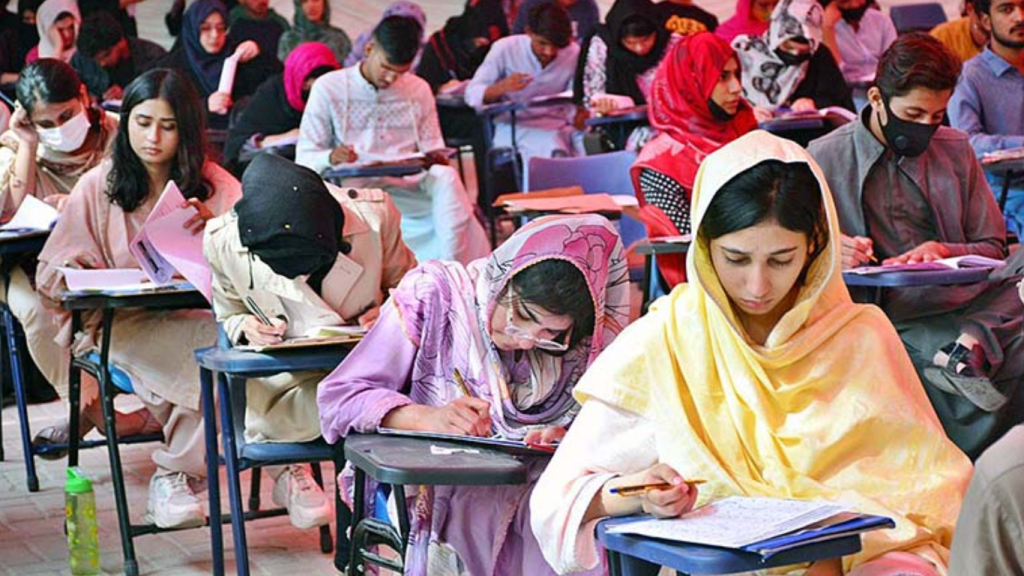
Some tragedies make noise, and some take place in silence. Educated youth unemployment is the concern of the latter. Not always does it make the headlines of the newspaper as a human tragedy; it also does not capture the sympathy that is reserved for more visible suffering. However, behind the closed doors of numerous households, a generation is silently grappling with one of the harshest ironies of this modern society: They’ve been taught that education is the key to dignity, independence and success, yet knowledge alone does not necessarily provide access to opportunity.
Education is told to be the solution to the problems that young people have for years. Their childhoods are structured around exams, their aspirations to “better” future are framed in terms of qualifications, and their sacrifices are rationalized by promises of a better future. They put their savings aside, sacrifice their own comforts and at times find it difficult to even pay for the very education they hope will save their children from poverty. A mother prays for her child’s success, a father imagines the day his years of labors will finally bring relief. When you leave school, they have photos and they say “congratulations” and they look happy.
Being an educated unemployed is a complex issue in Pakistan than not having a monthly income. It is a clash of the personal and the systemic. The unemployed graduate may be a person behind him whose years of disciplined work and family sacrifice and expectation of social mobility have not yet been realised. What was once a proud badge of honor can turn into an aching reminder of a future that is more distant than ever. The graduate keeps writing applications, studying for exams, going for interviews, updating CVs, and the years go by and they’re still dependent. While each rejection can be dealt with on its own, the feeling of continual disappointment can cause an individual to lose faith in themselves and in their ability to make a contribution.

The emotional impact is often the most intense, since an unemployment often does not single-handedly impact one person. It goes to the house, alters relationship and alters the tone of common conversations. Think about the father who has made it his life’s work to educate his child, wanting his offspring to have more security than he ever had. He might still be left supporting financial obligations as he gets older, which had been in his mind to be distributed among all parties. A qualified son or daughter is seated beside him, who knows everything he has done for them and for which he hoped they would bring him relief and help, but with no help available. Both are unable to openly express the entirety of this disappointment. While their love is still there, there is also a common fear that words can’t heal.
The human toll of unemployment is not merely lost income, it is also the agony that is felt when individuals feel they are not providing for the people they love the way they want to provide. The media frequently portrays the graduate as the success story for a family, but not what happens when that graduate is still not economically secure for years. While we celebrate education, we don’t create the conditions for that education to lead to productive employment.
There is an obvious issue in the problem too, in relation to the social value of education. Young people are pressured to earn degrees; their worth is often based on the thing they do after they get one. Questions are likely to be asked that boil down an entire graduate’s years of schooling to a single question: Have you gotten a job? They are no longer evaluated by their knowledge, intellectuality and personal characteristics but by their economic status. In this context, the problem of unemployment can evolve from a life problem to an identity issue also. It can start to feel like a personal failing to people because of the barriers they face, and they think that they are at fault for them, which is much more than just a personal issue.
This is where the talk must shift from mere emotional sympathy to genuine social analysis. Economic growth, job availability and quality, the linkage of education and industry, geographical inequality, recruitment and opportunities all contribute to unemployment. Labor market may fail to absorb all the graduates in some fields. In others, an employer can require practical experience for a candidate, who has not had a reasonable chance to get it. A lack of transparency in recruitment can also further erode trust in merit. The problems among young people are not solved by saying they need to try harder, be more patient, get some other qualifications.
It can be even more complex for the educated woman. A degree means independence, self-determination, and increased participation in family and social life—more than simply academic accomplishment—for many. But good jobs might not be available due to rigid social norms, poor access to transport, worries about workplace safety, inflexibility, or family commitments. Women who take a break from their careers to raise kids can find that their past work experience is not valued. Their skills and capabilities are untapped, and years of education and aspiration are consigned to the fringes of daily life.

This is not just an individual’s tragedy, it is a societal tragedy in terms of lost human resource which the world can least afford.
At the same time it is important that a serious discussion recognise a university degree does not guarantee a specific job or amount of income. Education is valuable in terms of intellectual, civic, and personal value other than in the context of employment. Not all graduates will automatically move on from university to a successful career. The actual fault lies when the institutions give false hopes and no good advice on what to do to get a job or no good skills, nor any real job prospect. It is not to demean education but to improve its ties with economic and social reality.
Increased responsibility of universities on career counselling, practical learning, internships and connecting with employers. Business should establish entry-level jobs that are meaningful and see the potential in fresh graduates and not see that experience must be a prerequisite. The emphasis on policy makers should be on sustainable job creation, productive investments, small enterprises and equitable employment. Transparent recruitment systems are crucial to making sure that competence is the reason behind an opportunity and not personal relationships. These reforms will need to be coordinated, held to account, and be prepared to acknowledge that educated unemployment is a public issue, not just a private inconvenience.
Above all, there needs to be a shift within society when it comes to addressing the issue of the unemployed graduate. Asking repeatedly about why someone didn’t succeed does not help to explain the challenges that they are facing. Competition with family or classmates is not an employment option. To tease them about their neediness is not to boost their self-confidence. Instead of empty reassurance or unconditional praise, what young people need are fair opportunities, practical support and dignity in being sought after while they are still searching for work.
An individual might be unable to work, but not be unable. Laziness is not always a problem, it can be that a graduate is suffering. Time not spent in the workforce doesn’t mean years of missed learning and financial struggles don’t mean that someone’s not worthy. The difference is significant since in a society that leaves people to view their whole worth in their work, they are left with the possibility of human dignity being reduced to a payslip.
Finally, the failure to deliver on the promise of education isn’t that “no degree equals no job. The promise of opportunity is so often given, without regard to whether or not opportunity is really present. Education raises expectations beyond the economy’s capacity to accommodate, and that becomes a collective experience. It’s about social justice, institutional responsibility and national development.

Young Pakistanis deserve to have a future without the promise of a future. They require a mechanism for turning knowledge into productive activity, talent into an honest assessment, and hard work into a prospect for improvement. They want an economy that respects their skills and structures that acknowledge their potential rather than waiting for years and losing faith in their abilities.
Maybe it is the most heart-wrenching picture of educated unemployment, not a graduate standing outside an office, or holding a rejection letter. It’s the low-key time at home when a parent asks, “Is there any good news?” and the child responds, “Not yet,” as if it doesn’t hurt.
That fleeting exchange says more than any number can when it comes to the gap between hope and reality. It is the delayed relief of the parent, the unexpressed guilt of the graduate, and the uncertain hope of the future that neither has ceased to believe in.
A nation defaults on its young people when it tells them that through the power of education, they will be granted access to opportunity, but then locks the doors with their qualifications, their sacrifices and their dreams. The end of education should not be the creation of graduates only. To build a society where their knowledge can be used, their dignity is preserved and their future is not decided by the bitter misfortune of whether an opportunity occurs or not.

Nayab Idrees : The writer is a freelance journalist and PhD scholar who frequently writes on social, political, and educational issues. She can be reached at [email protected].

