

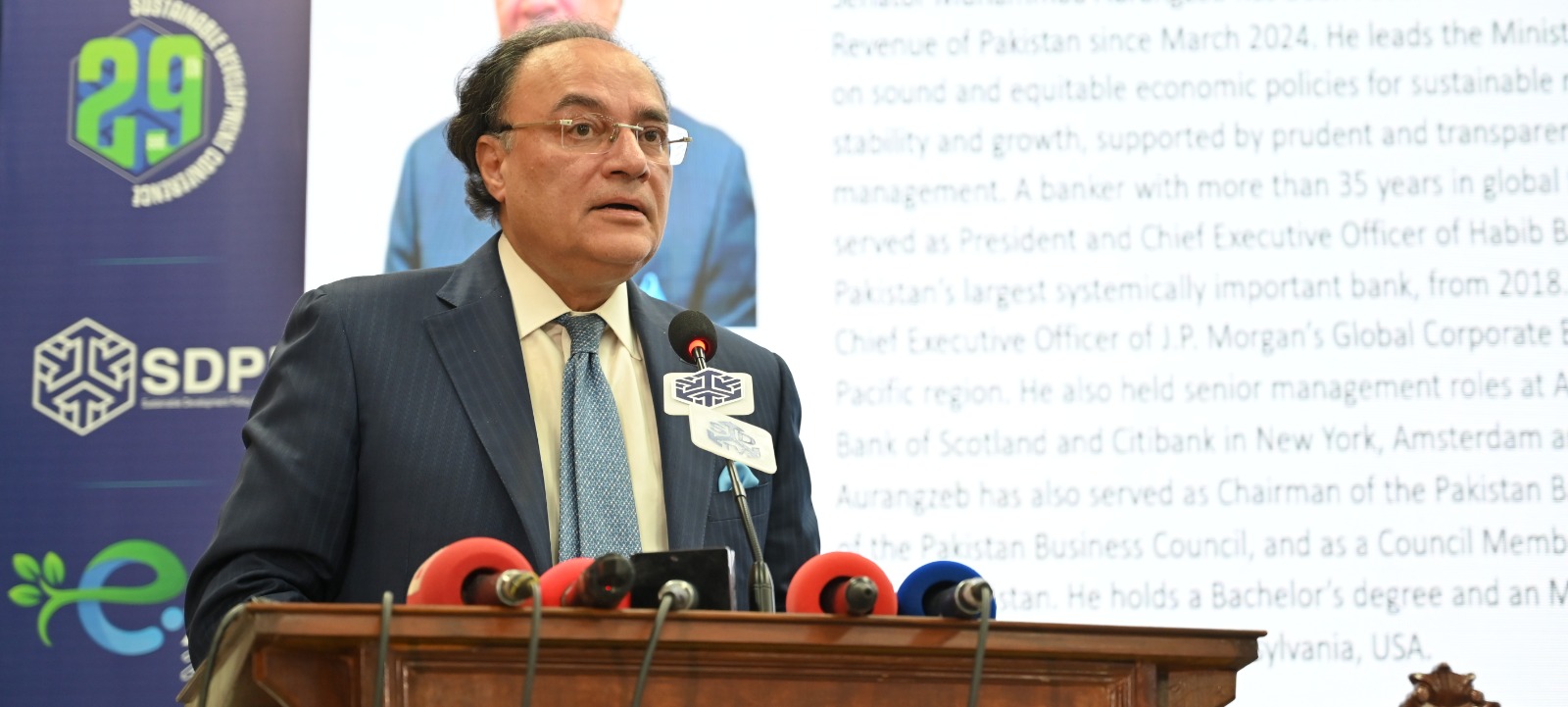
ISLAMABAD: Finance Minister Muhammad Aurangzeb on Tuesday said the government had adopted former State Bank governor Dr Ishrat Hussain’s institutional reform recommendations as the basis for its restructuring agenda, acknowledging his pivotal role in transforming Pakistan’s banking sector and laying the groundwork for wider governance reforms.
Addressing a ceremony organized by the Sustainable Development Policy Institute (SDPI) to confer a Lifetime Achievement Award on Dr Ishrat, the finance minister said the government was building on the work of previous administrations rather than discarding existing initiatives and starting afresh.
He said he had specifically approached Dr Ishrat for his institutional reforms report and adopted it as the basis of the government’s restructuring agenda. The principal modification, he explained, was to implement the recommendations in phases rather than simultaneously, given the large number of ministries and attached departments involved.
State Bank Governor Jameel Ahmed also paid tribute to Dr Ishrat, describing his contribution to the country’s socio-economic development and financial sector as significant.
Recalling his first professional interaction with Dr Ishrat in December 1999, Mr Ahmed said he had joined the central bank with a clear vision and an ambitious plan for its transformation. He said Dr Ishrat responded with determination, introducing far-reaching reforms over the next six years and bringing about one of the most extensive transformations in the SBP’s history.
Former federal minister and adviser on commerce Abdul Razak Dawood also praised Dr Ishrat’s transformation of the State Bank, describing the Lifetime Achievement Award as well-deserved recognition of his contributions.
Habib Bank Limited Chairman Sultan Ali Allana described Dr Ishrat as an institution in himself, highlighting his unusual combination of civil service experience and international financial expertise.
Former secretary to the prime minister Nargis Sethi recalled working closely with him during his tenure as chairman of the National Commission for Government Reform (NCGR), established by the government in 2006.
Dean Emeritus and Professor at Boston University’s Pardee School of Global Studies, Dr Adil Najam, said this aspect of his legacy was often underestimated because attention largely remained focused on his achievements as a policymaker.
Earlier, Stressing the need for a strong cooperation between Bangladesh and Pakistan, Advisor to Prime Minister of Bangladesh on Finance and Planning Rashed Al Mehmud Titumir has called for a new South Asian development paradigm based on industrial transformation, regional production networks, decent employment and stronger social protection.
He said the international economic and political order was undergoing structural transformation, requiring developing countries to rethink conventional development strategies and strengthen economic resilience.
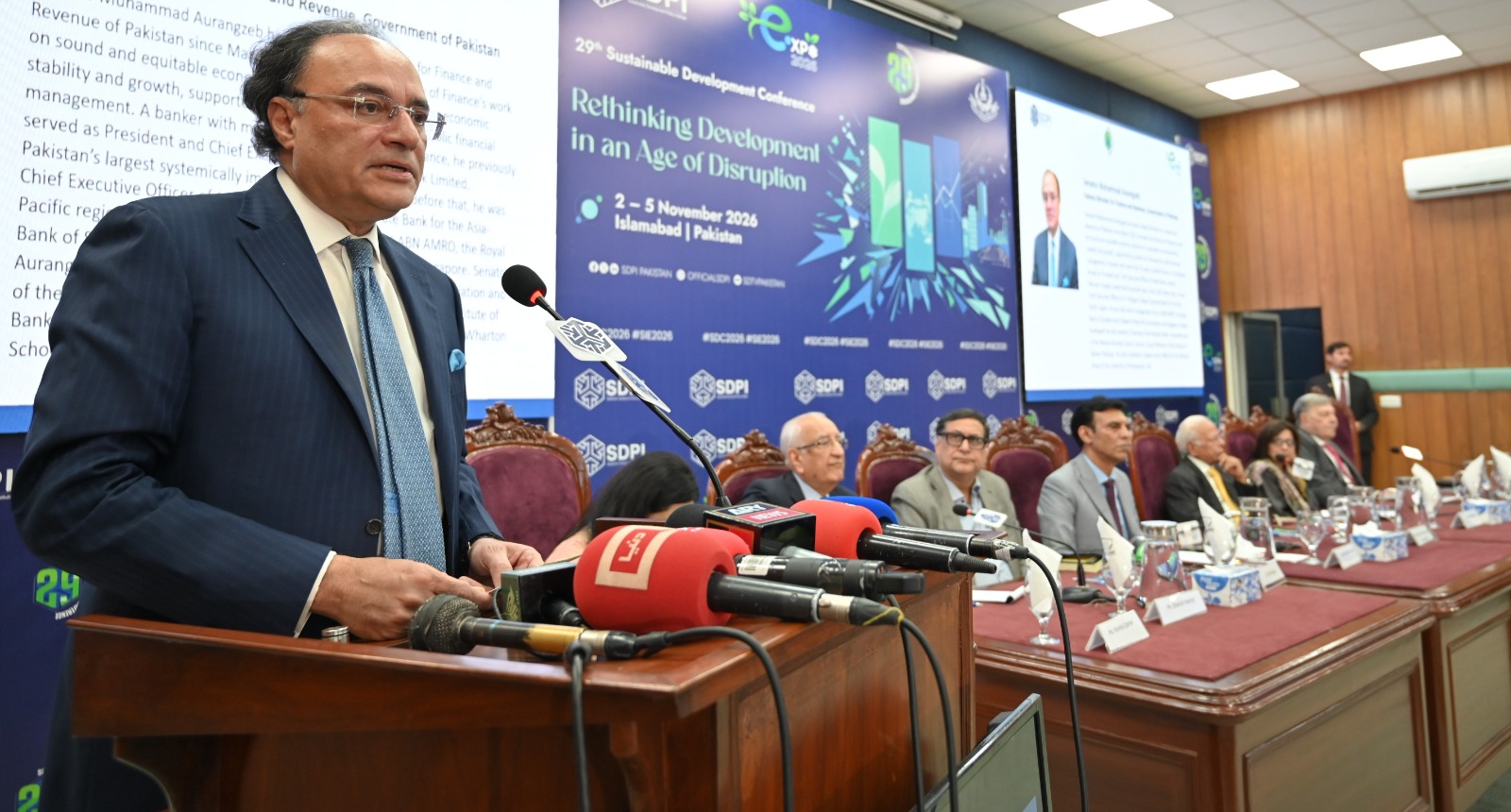
“These disruptions are not merely external shocks to be absorbed. They are reshaping the conditions under which countries can industrialize, create employment, mobilize domestic resources, finance development and secure economic sovereignty,” he observed. He said Bangladesh is now aspiring to become a manufacturing hub and export gateway, leveraging its strategic geographical location.
Federal Minister for Climate Change and Environmental Coordination Musadik Malik declared that Pakistan would no longer pursue development through additional borrowing, saying the country was open to equity investment and debt swaps but not further debt.
“That shop is closed. Whatever development we undertake must be fair, durable and genuinely ours,” he said.
Malik said Pakistan collected around Rs16 trillion in revenue, of which approximately Rs8 trillion was consumed by debt servicing, accounting for 48-49 percent of total revenue.
He also proposed using artificial intelligence to create employment opportunities for young people rather than displacing them, enabling graduates to train AI systems in regional languages, including Balochi, Brahui, Sindhi and Urdu. Malik announced a $10 million Green Field programme to provide young people with equity-based investment for scientific experimentation and innovative solutions, with the first competition planned within three months.
SDPI Executive Director Abid Qayum Suleri, Chairman SDPI Board of Governors Shafqat Kakakhel and Allama Iqbal Open University Vice-Chancellor Nasir Mahmood also
addressed the inaugural session, highlighting the importance of sustainable development, regional cooperation and adapting development strategies to emerging global challenges.
Federal Minister for Planning, Development and Special Initiatives Ahsan Iqbal also spoke on the occasion.

