

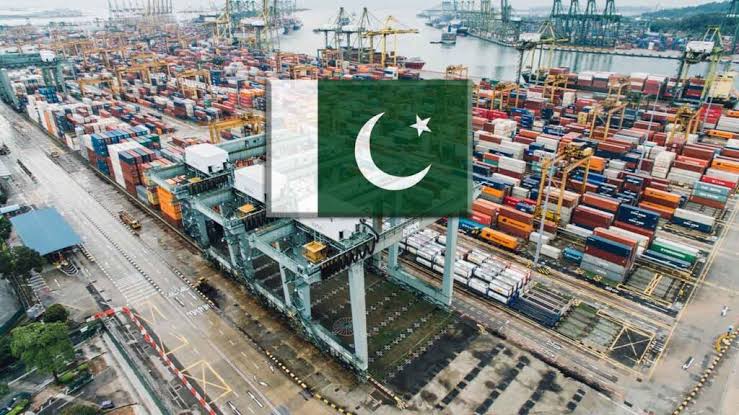
On 6 November, the Prime Minister approved an overhaul of the Trade Development Authority of Pakistan. He called for merit based hiring, promotions tied to performance and an independent audit, with the reforms to be fully operational by the middle of 2027.
All of that is welcome. But when the overhaul is complete, I would ask a much simpler question: which Pakistani companies are selling abroad today because TDAP helped them, and how many of their buyers have returned with a second order?
Pakistan exported $30.14 billion in goods in FY 2025/26, down 5.9 per cent. Imports rose to $69.76 billion, leaving a merchandise trade deficit of $39.62 billion. Goods exports have since recovered, rising 8.5 per cent to $11.34 billion in the first four months of the new fiscal year. That is encouraging. But it does not change the fact that textiles account for roughly 60 per cent of our goods exports, or that firms dependent on a single market or route can be badly hurt when a border closes, as our trade with Afghanistan has demonstrated.
Exporters will rightly point to power costs, delayed tax refunds and expensive finance. A commercial counsellor cannot make electricity cheaper, and an introduction to a buyer is worth little if the exporter cannot finance the order.
But that is precisely why the Commerce Minister must do more than lead delegations. When a refund, a testing requirement or a financing bottleneck is costing firms orders, the minister should be able to name the department responsible and say when the problem will be resolved. The ministry cannot fix everything itself. It can, however, stop allowing problems to disappear between departments.
Count the orders, not the meetings
Trade fairs have their place. For a small manufacturer, one good meeting with a distributor may justify the entire trip. TDAP has reported business generated by some exhibitions. What exporters and taxpayers need is a consistent record of what happened afterwards: how many meetings led to orders, how many orders were actually shipped and how many buyers came back. These are three different numbers. We should publish them separately.
The same test should apply to our commercial missions. A commercial counsellor should arrive at a posting knowing which Pakistani products have a realistic chance of selling there, which buyers to approach and what is keeping our firms out.
A surgical instrument manufacturer trying to sell a higher value device needs to know what approval is required and which distributor can sell it. A halal meat exporter needs to know which certification the buyer will accept and whether the cold chain can meet the buyer’s requirements. Neither needs another general briefing on market potential.
Give Commerce three years and publish the results
I would set a merchandise export target of $42 billion by FY 2028/29, with milestones of $33.5 billion this year and $37.5 billion next year. That requires annual growth of nearly 12 per cent from the FY 2025/26 base. At the current pace of 8.5 per cent, we will miss even the first milestone. That is exactly why the numbers must be published every quarter.

The government’s stated goal is $60 billion by 2029. I would rather set a target that can be achieved and enforced than one that nobody expects to reach and nobody will be held accountable for.
I would also set a separate target of $8 billion for ICT services exports, up from $4.6 billion. That requires approximately 20 per cent annual growth, close to the pace the sector achieved last year. It is not something we can take for granted. In the first four months of this year, IT exports grew by 17.6 per cent.
The composition of that growth matters as much as the headline number. At $42 billion, a non textile share of 45 to 50 per cent would mean roughly $19 billion to $21 billion in exports outside textiles, up from about $12 billion.
That is the harder target. It does not mean asking textiles to grow more slowly. It means selling more higher value garments and home furnishings while building export businesses in food, pharmaceuticals, medical devices and engineering goods.
The Commerce Minister should answer to Parliament for this plan. I would appoint a commercially experienced National Export Director on a three year contract to run it, placing responsibility for tracking TDAP and commercial mission results in one office rather than creating another parallel agency.
The Special Investment Facilitation Council should be used to resolve disputes that Commerce cannot settle with Finance, Energy or other ministries. Every dispute referred to it should have a named owner and a deadline. The minister must still explain the outcome.
The first 90 days
In the first 90 days, Commerce should publish a short list of priority products and markets, name the official responsible for each, and establish the baseline for a quarterly export scorecard.
Alongside export values and the non textile share, I would set three year goals of 500 firms completing their first verified export, 1,000 new overseas buyers placing orders that are fulfilled and traceable to a named promotion effort, and 50 new product and market combinations with verified sales.
An invitation, an introduction or a memorandum should not count as an achievement. The results should be independently verified.
Not every missed target will be the minister’s fault. Markets change, borders close and buyers cancel orders. But every missed milestone should have a public explanation: what went wrong, who can fix it and by when. If an official repeatedly fails to deliver on commitments within their control, replace them.
That is the real test of the November overhaul. Pakistan does not need another institution that measures its success by the number of meetings, delegations and exhibitions it organises.
When the next trade fair ends, don’t tell us how many people came. Tell us what Pakistan sold.

The writer is a former Chairman of the Punjab Board of Investment and Trade

