

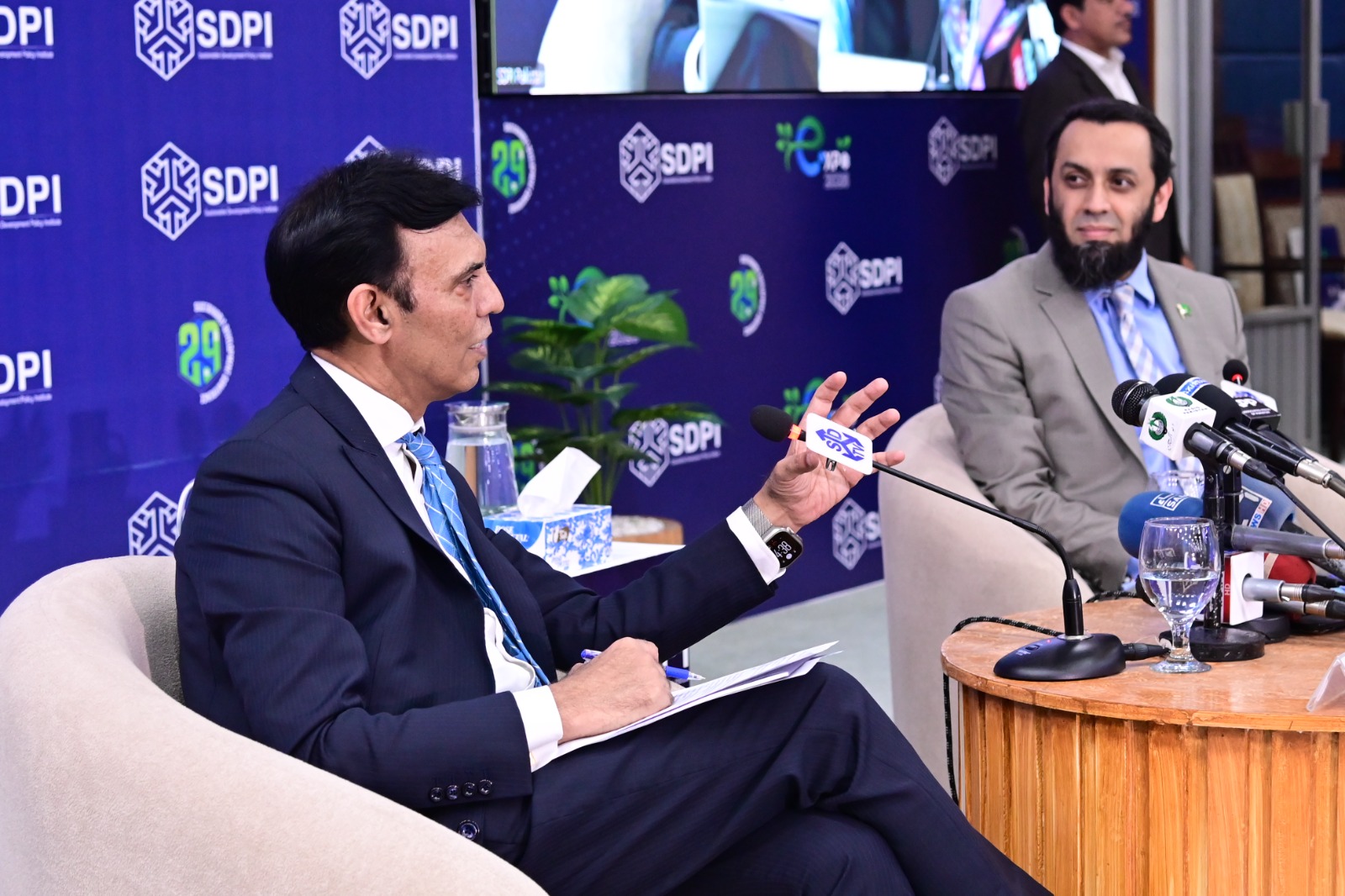
ISLAMABAD : Federal Minister for Information and Broadcasting, Attaullah Tarar, on Thursday called for mandatory labelling of AI-generated content, stronger fact-checking by social media platforms, local offices of those platforms in Pakistan, and an international convention on misinformation and disinformation.
He also proposed counselling for victims of online harassment and stronger prosecution and defamation systems.
He made the remarks in the keynote address at a Plenary, titled: “Rethinking Development in Post-truth Era”, of the Sustainable Development Conference, organized on the concluding day of 4-day Sustainable Development Conference held by the Sustainable Development Policy Institute at the Allama Iqbal Open University here.
The overarching theme of this year’s conference is ‘Rethinking Development in an Age of Disruption’.
The minister said the gatekeeper of information is now an algorithm built to maximize engagement and has no inherent system of verification. He said he has been urging platforms to make AI labelling mandatory and noted that TikTok has already done so. He cited the community notes feature on X as a way of flagging old videos presented as new events.
He added that AI labelling should be accompanied by a regulatory and legal framework, and that AI also poses risks to creative industries such as advertising and filmmaking, so human input remains necessary.
Mr Tarar said that during recent visits to partner countries he proposed an international convention on misinformation and disinformation, with an international body and member states.
On the Prevention of Electronic Crimes Act (PECA), the minister said it is purely for preventing crimes in cyber and digital space and does not restrict freedom of expression or stop journalists from working. He said the National Cyber Crime Investigation Agency (NCCIA) is establishing regional offices and training staff, and that a Social Media Regulation and Protection Authority has been set up and its chairperson appointed.
He called for stronger defamation laws so that people need not go abroad to sue. He said a time will come to define who counts as a broadcaster. He said women are the most vulnerable to harassment and blackmail online, and that a system of trial, prosecution and conviction is needed so offenders are punished.
In his opening remarks, SDPI Executive Director Dr Abid Qaiyum Suleri said the conference had discussed several disruptions, starting with floods, then the recent geopolitical situation and the closure of supply routes. He said the disruption to energy routes had negative effects across the economy. Climate change, energy and supply chains were the other themes of the conference.
He said another disruption is information which Western countries have also faced, including fabricated information around the US election. He gave an example from the May conflict (Marka-e-Haq), when friends in India phoned him to ask whether the “Lahore port” had been destroyed, though Lahore has no sea access. He said he was later asked about an alleged attack on Islamabad airport, based on pictures claiming to show it burning.
He said governments must maintain trust and credibility while protecting the right to information and freedom of expression, and still prevent misinformation and deliberate or selective presentation of facts.
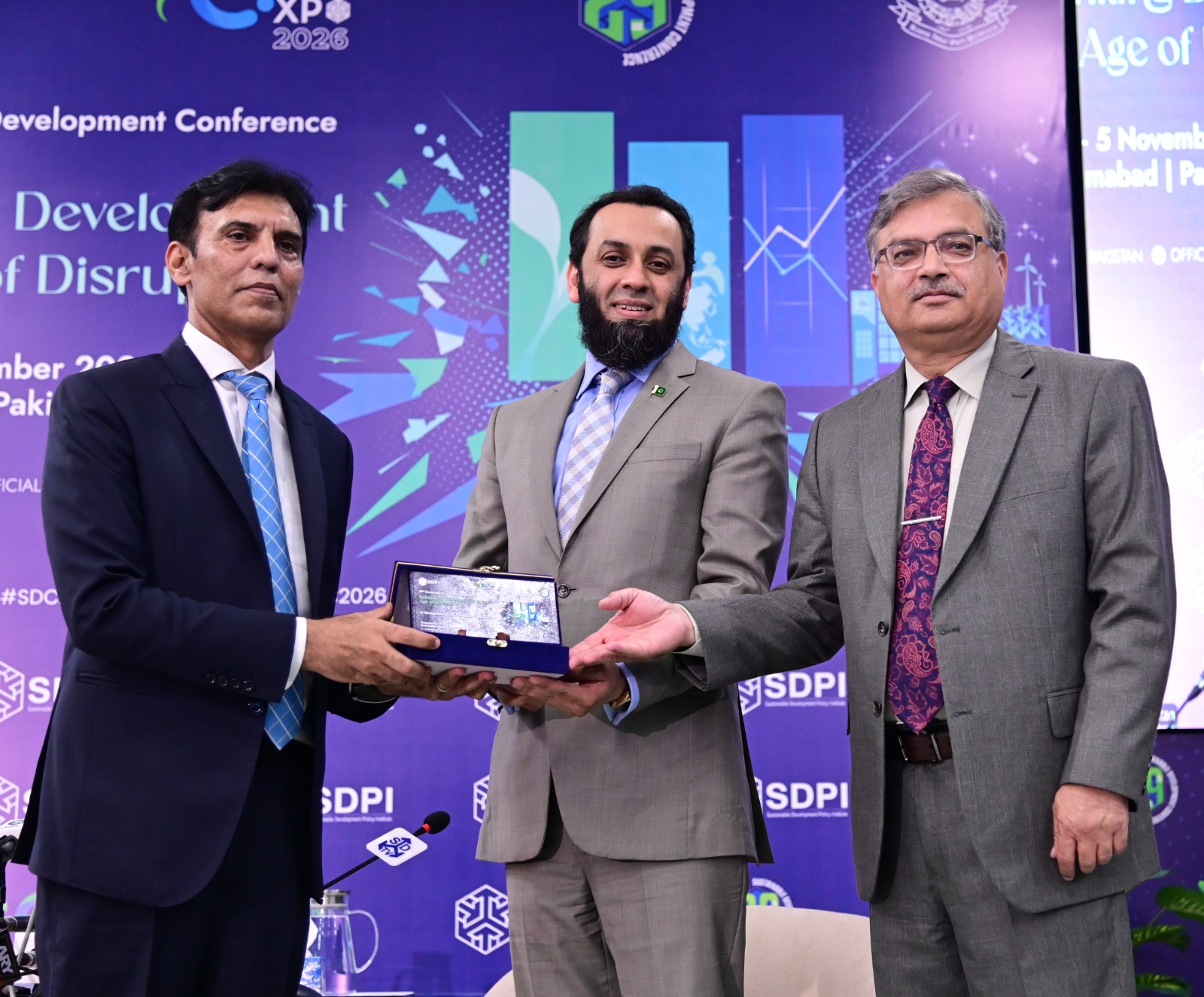
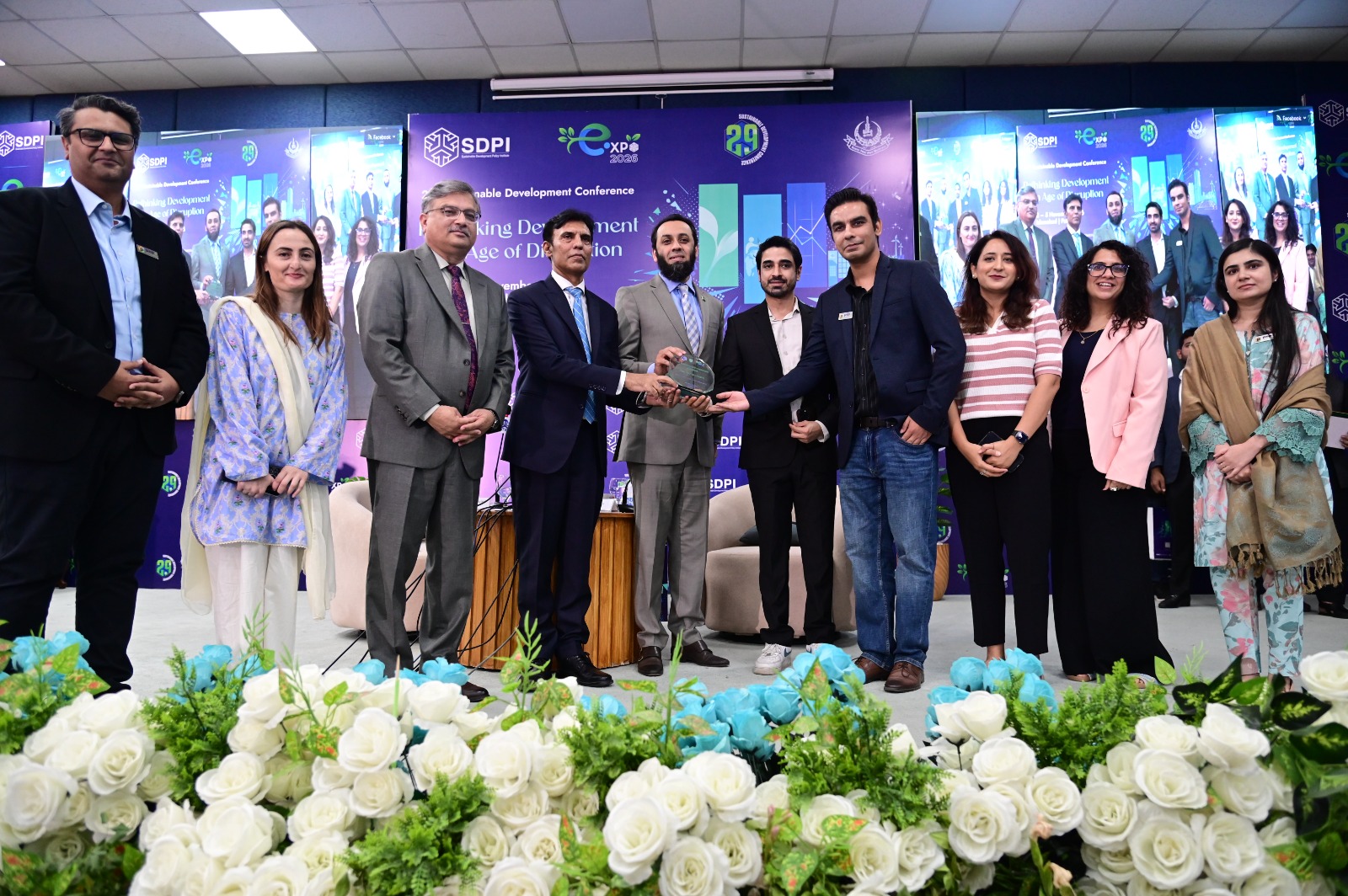
A memento was presented to the Federal Minister for Information by AIOU Vice Chancellor Dr Nasir Javed and Dr Abid Qaiyum Suleri.
Earlier, speaking at a session, titled: ‘Private Sector Growth and the Fiscal Policy Agenda, Minister of State for Finance and Revenue Bilal Azhar Kayani has said that the government is planning to reform tax policy, improve access to finance for small and medium enterprises (SMEs) and incentivize banks to lend to export-oriented businesses as part of efforts to accelerate exports growth and break Pakistan’s recurring boom-and-bust cycle.
The minister said that the government would differentiate between banks extending credit to agriculture and SMEs and those reluctant to finance these sectors, while ensuring policy predictability and a business-friendly tax regime to encourage investment, exports and employment generation.
Kayani acknowledged a trust deficit between businesses and the government, saying policy announcements often failed to deliver results because of implementation problems and multiple regulatory requirements imposed by federal and provincial agencies.
Additional Secretary, Special Investment Facilitation Council (SIFC) and Economic Diplomacy Division, Ministry of Foreign Affairs, Ambassador Abrar H. Hashmi said Pakistan’s ability to attract and retain investment depended not only on available opportunities but also on investor confidence, policy stability and regulatory consistency.
At another session, titled: ‘From Policy to Practice: Strengthening Extended Producer Responsibility (EPR) for Better Systems in Pakistan’, Dr Shezra Mansab Ali Khan Kharal, Minister of State for Climate Change, stressed the urgent need for stronger systems of collection, segregation and recycling, while recognizing the significant reliance on the informal waste collection sector while pointing out the challenges created by differing plastic regulations and enforcement approaches across jurisdictions.
The Minister also shed light on the Single-Use Plastics Prohibition Regulations 2023 and Pakistan’s participation in the Global Plastic Action Partnership (GPAP), which the country joined in 2022, leading to the development of a National Action Roadmap to reduce plastic pollution.

