

Islamabad : The World Health Organization co-organizes a national conference led by the Ministry of National Health Services, Regulations and Coordination to reinforce in the short- and long-term emergency preparedness, health sector coordination, timely efficient data sharing for evidence-based decision-making, resource optimization, predictable funding and uninterrupted delivery of essential health services during emergencies.
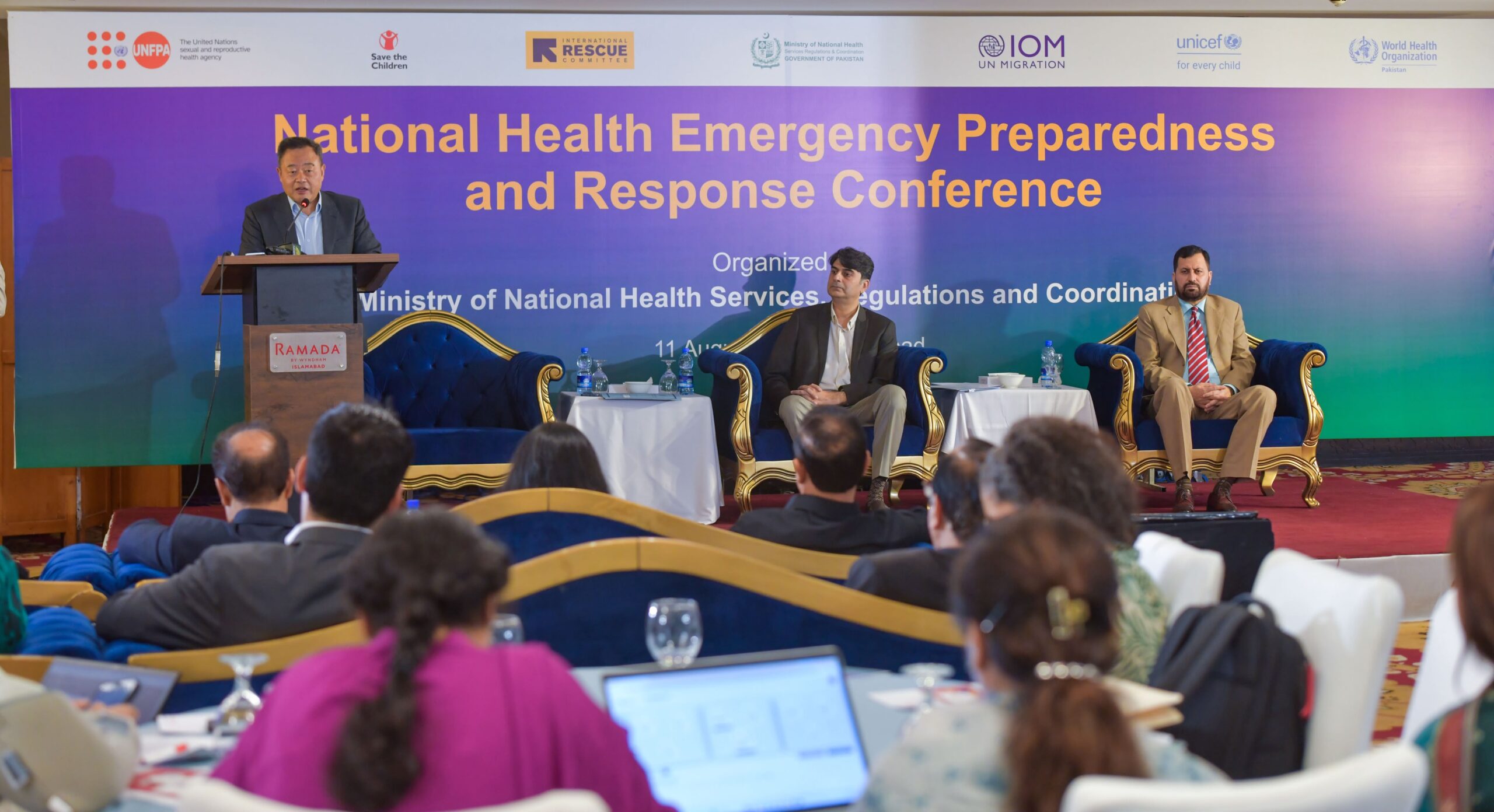
According to an official statement issued by WHO office here , Pakistan Representative Dr Luo Dapeng speaks during the National Health Emergency Preparedness and Response Conference celebrated today in Islamabad. Photo credit: Hamid Inam/WHO Pakistan.
12 August 2026, Islamabad, Pakistan – The World Health Organization (WHO) joined the Government of Pakistan, provincial authorities and partners in a national conference to strengthen health emergency preparedness and response to climate-driven hazards over the long term as the health sector stands ready to activate the Monsoon and Flood Contingency Plan 2026 to assist 1.8 million people in high-risk areas.
Under the leadership of the Ministry of National Health Services, Regulations and Coordination, the objective of the National Health Emergency Preparedness and Response Conference was to reinforce in the short- and long-term emergency preparedness, health sector coordination, timely and efficient data sharing for evidence-based decision-making, resource optimization, and the uninterrupted delivery of essential health services during emergencies, particularly for the most vulnerable, regardless of social or economic status.
The conference was organized by the Ministry of National Health Services, Regulations and Coordination and supported by WHO – as co-chair of the Health Sector –, UNFPA, IOM, UNICEF, the International Rescue Committee, and Save the Children.
“Pakistan’s geographical location means that we are among the first to experience the effects of climate change. From Gilgit all the way down along the banks of the Indus River we can see an entire belt being affected. It is estimated that approximately 60 million people are affected by hazards associated with climate change across this entire area. What we need to discuss today is what our preparedness should look like before we have to respond. In this context marked by climate change, how we cater to and protect vulnerable populations is extremely important,” said Federal Minister of State for Health Dr Malik Mukhtar Ahmad Bharath.
According to the World Risk Report 2024, Pakistan is among the 10 countries most vulnerable to climate change and other overlapping crisis factors, including extreme weather events such as heatwaves, floods that lead to an increase in waterborne diseases, droughts, and air pollution. The Global Climate Index 2026 also ranks Pakistan among the 15 countries most affected by extreme weather events during the period 1995–2024.
“The evidence is clear. Preparedness and timely health emergency responses save lives. In a context marked by increasing climate-driven natural disasters, investing in preparedness and a science-based health emergency response is not only the right thing to do to protect lives; it is also the smartest and most cost-effective decision,” said WHO Pakistan Representative Dr Luo Dapeng.
“When we are able to ensure predictable funding, strong leadership and coordination, and timely science-based interventions, we are in a better position to save lives while also reducing economic costs, since a late intervention is usually more expensive and less effective intervention and takes a toll on human lives.”

