


Imran Nasir Shaikh
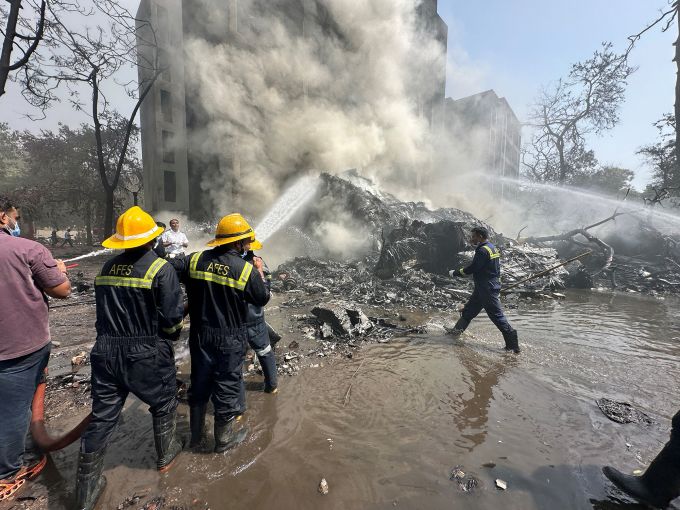
In a tragedy that stunned the nation and rattled the global aviation community, Air India Flight AI171, a Boeing 787-8 Dreamliner, plunged into Ahmedabad’s Meghani Nagar neighborhood moments after takeoff. Bound for London Gatwick, the aircraft carried 242 individuals: 230 passengers and 12 crew. At 13:38 local time, a mayday call was transmitted. Seconds later, radar contact was lost.
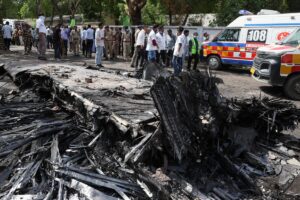
The aircraft, now in freefall, collided with a doctors’ hostel linked to B.J. Medical College. The resulting fireball claimed at least 204 lives.It was the first fatal accident involving Dreamliner since the aircraft’s commercial debut in 2011 and the deadliest air disaster in India in over a decade. Amid the devastation, one man, 40-year-old British Indian businessman Vishwash Kumar Ramesh, emerged as the sole survivor. “There was a bang then everything went black,” he recalled from his hospital bed. Eyewitnesses on the ground described a violent explosion, followed by towering plumes of smoke that engulfed the neighborhood.
From Routine Climb to Catastrophe:
The aircraft used the full 3,500 meters of Runway 23 at Sardar Vallabhbhai Patel International Airport for takeoff. Data showed the jet reached an altitude of just 625 feet before its climb abruptly halted. The mayday call followed swiftly, indicating an emergency that unfolded almost instantly.The experienced cockpit crew, Captain Sumeet Sabharwal with 8,200 hours of flight time and First Officer Clive Kundar with 1,100 hours, faced an extreme emergency in a critical phase of flight.
Authorities suspect a catastrophic failure in either propulsion or flight control systems. Both the cockpit voice recorder (CVR) and flight data recorder (FDR) have been recovered and are being analyzed by the Directorate General of Civil Aviation (DGCA) with assistance from the U.S. National Transportation Safety Board (NTSB), UK’s Air Accidents Investigation Branch (AAIB), the Federal Aviation Administration (FAA), and GE Aerospace, the engine manufacturer.
India Grieves as Forensics Unfold:
Prime Minister Narendra Modi conveyed heartfelt condolences and pledged a full investigation. Air India’s parent company, Tata Group, announced compensation of ₹10 million (approximately $116,855) for each victim’s family. Emergency teams, including the National Disaster Response Force and forensic experts, are conducting intensive recovery efforts.
Among the victims were five medical students dining in the hostel cafeteria at the time of the crash. The aircraft’s impact tore through classrooms and residential wings, transforming a place of learning into a scene of unimaginable loss. Grief is widespread, with many hailing the students as the “future of India’s healthcare” now tragically cut short.
Key Facts at a Glance:
Flight: Air India AI171
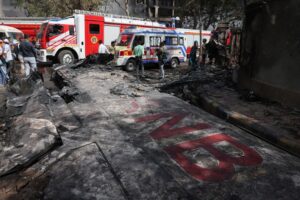
Aircraft: Boeing 787-8 Dreamliner (VT-ANB), 11 years old
Fatalities: 204 confirmed
Survivor: 1 (Vishwash Kumar Ramesh)
Crash Site: Meghani Nagar, Ahmedabad
Suspected Cause: Under investigation (engine, structure, or systems failure)
Investigation Bodies: DGCA, NTSB (US), FAA, AAIB (UK), GE Aerospace
Compensation: ₹10 million (~$116,855) per victim (Tata Group)
Boeing’s Safety Culture in the Spotlight:
When it entered service in 2011, the Boeing 787 Dreamliner was hailed as a revolutionary aircraft. With its carbon fiber composite fuselage and next-generation engines, it promised 20% better fuel efficiency and enhanced passenger comfort. Today, over 1,100 Dreamliners operate worldwide.
Yet its track record has not been without controversy. The global fleet was grounded in 2013 due to lithium-ion battery fires. A Dreamliner caught fire at Heathrow while parked, and subsequent incidents included recurring electrical faults and a midair mechanical failure in 2024 aboard a LATAM 787-9. That same year, Boeing engineer Sam Salehpour raised concerns about manufacturing flaws in fuselage joints, allegations initially dismissed but now revisited amid fresh scrutiny.
The AI171 disaster is not an isolated blow to Boeing’s reputation; it follows a series of deeply troubling events. The crashes of two 737 Max jets in 2018 and 2019 killed 346 people and exposed
major flaws in software design and certification oversight. In January 2024, a 737 Max 9 suffered a midflight door plug blowout. FAA audits later uncovered loose bolts, incomplete documentation, and foreign object debris in newly delivered aircraft.
Insiders have long alleged that Boeing’s North Charleston facility, where VT-ANB was built, prioritized production schedules over quality control. With Boeing’s stock now in sharp decline
and international regulators launching new rounds of inspections, the company faces renewed
questions over its safety culture and oversight standards.
Air India: Tragedy and Turbulence Through Time
Air India has faced numerous tragedies in its operational history. In 2020, a 737 crash in Kozhikode killed 21. In 2010, another in Mangalore resulted in 158 deaths. As far back as 1978, a cockpit instrumentation failure claimed 213 lives in Mumbai. And in 1985, a terrorist bombing on Flight
182 killed 329.
Despite recent modernization under Tata Group, the airline’s operational challenges persist. The ill-fated aircraft, VT-ANB, had completed over 39,000 flight hours and passed recent inspections. However, passengers had previously reported broken inflight systems and worn-out interiors,
superficial issues that now raise serious questions about deeper mechanical health and maintenance
practices.
What Happened in the Final Seconds?
Investigators are examining three primary scenarios:
An uncontained engine failure resulting in asymmetric thrust
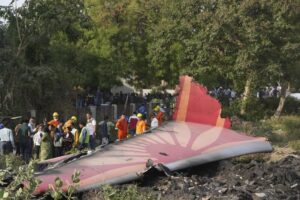
A structural failure such as a dislodged control surface that disrupted aerodynamic stability
A cascading avionics failure that impaired flight instruments
The analysis of black box data will be pivotal in understanding how much time the crew had, what information was available to them, and whether Crew Resource Management (CRM) protocols
were followed under pressure. These final seconds could determine whether the crew had any chance of recovery or whether the event was simply beyond human response.
Global Reverberations at Cruising Altitude In the wake of the tragedy, civil aviation authorities around the world have initiated inspections of
Dreamliner fleets, particularly aircraft of similar age and configuration. Boeing has dispatched technical teams globally, and India’s DGCA has grounded multiple aircraft for checks.
This response marks more than a procedural inspection; it signals a profound crisis of confidence
in Boeing’s manufacturing standards and the aviation sector’s oversight frameworks. Analysts warn that regulatory tolerance of cost-driven shortcuts may now be facing a long-overdue reckoning.
A Wake-Up Call the Industry Cannot Ignore
The crash of AI171 is not merely an isolated incident; it is a watershed moment. It calls into question the balance between speed and safety, and whether critical red flags were normalized or ignored during assembly, inspection, and operations. As investigations continue, the industry is confronted with hard truths. Aviation safety has long depended on an uncompromising commitment to continuous improvement. If the AI171 tragedy
reveals normalization of deviance, it would represent not just a technical failure but a failure of ethos. The sector must now reaffirm its core priority: safety above all

