


The Indus Waters Treaty: Water Must Never Become a Weapon Against Humanity. Recent Judgement by the International Court of Justice The Indus Water,s Western Rivers Arbitration (Islamic Republice Of Pakistan VS Republic Of India )The HAGUE 31August 2026 on the Application of Pakistan dated 4 march 2026 is a great Victory Of the Humanity in the favour of Pakistan 🇵🇰. The Credit goes to Honourable Field Marshal,CODF, COAS Gen Asim Muneer and Lt Gen Worthy DG ISI Asim Malik Sahib and his team. It’s reality that Armed Forces is the CUSTODION Of The Country.
Water is not merely a natural resource. It is the foundation of life, food security, agriculture, livelihoods, environmental sustainability, and the dignity of millions of people.Allah Almighty in Quran Says we Created every thing through Water.
This is precisely why the Indus Waters Treaty (IWT) must not be reduced to another chapter in the political rivalry between Pakistan and India. It is a matter of profound humanitarian, environmental, economic, and regional significance.
The Treaty, signed in 1960 with the assistance of the World Bank, established a framework for the use of the waters of the Indus river system. Despite wars, political crises, and decades of hostility between the two countries, this framework endured and provided an institutional mechanism for managing one of the most sensitive trans boundary water systems in the world.
That history carries an important lesson:
Even when relations between states deteriorate, certain principles must remain above political confrontation.
Water must be one of them.
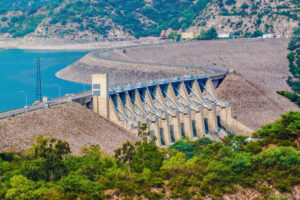
Water Must Not Be Used as an Instrument of Political Pressure
There is a fundamental difference between pursuing legitimate national interests and using a resource essential to human survival as an instrument of political pressure.
The consequences of disruption to water flows do not remain confined to government offices or diplomatic chambers.
They reach the farmer standing in his field.
They reach the family dependent upon agriculture for its livelihood.
They reach livestock and wildlife.
They affect food production, rural economies, employment, and ultimately the ordinary citizen.
For Pakistan, the waters of the Indus river system are indispensable to its agricultural economy and food security. Any serious disruption can therefore have consequences far beyond the immediate question of water allocation.
This is why the issue must be treated with the highest degree of responsibility and restraint.
A Message to India
India is a major country, a rising economy, and an important regional and global power.
With such stature comes responsibility.
Political disagreements between India and Pakistan are neither new nor insignificant. Kashmir, security concerns,Indian involvement in terrorism, borders, and other disputes have created profound tensions between the two countries.
But even in the most difficult circumstances, there must remain certain boundaries that responsible states should not cross.
Water should be one of those boundaries.
If there are disagreements concerning the interpretation or implementation of the Indus Waters Treaty, the appropriate response is negotiation, diplomacy, technical engagement, arbitration, or other mechanisms available under international law and the Treaty framework.
The answer should never be to place millions of ordinary people at risk.
A dispute between governments must not become a crisis for farmers, families, animals, and ecosystems.
The Humanitarian Dimension Must Not Be Ignored
It is easy to discuss water in terms of treaties, rivers, dams, reservoirs, and technical clauses.
But behind every cubic metre of water is a human story.
A farmer invests his savings in seeds, fertiliser, machinery, labour, and irrigation.
He spends months cultivating his land with the expectation of harvesting a crop that will support his family.
If water becomes unavailable at a critical stage of cultivation, that investment can disappear within weeks.
The consequences can include crop losses, rising food prices, declining rural incomes, unemployment, and increased economic pressure on already vulnerable communities.
This is why the water question cannot be viewed exclusively through a strategic or geopolitical lens.
It is, fundamentally, a human issue.
The Environment and Animals Are Also Part of This Equation
Human beings are not the only beneficiaries of rivers.
Rivers sustain livestock, wildlife, wetlands, fisheries, vegetation, and entire ecosystems.
A river is a living ecological system.
Its waters support communities far beyond the immediate location where the river flows.
Any major alteration of natural water systems can therefore create consequences that extend well beyond national borders.
We must remember that the environment does not recognise political boundaries.
Neither does ecological damage.
This is why responsible water management is not simply a bilateral obligation; it is a broader responsibility toward future generations.
A Message to the Media: Exercise Responsibility
There is also an important responsibility that lies with the media in both countries.
The media has enormous influence over public perception.
It can either reduce tensions through facts and responsible journalism, or intensify them through sensationalism and inflammatory narratives.
Water disputes should not become television spectacles designed merely to generate ratings.
Headlines should not transform technical disagreements into calls for confrontation.
Neither should legitimate concerns be suppressed.
The public deserves facts.
The public deserves context.
The public deserves to understand what the Indus Waters Treaty actually provides, what obligations it creates, what mechanisms exist for resolving disputes, and what humanitarian and environmental consequences may follow from decisions affecting transboundary waters.
The responsibility of the media is not to pour fuel on a fire; it is to illuminate the facts.
This applies equally to Pakistani and Indian media.
International Law Provides a Path Forward
The Indus Waters Treaty itself contains mechanisms for addressing differences and disputes.
The framework includes the Permanent Indus Commission and procedures involving a Neutral Expert and a Court of Arbitration for different categories of disputes.
Therefore, when disagreements arise, there are established legal and institutional avenues through which they can be addressed.
This is precisely why the international community should encourage both countries to remain within the framework of law and diplomacy.
Pakistan has maintained that the Treaty remains legally binding and has rejected the idea that it can simply be unilaterally suspended outside its established framework.
India, meanwhile, has articulated its own security and political concerns.
Those differences should be addressed through legitimate diplomatic and legal channels.
The rule of law must prevail over the politics of retaliation.
The World Should Pay Attention
The international community should not view the Indus Waters issue as merely another bilateral disagreement in South Asia.
The principle at stake is much broader.
Across the world, hundreds of millions of people depend upon transboundary rivers.
If water increasingly becomes an instrument of geopolitical coercion, the consequences could extend far beyond South Asia.
Today it may be the Indus.
Tomorrow, another river in another region could become the centre of a similar confrontation.
The international community therefore has a vested interest in ensuring that transboundary water systems remain governed by law, cooperation, technical dialogue, and established international norms.
Water security is becoming a global security issue.
The Reputation of States Matters
In international relations, national power is measured not only by military capability or economic strength.
It is also measured by credibility.
A state demonstrates strength when it honours its commitments, respects international agreements, and resolves disputes through lawful and peaceful means.
The international community watches how powerful states treat those who depend upon them.
If water—one of humanity’s most fundamental necessities—is perceived as being used as an instrument of political punishment, it inevitably raises serious questions about responsibility, proportionality, and humanitarian principles.
No country benefits from an international reputation built upon the suffering of ordinary people.
True strength is not the ability to cause hardship; true strength is the ability to exercise power responsibly.
Pakistan Must Also Prepare for the Future
At the same time, Pakistan must look inward.
Defending water rights internationally is essential, but protecting the country’s water future requires much more.
Pakistan must expand water-storage capacity, modernise irrigation infrastructure, reduce water losses, improve agricultural efficiency, invest in water conservation, strengthen water governance, and develop long-term national water-security policies.
The country cannot afford to depend solely on diplomatic statements after a crisis has already emerged.
Water security must become a long-term national priority.
Pakistan must protect every drop, improve efficiency, modernise agriculture, and prepare for the challenges posed by climate change and growing demand.
Disagreement Is Inevitable. Humanitarian Responsibility Is Not.
Pakistan and India may continue to disagree.
They may continue to compete.
They may continue to have serious differences on security, Kashmir, borders, and other matters.
But disagreement does not justify abandoning humanitarian responsibility.
The people of both countries deserve peace, stability, food security, and access to the natural resources upon which their lives depend.
The farmers of Pakistan should not become collateral damage in a political dispute.
Neither should Indian farmers.
Neither should animals.
Neither should the environment.
And neither should future generations.
A Final Appeal
To India:
Pursue your legitimate interests through diplomacy, dialogue, and international law. Raise your concerns through established mechanisms. Protect your national interests—but do not turn water into an instrument that places ordinary people at risk.
To Pakistan:
Defend your legitimate water rights through every lawful diplomatic and legal avenue available, while simultaneously strengthening your own water infrastructure, conservation policies, and national resilience.
To the media:
Report responsibly.
Investigate thoroughly.
Inform the public.
Do not turn water into a weapon of propaganda.
And to the international community:
Do not wait for a humanitarian crisis before taking the issue seriously.
The Indus is not merely a river.
It is a lifeline.
It sustains agriculture, communities, economies, ecosystems, livestock, and millions of human lives.
The future of South Asia should not be defined by the question of who can exert the greatest pressure over water.
It should be defined by the question of who can demonstrate the greatest responsibility in managing it.
Water must remain a bridge for cooperation—not a weapon of confrontation.
Political disputes can be negotiated.
Treaties can be interpreted.
Differences can be resolved.
But once human lives, food security, and ecosystems are placed at risk, the consequences can extend far beyond the control of any government.
Let diplomacy prevail over retaliation.
Let international law prevail over unilateral pressure.
Let humanity prevail over politics.
Because water is life—and no political dispute should ever 6make humanity pay the price for it.

Hamid Ali Wahlah
Chairman & CEO, Eagle & Legal Eyes Global
Vice President, Pakistan Policy Institute USA 🇺🇸
Former Director, Mega Scandals & Recovery, National Accountability Bureau (NAB) PAKISTAN

