

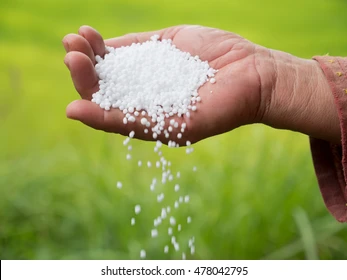
The Government of Pakistan, through S.R.O. 1338(I)/2026, issued by the Ministry of Energy (Petroleum Division) on 7 August 2026 and published in the Gazette of Pakistan (Extraordinary) on 8 August 2026, has declared 23 substances as “explosive precursors” under Rule 5(3) of the Explosives Rules, 2010.
Pakistan is facing a serious policy challenge that deserves urgent reconsideration. The government’s recent decision to bring a range of fertilizers and other chemicals under the regulatory framework applicable to “explosive precursors” may have been motivated by legitimate national-security concerns. However, a blanket approach towards agricultural fertilizers could create consequences far beyond the security objective it seeks to achieve.
Pakistan is an agriculture-dependent country. Millions of farmers rely on timely and uninterrupted availability of fertilizers such as urea, DAP and other nutrient products to produce wheat, rice, maize, cotton, sugarcane, fruits and vegetables. Fertilizer is not a luxury or an optional industrial commodity; it is a fundamental input of national food production.
Therefore, any regulatory framework that makes the ordinary manufacture, import, transportation, storage, distribution and sale of fertilizers unnecessarily complicated must be examined very carefully.
Security must be protected — but regulation must be proportionate
There is no disagreement that materials capable of being misused for unlawful purposes must be monitored. Pakistan has genuine security challenges, and the government has every right — indeed, the responsibility — to prevent the diversion of chemicals and other materials for terrorist or criminal activities.
But national security and agricultural security should not be treated as competing objectives.
The correct question is not whether certain substances can potentially be misused. The correct question is how they should be regulated according to their actual risk, concentration, formulation, intended use, quantity and supply chain.
The government’s own recent notification reportedly identifies a number of substances as “explosive precursors”. This is an important distinction. A substance being classified as a precursor does not automatically mean that every commercial fertilizer product containing that substance should be treated in the same manner as a conventional explosive.
This distinction is particularly important for Pakistan’s fertilizer sector.
Not all fertilizers carry the same level of risk
Calcium Ammonium Nitrate (CAN) and certain ammonium-nitrate-based materials have well-established security sensitivities and may reasonably require enhanced controls.
However, applying identical regulatory requirements to every major agricultural fertilizer — including widely used products such as urea and DAP — without differentiating their actual risk characteristics would be a disproportionate policy response.
The government should therefore adopt a risk-based classification system, rather than placing the entire fertilizer sector under a broad “explosives” regulatory umbrella.
Urea and DAP are primarily agricultural inputs used by millions of farmers. Their legitimate commercial movement takes place through an extensive national distribution network involving manufacturers, importers, wholesalers, dealers, retailers, transporters and ultimately farmers.
If every transaction, movement or storage activity is subjected to procedures designed primarily for explosives, the cost and complexity of supplying fertilizer to farmers could rise substantially.
The farmer will ultimately pay the price
The first victim of excessive regulation will not necessarily be the large manufacturer. It will be the farmer at the end of the supply chain.
Pakistan’s farmers already face high costs of diesel, electricity, seeds, pesticides, machinery, irrigation and transportation. Any additional administrative burden, licensing requirement, delay or restriction on fertilizer movement will ultimately increase the cost of cultivation.
A small farmer cannot afford to wait several days for a fertilizer consignment because a transporter or dealer is unable to fulfil a new regulatory requirement.
Agriculture operates according to seasons and crop cycles. Fertilizer is often required within a narrow window. A delay of days at the wrong stage can translate into lower yields and significant financial losses.
The distribution network is the backbone of food security
Pakistan has built a large and sophisticated fertilizer distribution network over decades. Thousands of dealers and distributors ensure that fertilizer moves from manufacturing plants and ports to remote agricultural areas.
This network should be strengthened, digitized and monitored — not paralyzed.
If fertilizer dealers are required to obtain procedures and licences comparable to those applicable to explosives, many small and medium-sized dealers may simply withdraw from the business.
The result could be:
* reduced availability of fertilizer in rural areas;
* higher transportation and compliance costs;
* delays in delivery during critical crop seasons;
* increased opportunities for black marketing;
* greater regional price differences;
* disruption of legitimate trade; and
* increased pressure on an already vulnerable agricultural economy.
Ironically, excessive restrictions could even create the very security problem the government is attempting to prevent by encouraging undocumented or informal channels of trade.
Food security must remain the ultimate consideration
Pakistan cannot afford to experiment with food security.
The government itself recognises the importance of maintaining stable fertilizer supplies for agricultural production and food security. (Ministry of Food Security)
If fertilizer becomes difficult to obtain, farmers may reduce application rates or delay application. Lower fertilizer use can affect crop productivity, and lower agricultural production can eventually translate into higher food prices, increased imports and greater pressure on the national balance of payments.
In other words, a fertilizer policy is ultimately a food-security policy.
There is a better solution
Pakistan does not need to choose between national security and agriculture.
It can have both.
The government should immediately review the present framework and introduce a risk-based fertiliser control mechanism with clear distinctions between:
1. Conventional agricultural fertilizers;
2. Fertilizers with higher security sensitivity;
3. industrial-grade chemicals;
4. Controlled precursor chemicals; and
5. Genuine explosive materials.
For high-risk products, strict controls, traceability and licensing may be entirely justified.
For mainstream agricultural fertilizers, however, the regulatory system should focus on traceability rather than treating the entire supply chain as an explosives industry.
A modern digital system could allow the government to monitor manufacturers, importers, distributors and dealers through registration, invoices, batch numbers and digital movement records. Suspicious transactions could be flagged automatically without disrupting legitimate farmers and businesses.
Do not punish the entire agricultural economy for the misuse of a few
The misuse of a lawful commercial product by criminals should be addressed through intelligence, law enforcement, traceability and targeted controls.
It should not automatically result in treating millions of legitimate farmers and thousands of legitimate businesses as potential offenders.
Pakistan’s fertilizer dealers and distributors are part of the agricultural economy. They are not the enemy. They are an essential link between the fertilizer industry and the farmer.
The government should therefore engage with fertilizer manufacturers, distributors, dealers, farmer organizations, security agencies and technical experts before implementing a framework that could fundamentally alter the movement of agricultural inputs across the country.
A call for immediate policy review
The government’s security concerns deserve respect. But good public policy requires proportionality.
Pakistan needs strong security controls where there is a genuine risk of misuse. At the same time, Pakistan needs an efficient, affordable and uninterrupted fertilizer supply chain to feed its population.
These objectives are not contradictory.
The government should therefore reconsider any blanket application of explosives-related procedures to ordinary agricultural fertilizers and introduce a science-based, product-specific and risk-based regulatory framework.
The message to policymakers is simple:
Secure the country, but do not compromise its food security.
Regulate genuine risks, but do not criminalize legitimate agriculture.
Track suspicious activity, but keep fertilizer moving to the farmer.
Pakistan’s farmer needs fertilizer, not bureaucracy. And Pakistan’s food security depends on getting that fertilizer to the field — safely, affordably and on time.

Ghulam Ahmad : Pattern-in -Chief All Pakistan Fertilizer Dealers Association

