

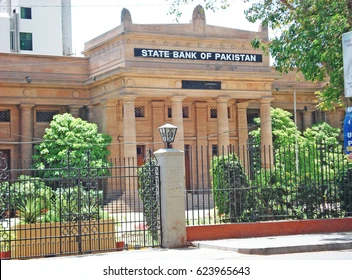
Karachi .At its meeting today (Monday), the Monetary Policy Committee (MPC) decided to cut the policy rate by 100 bps to 11 percent, effective from May 6, 2025. The Committee noted that inflation declined sharply during March
and April, mainly due to a reduction in administered electricity prices and continued downtrend in food
inflation. Core inflation also declined in April, primarily reflecting favorable base-effect amidst moderate demand conditions.
In its handout , SBP said overall, the MPC assessed that the inflation outlook has improved further relative to the
previous assessment. At the same time, the Committee viewed that the heightened global uncertainty surrounding trade tariffs and geopolitical developments could pose challenges for the economy. In this backdrop, the MPC emphasized the importance of maintaining a measured monetary policy stance.
2. While reaching the decision, the Committee noted the following key developments since its last
meeting. First, provisional real GDP growth for Q2-FY25 was reported at 1.7 percent y/y, whereas Q1 growth was revised up to 1.3 percent from 0.9 percent. Second, the current account recorded a sizable surplus of $1.2 billion in March, mainly due to record-high workers’ remittances. This surplus and SBP’s FX purchases partially cushioned the impact of large ongoing debt repayments on the SBP’s FX reserves.
Third, recent surveys suggest further improvement in both consumer and business sentiments. Fourth, shortfall in tax collection has continued to widen. Lastly, global uncertainty, particularly around tariffs, has led the IMF to sharply downgrade its 2025 and 2026 growth projections for both advanced and emerging economies. The
tariff uncertainty has also triggered heightened financial market volatility and a sharp decline in global oil
prices.
3. On balance, considering the evolving developments and risks, the MPC viewed that the real policy rate
remains adequately positive to stabilize inflation in the target range of 5 – 7 percent, while ensuring that the
economy grows on a sustainable basis.
Real Sector
4. Real GDP growth was provisionally reported at 1.7 percent in Q2-FY25, bringing cumulative growth in
H1-FY25 to 1.5 percent. This was in line with the MPC’s expectation. Furthermore, incoming high-frequency
indicators suggest that economic activity is maintaining momentum, as reflected by rising sales of passenger
vehicles and petroleum products (excluding furnace oil), increasing electricity generation, and improving
business and consumer confidence. Nonetheless, the MPC observed that LSM outturns continue to remain
below expectation. This is driven by a sizable contraction in a few low-weight segments and construction-
allied sectors, which are more than offsetting positive growth momentum in key segments, such as garments,
textiles, pharma and automobiles. In agriculture, while wheat output turned out to be better than the target, it
remained lower than last year. The MPC kept its FY25 growth projection unchanged in the range of 2.5 – 3.5
percent and anticipates it to accelerate further in FY26. This outlook is, however, subject to risks, particularly
from global uncertainty and unfavorable weather conditions for the upcoming Kharif season.
External Sector
5. The substantial current account surplus in March 2025 – led mainly by record-high workers’
remittances – propelled the cumulative surplus to $1.9 billion during July-March FY25. The MPC observed
that the moderation in import bill, mainly due to the reduction in global oil prices, along with the continued
uptick in HVA-textile exports, also contributed to the current account surplus in March. However, for April,
PBS has reported the trade deficit to have risen sharply to $3.4 billion. On balance, supported by robust
workers’ remittances, the MPC assessed the current account to remain in surplus during FY25. The MPC observed that the net financial inflows have remained weak till March mainly due to large debt repaymentsand delays in the realization of official inflows. Nonetheless, on the back of the expected realization of
planned official inflows, the MPC expects SBP’s FX reserves to rise to $14 billion by June 2025. Going forward, the MPC expects this build-up in FX reserves to continue in FY26, based on a moderate current account deficit and improved financial inflows. At the same time, the MPC cautioned that this outlook is
subject to risks, particularly those emanating from uncertain global economic and trade environment.
Fiscal Sector
6. FBR tax revenue recorded a sizable 26.3 percent y/y growth during July-April FY25, though it
remained below the target. The MPC noted that the government raised PDL rates, which is expected to
further propel non-tax revenues in the remaining months of FY25. Moreover, estimates from the financing
side suggest that overall expenditures remained relatively contained during July-March FY25. On balance, the
Committee reaffirmed its earlier assessment that while the overall fiscal deficit may remain close to the FY25
target, achieving the targeted primary surplus appears to be challenging. In this context, the MPC highlighted
the need for reforms to put the fiscal sector on a more sustainable footing, especially by expanding the tax net
and reforming SOEs. In this regard, the MPC acknowledged the recent legislations to increase agriculture
income tax collection by the provinces, and emphasized on their effective implementation.
Money and Credit
7. The broad money (M2) growth accelerated to 13.3 percent y/y as of April 18 from around 11 percent
at the time of the last MPC meeting. This was driven by both NDA and NFA of the banking system. The
acceleration in NDA growth was entirely due to uptick in credit to the private sector, which grew by 12.6
percent y/y, reflecting easing financial conditions and improving economic activity. Specifically, firms in
textile, refinery, and chemical and fertilizer sectors increased their borrowing for working capital during July-March FY25 as compared to the same period last year. Auto financing and personal loans have also risen this
year. On the liability side, the currency in circulation recorded Eid-related seasonal increase in March, and
which has partially reversed so far. This has led to an uptick in reserve money growth to 13.1 percent by April
18.
Inflation
8. Continuing its downtrend, headline inflation fell to 0.3 percent y/y in April, driven primarily by food
and energy prices. A sharp decline in wheat and allied product prices, moderation in global commodity prices
and downward adjustment in electricity tariffs were the major drivers of this ease in food and energy prices.
These factors also contributed to the moderation in inflation expectations of consumers. Moreover, core
inflation, after remaining sticky at around 9 percent over the past few months, declined to 8.0 percent y/y in
April. Going forward, the Committee anticipates inflation to gradually inch up in the coming months and
stabilize within the target range of 5 – 7 percent. This outlook is, however, subject to both upside and downside risks emanating from volatility in wheat and other food prices, timing and magnitude of energy price adjustments, potential global supply-chain disruptions and uncertain commodity price outlook.

