

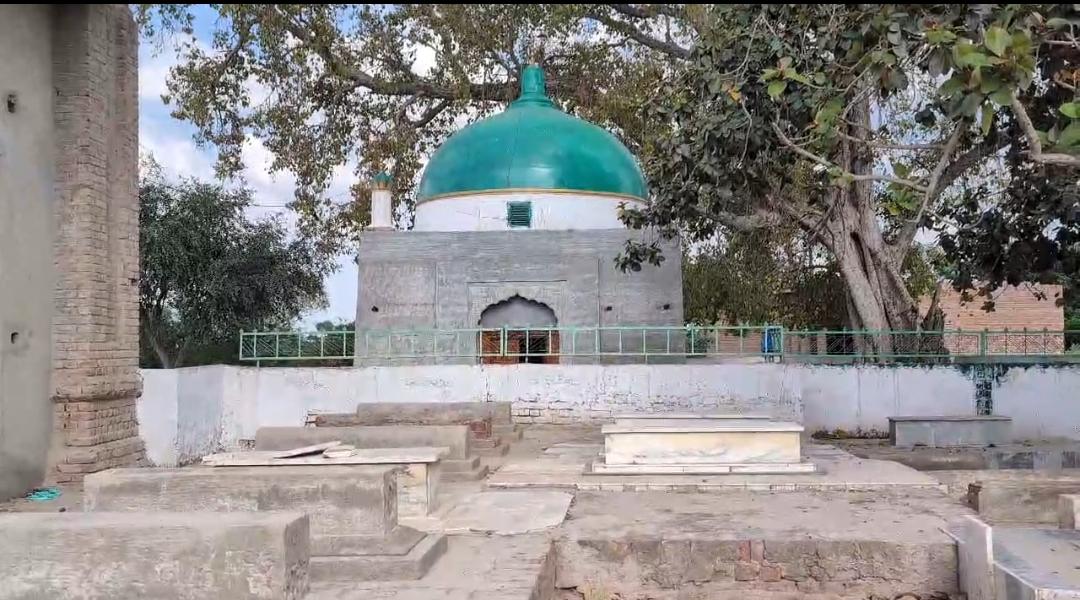
The land of Punjab has long been known as a cradle of Sufism, where the fragrance of love, peace, and spirituality has permeated the air for centuries. It is a region where saints, through their character, teachings, and poetic expression, have guided humanity toward a more meaningful way of life. Among these luminous figures stands Mian Ali Haider Multani, a remarkable spiritual personality born in the sixteenth century in the region of Pir Mahal, District Toba Tek Singh, whose legacy continues to shine through time.
Mian Ali Haider Multani was not only a revered Sufi saint but also a distinguished Punjabi poet. His poetry, rich in spiritual depth and emotional resonance, remains influential even today. Its enduring relevance is evident in the fact that his work is included in academic curricula, where students at Matric, FA, BA, and MA levels continue to study his verses as part of their formal education.
Tracing his lineage reveals that his forefathers migrated from Iraq to the Indian subcontinent. His ancestor, Sheikh Ameen Hashmi Qureshi, settled near the banks of the River Ravi the area at time,s Multan state. During the reign of the Mughal emperor Aurangzeb Alamgir, he was appointed to the position of a Qazi (judge). This association later led to the establishment of a settlement known as Qazi Ghalib, which still stands as a testament to this historical legacy.
Born in 1601, Mian Ali Haider Multani lived a long and impactful life, passing away in 1690 at the age of around ninety. His shrine is located in the village of Qazi Ghalib, near Pir Mahal in the Toba Tek Singh district, and continues to attract visitors seeking spiritual solace.
His contributions to literature are profound. Scholars from leading universities in Pakistan have conducted extensive research on his Punjabi poetry. Academics such as Professor Javed Chandio, Professor Chaudhry Hanif, and Professor Shaukat Ali Qamar have completed doctoral studies focusing on his work, further cementing his place in literary history.
Among his notable writings are Laal Heere, Kulliyat-e-Ali Haider, Kook, and Waseeb. These works are not only treasured pieces of Punjabi literature but also timeless reflections of spirituality, divine love, and moral values. His poetry beautifully captures themes of inner purification, compassion, and the pursuit of truth.
The spiritual stature of Mian Ali Haider Multani is further highlighted by the visits of eminent Sufi figures to his shrine. Notably, Pir Meher Ali Shah of Golrra Sharif spent a month there in devotion and meditation. Additionally, Khwaja Noor Muhammad Maharvi, Khwaja Suleman Taunsvi, and Hafiz Jamal Multani played significant roles in the construction of the shrine.
Today, the custodianship of the shrine rests with Mian Allah Bakhsh, who continues to uphold and promote the teachings of his ancestor. According to him, the message of Mian Ali Haider Multani revolves around love, unity, and humanity. Visitors to the shrine often express that they find not only spiritual comfort through prayers but also inner peace through his poetic verses.
In essence, the shrine of Mian Ali Haider Multani is far more than a historical monument, it is a living institution of spiritual learning. Even today, it serves as a source of inspiration, reminding society of the enduring values of tolerance, compassion, and human connection. The teachings of the Sufis remain a guiding light, one that continues to illuminate hearts across generations without ever fading.

Dr Maqsood Ahmad Shanawar
The author is a lawyer by profession and contributor for NEWSMAN

