

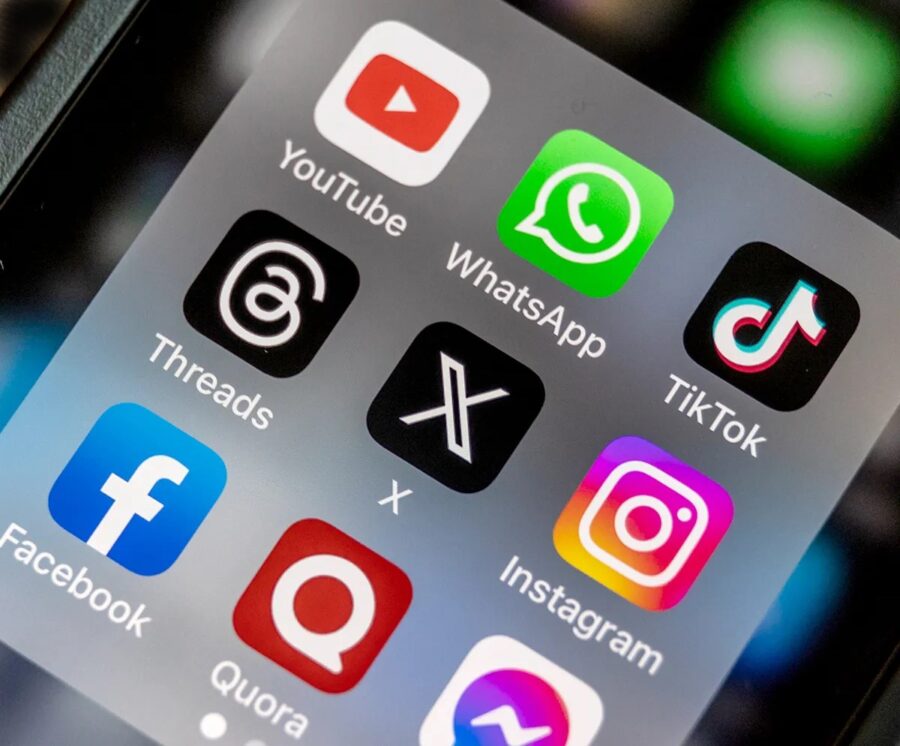
The youth in Pakistan are the most connected ever. The bigger problem is if they have ever been more in control of their own attention.
It’s a strange world we live in. We are more digitally connected than ever and the question has been raised about how we can maintain our emotional presence, mental focus and emotional social connections. The smartphone is no longer just an instrument for communicating, it’s also a mini console, a store, an arena for social validation for lots of youngsters. We document our lives on the screens, we count our popularity by the number of likes and the value of our lives by reactions from out of our circle.
There’s a serious question which needs to be addressed below this culture of connectivity: if our attention is the product, are we still the social media user or are we the most valuable resource of social media?
The economy of attention: whose time is it anyway?
It’s not just a matter of winning our attention with modern platforms, it’s a matter of capturing it. There is a method to the madness with notifications, personalised recommendations and endless scrolling. They’re constructed so that they will tempt the user to revisit them again, as each extra moment the user is spending online is a chance to provide them with content and advertising.
One thing that we have to take care of is not only that youths spend a lot of time on their phones, but also that they spend too much time on their phones. It is that for some users it can be more difficult to turn the computer off, and more difficult to focus on something they have to be patient with, reflect on, and concentrate on. If a student can’t read a chapter without pulling for the phone, he or she isn’t just a weak person with bad will, he or she is facing some of the most complex systems designed by some of the most technologically advanced companies in the world.
There, it is crucial to protect our attention, as it is to protect our independence. If they cannot determine where they’re going to focus, they’ll struggle to determine where they’re going to focus for the future.
Digital Paradox of Pakistan: Opportunity amidst Vulnerability
Social media for Pakistan is an economic opportunity as well as social challenge to the overwhelmingly youthful population of Pakistan. Digital platforms create new possibilities in the fields of freelancing, entrepreneurship, online learning and expression of creativity. A young person with a small budget can demonstrate a competency, establish a business career or engage customers in a business without ever opening a store or a traditional business entity. A phone is a work and office, a school and a store — all in one for many families.
But there are not equal gains to connectivity. Young people’s use of these platforms is influenced by disparities in digital literacy, the quality of education received and family income and parental guidance. With the same phone and the same data plan, one user becomes a small business and the other is drawn further into hours of passive scrolling, unverifiable claims and negative comparison. The same technology applies. The results are no.
In addition, misinformation adds an extra layer of vulnerability. Today’s youth who have grown up in a society of forwarded messages and viral clips are easy pawns of rumours not knowing how to check the source. Empowering people to participate digitally, but not digitally literate, is not empowering them.
But our challenge is to not discourage digital participation. It’s for connectivity to be a force of capability, not a negative influence, misinformation or doom.
The Psychology of Comparison
Social media is always filled with carefully curated images of success, beauty, wealth and happiness. We’re aware that when we see something on the internet, it’s not necessarily true. But, as we are repeatedly exposed to these illustrations, they can also influence our conception of what a good life is, and how we perceive our own life relates to that.

For some of the youths, obtaining likes, comments, and followers is almost synonymous with self-esteem and social acceptance. Others are feeling the pressure to present an idealised online persona and find themselves caught up in normal life with normal problems like exam stress, family pressure, an uncertain job market etc. With the expectations on young people as they are in a country, the difference between the curated and the lived can be a silent burden.
However, it’s important to recognize that there is a complexity when it comes to social media and mental health. The impact of the effects depends on individual circumstances, patterns of use, content of what is encountered and the quality of the offline relationships. An online community can be a lifeline to an online teen who feels lonely, but it can also reinforce insecurities to another. The goal should be to try to comprehend these differences instead of equating the same effects for all young visitors. There is no such thing as being too late to alarmed or too early to alarm.
The responsibility of companies that develop technologies.
Much of the public debate focuses on the individual – reduce your use of your phone, go to “airplane” mode, behave. While personal responsibility is important, it can’t be the only solution because the other side of the game is a business model that focuses on maximizing time spent.
Higher demands are to be made on companies which are engaged in technology. Is there a default setup that caters to the needs of young users? Is there a benefit to providing information, or simply provoking? Do age protections have any substance or are they merely nominal? Are the incidents of harassment and harmful material equally being reported in Urdu, Punjabi, Sindhi and Pashto media as in English media? It is not an unreasonable demand that transparency regarding the influence of algorithms on the viewers be included in the conditions to which an algorithm has to conform in order to operate in a society whose children are part of the audience.
Adolescent usage of digital media and their experiences online have been the focus of increasing attention from international organizations, including the World Health Organization and UNICEF, and research institutions, including the Pew Research Center, which has tracked teens’ social media habits. These efforts lead to an obvious conclusion: It is necessary that responsible design and sensible regulation and informed users go hand in hand.

The policy makers in Pakistan should be aware that thoughtfully designed protection measures with evidence based approach is preferable than a simple restriction that is likely to prevent many young people from learning and earning on the internet.
A Shared Responsibility
Parents also have a part to play and it’s more than just phone confiscation. Children imitate adults; an example of this is a family that dines in front of a screen, and is an inadequate environment for instruction in moderation. Media literacy should not be an add-on, but a fundamental competency for students, which helps them to check the accuracy of a statement, identify manipulation and regulate their use of the internet.
But it’s also important for young people to start with small acts of awareness by asking themselves “why am I opening this app before I do it?,” “how does this type of content make me feel?,” or “How many hours of my time would I like to dedicate to studying, sleeping, or spending time with my family? These are small changes, but they make an important difference: “chosen not captured” in terms of attention.
The question for Generation Z isn’t really about accepting or rejecting technology but using it in a aware, purposeful and controlled way. The opportunities in social media offer the potential of a classroom, a marketplace, a source of creativity, and a connection between cultures. But it cannot take the place of meaningful relationships, independent thought or experiences in the development of character.
All parents, teachers, policy-makers and users of technology have a role to play in recognising that technological advances are insignificant without advances in human health. The future is not just for those who stay connected, but for those who can and will connect and disconnect at the right times and take digital access to achieve meaningful results.
Nayab Idrees : The writer is a freelance journalist and PhD scholar who frequently writes on social, political, and educational issues. She can be reached at [email protected].

