

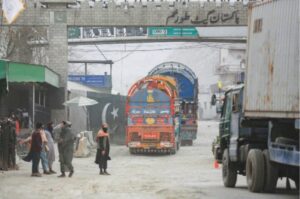
PESHAWAR – In a significant breakthrough for cross border trade between Pakistan and Afghanistan, authorities have finalized arrangements for the return of more than 1,600 Pakistani cargo trucks that have remained stranded in Afghanistan for nearly eight months.The phased repatriation process will commence on June 11 through the Torkham border crossing, following a key jirga convened under the supervision of Peshawar Commissioner Riaz Mehsud.
The decision was reached during a high level consultative meeting attended by local tribal elders, transporters, traders, customs officials, border management authorities, and representatives of relevant government departments.Participants discussed the prolonged difficulties faced by transporters and businesses due to the disruption and agreed on a mechanism to facilitate the orderly return of stranded vehicles.
According to the agreed plan, Pakistani trucks currently stranded in Afghanistan will be allowed to cross into Pakistan daily from morning until 2:00 p.m.Beginning at 2:00 p.m, border authorities will resume the scheduled repatriation process of Afghan nationals returning to Afghanistan, ensuring that both operations continue without disruption.

Thousands of Transporters Affected
Sources familiar with the matter said that border related restrictions, administrative complications, and intermittent disruptions at the Torkham crossing had left more than 1,600 Pakistani commercial vehicles stranded on the Afghan side of the border.The prolonged impasse caused substantial financial losses for transport companies, exporters, importers, and truck owners.Many transporters reported that vehicles carrying commercial goods remained immobilized for months, resulting in increased operational costs, delayed deliveries, contractual penalties, and severe financial strain on drivers and transport businesses.Industry representatives estimate that the disruption adversely affected regional supply chains and reduced the efficiency of bilateral trade flows, particularly for goods moving between Pakistan, Afghanistan, and Central Asian markets.
Traders and Transporters Welcome the Decision
Transporters and business leaders have welcomed the agreement, describing it as a timely intervention that could help restore confidence among stakeholders engaged in cross border commerce.
Speaking after the jirga, several participants emphasized the importance of dialogue and consultation in resolving border related disputes.They argued that sustained engagement among government authorities, tribal elders, traders, and transport associations remains essential for preventing future disruptions.
Business representatives noted that the return of stranded trucks would help clear logistical bottlenecks and enable transport operators to resume normal commercial activities after months of uncertainty.
Experts View Move as a Positive Step for Regional Trade
Economic and trade experts view the decision as an important development for Pakistan Afghanistan commercial relations.
Analysts point out that Torkham serves as one of the busiest and most strategically important border crossings between the two countries, handling a significant portion of bilateral trade.Any prolonged disruption at the crossing not only affects transporters and traders but also impacts supply chains, customs revenues, and market stability on both sides of the border.According to trade experts, the phased return of the stranded vehicles is expected to reduce congestion, improve the movement of goods, and gradually restore confidence among investors and businesses involved in regional commerce.
They further noted that smooth functioning of the Torkham crossing is critical for Pakistan’s trade connectivity with Afghanistan and onward access to Central Asian markets.Stability at the border, they argue, contributes directly to economic activity, employment generation, and regional integration.
Confidence Building Measure
Participants in the jirga described the agreement as more than a logistical arrangement, calling it a confidence-building measure that demonstrates the effectiveness of negotiation and mutual understanding in addressing cross-border challenges.
Observers believe that the successful implementation of the plan could pave the way for broader cooperation on trade facilitation, border management, and transportation issues between the two neighboring countries.With the return process set to begin on June 11, transporters and traders are hopeful that the long-standing issue will finally be resolved, allowing commercial activity at the Torkham border to normalize and strengthening prospects for sustained economic engagement between Pakistan and Afghanistan.

