

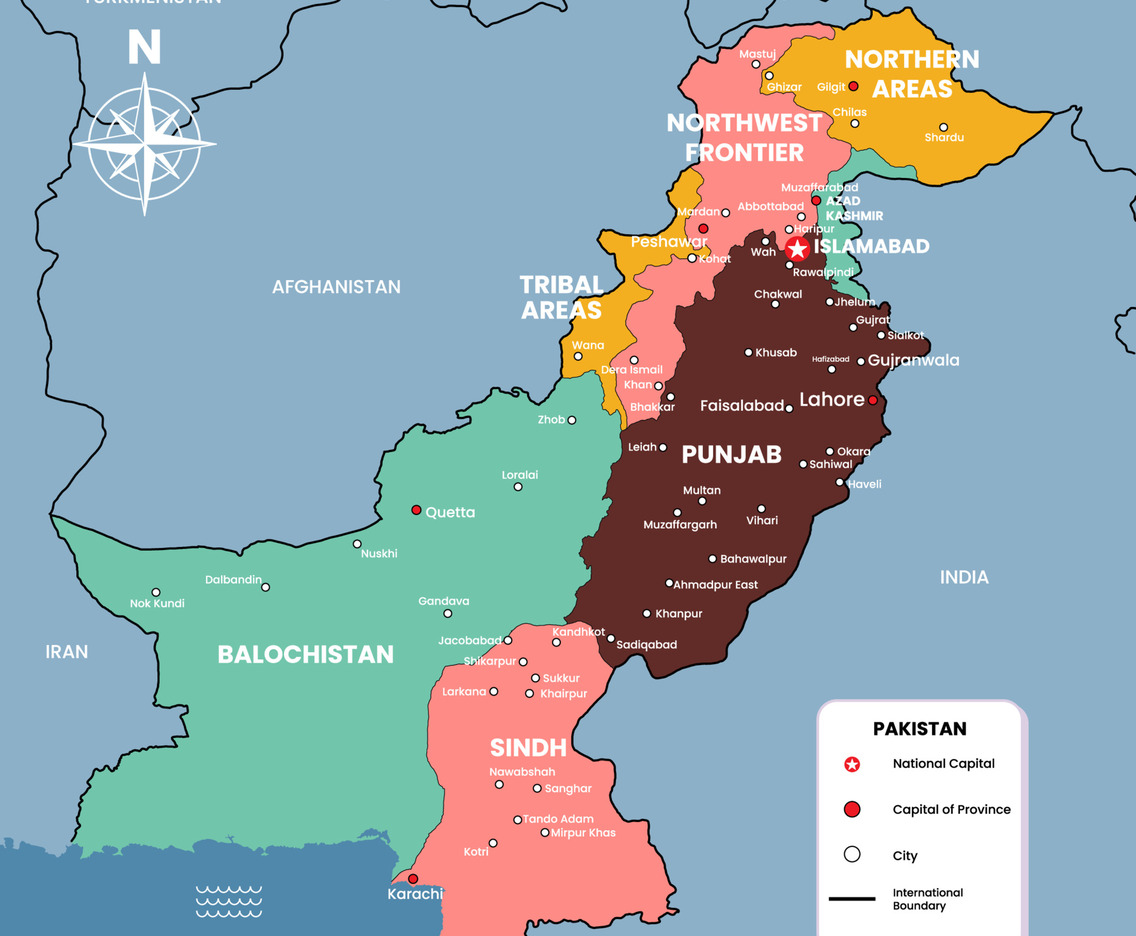
There is a growing debate in Pakistan about creating more provinces, with some even proposing that the country should be divided into as many as 32.
It is an important debate and one we should have.
But before we start drawing new lines on the map, perhaps we should first ask a more fundamental question.
*What exactly are we trying to fix?*
If the objective is better governance, greater representation and bringing government closer to the people, then I am completely in favour of it.
Pakistan desperately needs decentralisation. Power needs to move away from Islamabad and the provincial capitals and closer to the people.
*But decentralisation and multiplying provinces are not the same thing.*
The United States is often cited as an example. America has 50 states, so the argument goes, why can’t Pakistan have 20, 30 or 32 provinces?
Because that comparison ignores how America actually governs itself.
The United States does not stop at Washington and 50 state capitals.
Below the states are counties. Below and alongside counties are cities, towns and townships. Then there are elected school boards and thousands of special districts responsible for water, transport, fire protection, hospitals, ports, parks and other public services.
A citizen may simultaneously elect a President, Governor, Congressman, State Legislator, Mayor, County Commissioner, Sheriff and School Board.
And critically, many of these governments have clearly defined responsibilities and access to revenues with which to perform them.
That is decentralisation.
*It is not Islamabad being replaced by 32 smaller Islamabads.*
Pakistan’s problem is not simply that our provinces are too large. Our problem is that power remains too concentrated at every level.
We already have four provinces, yet we struggle to resolve fundamental questions of resource distribution between them, particularly water.
If the institutional mechanisms for resolving disputes between four provinces do not function effectively, how does multiplying those disputes eightfold solve the underlying problem?
It doesn’t.
*You don’t fix dysfunction by multiplying it.*
*What Pakistan needs is genuine devolution.*
Imagine empowered elected local governments in Karachi, Hyderabad, Sukkur, Lahore, Multan, Faisalabad, Peshawar, Quetta and across our districts, towns and communities, with constitutionally protected tenure, clearly defined responsibilities and predictable financial resources.
A mayor who actually has the authority and resources to run his city.
A district government accountable to the people living in that district.
Local governments that cannot disappear simply because a provincial chief minister finds them politically inconvenient.
Specialised authorities responsible for water, sanitation, transport and other essential services that are professionally managed and publicly accountable.
That would be a serious conversation about governance reform.
But before undertaking such a fundamental restructuring of the federation, there is an even more basic question.
*Who has the democratic legitimacy to redesign Pakistan?*
A restructuring of this magnitude cannot be imposed by unelected institutions, technocrats or a government whose mandate itself is disputed.
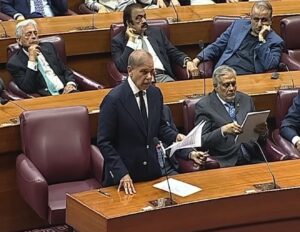
It requires national consensus and representatives carrying an unquestionable mandate from the people.
That brings us to the real problem.
*Pakistan first needs free and fair elections.*
*It needs an independent and credible judiciary capable of enforcing its own decisions.*
*It needs functioning constitutional institutions.*
And it needs genuine political, administrative and fiscal devolution to the grassroots.
Once those foundations exist, Pakistan can have an intelligent national debate about whether four provinces, eight provinces or thirty two administrative units best serve its people.
Maybe we eventually conclude that Pakistan does need more provinces. Maybe we don’t.
But that decision should come from a serious examination of governance, demographics, resources, economic viability and the wishes of the people, not from drawing arbitrary lines across a map and pretending we have solved the problem.
Because changing the number of provinces while leaving the same dysfunctional concentration of power intact achieves very little.
You simply create more governors, more chief ministers, more ministers, more assemblies, more bureaucracies and ultimately more competition over the same resources.
*Don’t confuse division with devolution.*
Pakistan does need reform.
Pakistan does need decentralisation.
Pakistan does need power transferred to the people.
*But first, fix the system. Then, if necessary, redraw the map.*
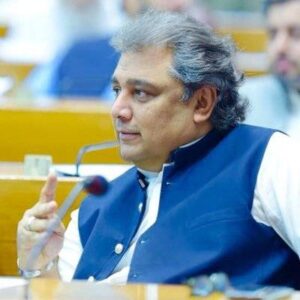
Ali Haider Zaidi
_Former Federal Minister_
[email protected]

