

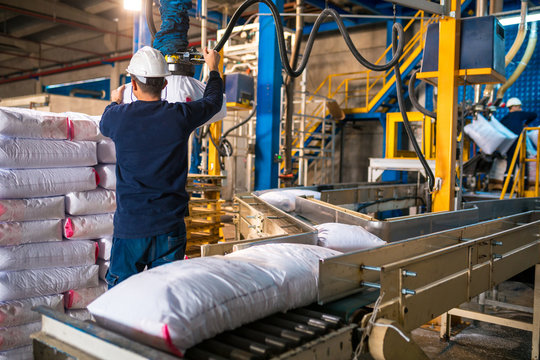
ISLAMABAD — Escalating geopolitical tensions in the Middle East, coupled with disruptions to Qatari gas exports and the closure of the Strait of Hormuz, have triggered a profound shock across global fertilizer markets. The Gulf region—accounting for nearly one-third of global urea exports—has witnessed a sharp contraction in production and logistics, leading to severe supply constraints and unprecedented price escalation.
International urea prices have surged to USD 740–750 per ton, reflecting the compounded effects of feedstock shortages, shipping disruptions, and heightened market uncertainty. For import-dependent economies, particularly in South Asia, the crisis has translated into delayed shipments, tightened availability, and significantly elevated procurement costs.
For Pakistan, where urea constitutes a critical input for staple crops such as wheat and rice, the implications are substantial. Current estimates place the landed cost of imported urea between PKR 13,700 and 14,700 per bag, compared to the domestic price of approximately PKR 4,400 per bag. This differential—exceeding threefold—captures the extent of exposure that has effectively been mitigated through domestic production.
At the core of this resilience lies Pakistan’s indigenous fertilizer industry. Leveraging local gas resources and established production infrastructure, domestic manufacturers have maintained uninterrupted supply, insulating farmers from global price volatility. Presently, the industry holds an inventory of approximately 0.9 million tons of urea, sufficient to meet demand requirements for the upcoming Kharif season, contingent upon continued plant operations throughout the year.
The stabilizing role of domestic production extends beyond affordability. In agricultural systems, fertilizer application is closely correlated with yield outcomes. Elevated input costs typically lead to reduced usage, which in turn suppresses crop productivity and exacerbates food inflation. By maintaining price stability, the domestic fertilizer industry has effectively interrupted this inflationary transmission mechanism, safeguarding both farm economics and broader food security.
However, the situation presents a contrasting challenge in the case of Di-Ammonium Phosphate (DAP). Domestic DAP production remains structurally constrained, with output estimated at approximately 0.7 million tons per annum, primarily from a single manufacturing facility. In contrast, Pakistan’s total DAP requirement fluctuates between 1.3 million and 2.3 million tons annually, necessitating substantial reliance on imports.
This structural gap renders the country particularly vulnerable to prolonged disruptions in the Middle East. Any sustained constraint on global DAP supply is likely to precipitate a sharp escalation in international prices, replicating—and potentially exceeding—the volatility observed in urea markets. In this context, ensuring uninterrupted gas supply to the sole domestic DAP production facility assumes critical importance as a means of minimizing external dependence.

The ongoing crisis thus reinforces a central policy imperative: domestic fertilizer production must be treated as a strategic asset rather than a purely commercial enterprise. The capacity to produce and supply essential agricultural inputs locally has demonstrated its value as a buffer against external shocks, preserving both economic stability and food security.
As global supply chains continue to face uncertainty, the lesson is unequivocal. In moments of international disruption, it is domestic industrial capacity that sustains agricultural continuity—keeping fields productive, markets stable, and food systems secure.
