

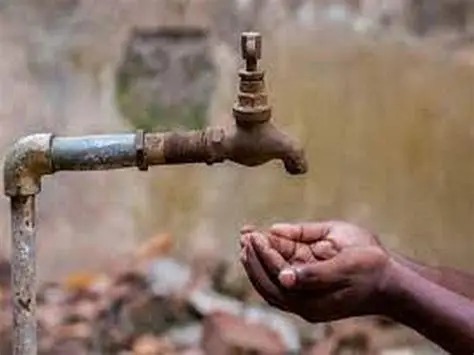
Rawalpindi : Groundwater problems in Rawalpindi are becoming dangerously serious. The Punjab government has accelerated the construction of dams and other important infrastructure in Rawalpindi to overcome the water crisis, the district administration and the concerned departments seem powerless against illegal hydrants and the influential tanker mafia.
The rampant development of illegal hydrants and tankers has badly affected the groundwater level and due to these illegal hydrants, water sources in Rawalpindi have dried up. The recent attempt by the government to bore near Government Girls High School, Carriage Factory Colony, Rawalpindi Cantt. failed miserably. The illegal water business is spread across several areas including Chakri Road, Adiala Road, Girja Road, Misrial Road, Chakra, Sadiqabad, Gulzar Quaid, Dhamial, Dhok Syedan, Dhok Chaudhryan, People’s Colony, Tench, Harley Street, Lal Kurti, Tali Mohri and other areas.
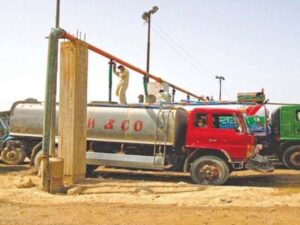
Self-styled local companies are earning millions of rupees daily from the supply of water, while the administration is playing the role of a silent spectator. Remember that 80 diseases are caused by unsuitable and poisoned water. 9% of deaths in Pakistan are due to the use of poisoned water, while children are more affected and more susceptible to it, who are also facing other deadly diseases like cholera, typhoid, skin diseases, hepatitis A and B, and kidney diseases.
And the poisoned water of local companies is everywhere. Local water companies, without any permit and without obtaining authority from any institution, are illegally selling poisoned water at cheap prices by labeling it with self-styled names. The number of illegal water hydrants and tankers is increasing at an alarming rate, which is increasing the current water shortage.
Illegal water tanker mafia is selling water to residents for between Rs 2000 and Rs 2500 per tanker. Despite the clear water crisis, the local administration has failed to stop the spread of private tanker mafia and unauthorized commercial tube wells exploiting groundwater. The responsibility of water supply falls on the Cantonment Boards, Water and Sanitation Agency (WASA) Rawalpindi. However, both the institutions have failed to discharge their responsibilities. The unbridled development of these illegal hydrants has severely affected the groundwater level. Residents lament the lack of water sources due to these unauthorized activities. In 2023, following the directions of the Lahore High Court, the Rawalpindi district administration started collecting data on illegal hydrants and ensuring the provision of clean water to the citizens at reasonable prices. In which a committee was formed to standardize the rates of water tankers and provide clean water. According to the survey, 59 unauthorized water hydrants were identified in areas of Rawalpindi city, and it has been found that there are more than 89 illegal hydrants in Rawalpindi district. Illegal commercial tube wells in Rawalpindi have significantly reduced the water level. Due to which many domestic tube wells have dried up. Until it is clarified through legislation, we cannot move towards effective management of groundwater.
The fact that many different institutions have control over groundwater in Punjab and their jurisdictions also overlap with each other, the Punjab government should immediately pass new laws, impose a complete ban on illegal boring of groundwater by private individuals around intersections, streets, public roads, roads, parks and grounds, make it mandatory to obtain a license from the relevant department for boring tube wells, take strict action against illegal commercial tube wells, impose stiff fines, and do not regulate the business of illegal commercial tube wells.The water crisis in Rawalpindi can be ended with the construction of new dams Daducha and Chahan and the completion of projects to conserve rainwater. The construction of underground water tanks in the cantonment and city areas will make millions of gallons of water available daily. Work is underway on the construction of new Daducha and Chahan dams.
Similarly, the water capacity of Rawal and Khanpur dams can also be increased. Every year, the residents of Rawalpindi and Chaklala Cantonments face severe shortages due to lack of water storage facilities. Priority should be given to the release of allocated funds for timely completion of underground tank projects to ensure water supply to the public. Underground projects that are to conserve rainwater. Construction of underground water tanks with a storage capacity of 200,000 gallons per day in Bhata Chowk and 100,000 gallons per day in Gowalmandi. Projects are underway in Naseerabad, Barf Khana Chowk, Ghaziabad, Afshan Colony, Tench Bhatta, Tahli Mohri and Wards 7, 8, 9 and 10 of Chaklala Cantonment, each designed to store 50,000 gallons per day.The groundwater level in Rawalpindi city has dropped below 700 feet, which is the result of the actions of the mafia operating illegal hydrants in the city, cantonment and rural areas.
If immediate steps are not taken to prevent the depletion of groundwater reserves, disastrous consequences will emerge. The district administration and the concerned departments seem helpless against the influential mafia dominating this illegal business. Water is sold at high prices from these illegal sources, which further aggravates the plight of the citizens. One tanker is barely enough for two days, their solution lies in the implementation of government-led water schemes. Only when citizens are provided with sufficient water through legitimate channels will the demand for illicit water reduce. However, complete dependence on water from Rawal Dam or underground tube wells is not enough. The Punjab government should expedite the construction of Daducha Dam and other important infrastructure to end the water crisis in Rawalpindi. Due to the lack of regulatory control over prices or water quality, citizens have no choice but to fall prey to the exploitative practices of the mafia.
According to Section 11(i)(a) of the WAPDA Act, 1958, WAPDA ‘has control over the underground water resources in any area of a province.’ The same text will be found in Section 8 of the Punjab Irrigation and Drainage Authority Act, 1997, which gives this authority ‘control over the underground water resources in any area of the province.’ A situation has arisen in which the underground water of Punjab is managed by two different institutions, one of which is provincial and the other federal. That under Section 62A of the Irrigation and Drainage Act, 1873, it is the responsibility of the provincial government to ‘properly manage groundwater for the conservation of groundwater reserves’ is the third law that empowers another body to protect, regulate and manage groundwater.
Apart from this, the Punjab Development of Cities Act, 1976 or RDA Act is applicable in cities, where the relevant authority of each city has the right to ‘use groundwater resources without any participation from others’ in its area. The question is how the authorities should work with local governments in an environment where they also have the same responsibilities and powers under the law? These laws are applicable in different contexts and it is possible to interpret them while keeping them consistent with each other, i.e. we have vague ownership rights of groundwater, that after the legal changes are made, legal interpretations have to be prepared regarding the law of ownership rights and the rights of users. For example, under section 7(g) of the Easements Act 1882, every landowner still has the right to ‘collect all water’ under his land. This is based on an ancient concept from Roman law according to which the landowner has a right of ownership to an infinite depth and height above and below that land.

