

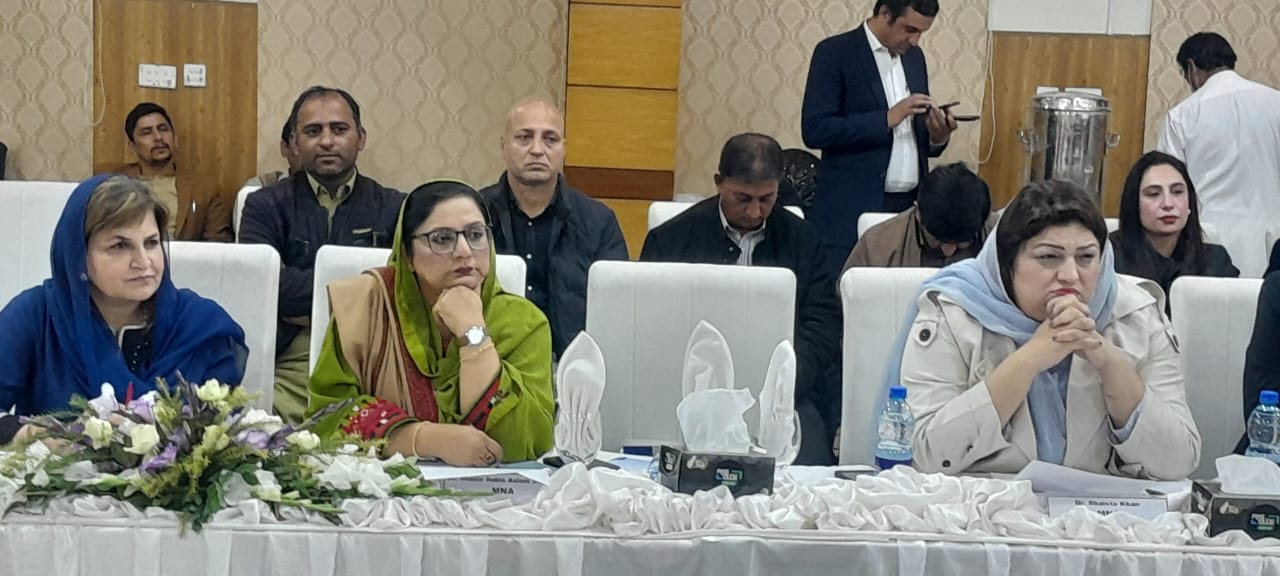
Islamabad: Serious weaknesses in the country’s health system were laid bare during a meeting of the National Assembly’s Standing Committee on National Health, where members expressed grave concern over the shortage of insulin and diabetes medicines, the quality of drugs being provided at discounted rates, and the excessive use of antibiotics.
The Committee issued a clear warning that if immediate corrective measures were not taken, public health could face a major crisis.
The meeting of the Standing Committee was held under the chairmanship of Dr. Mahesh Kumar Malani. Members stated that diabetic patients across the country were unable to obtain insulin and certain specific brands of medicines, and even where these were available, questions were being raised about their quality. Members also voiced reservations about the 30 percent discounted medicines being provided to parliamentarians and asked whether quality was being compromised in exchange for lower prices.
The Committee was informed that samples of medicines had been taken from the Parliamentarians’ Dispensary and PIMS and sent for laboratory testing, and that the reports would be presented to the Committee. Acknowledging the concerns raised by members, the Minister for Health assured them that the relevant pharmaceutical companies and institutions would be summoned in the next meeting to provide detailed explanations.
The Committee also questioned the pharmacy tender awarded to the Federal Government Hospital at a 69 percent discount, asking whether the benefit of this discount was actually reaching ordinary patients. The Drug Regulatory Authority maintained that inspections were ongoing and that procurement had been carried out in accordance with PPRA rules; however, members remarked that paperwork alone did not guarantee public relief.
Another alarming issue highlighted in the meeting was antimicrobial resistance. The Health Minister stated that the excessive use of antibiotics in livestock was increasing resistance in humans, describing it as a silent but dangerous health crisis. The Committee recommended promoting preventive and lifestyle-based medicine instead of focusing solely on treatment, and proposed that lifestyle education be included in medical and other educational curricula.
Regarding reforms in the nursing sector, the Committee was informed that following the implementation of the new Nursing and Midwifery framework, the old law had been repealed. The Ministry of Law confirmed that the new ordinance would be presented before the National Assembly, while the Minister assured that the Standing Committee’s concerns would be addressed in the first meeting of the new Council. In light of these developments, the Nursing Amendment Bill was disposed of.
On the other hand, the performance of the Health Services Academy was appreciated, but members raised tough questions about admissions, faculty recruitment, budgetary issues, plagiarism in theses, the use of artificial intelligence, and student representation from Khyber Pakhtunkhwa and Balochistan. The Academy’s administration maintained that all processes were being carried out strictly in accordance with merit and rules, and that the relevant documents would be provided in the next meeting. During repeated questioning by Dr. Shazia Sobia Aslam Soomro, the Vice Chancellor of the Health Services Academy appeared visibly flustered and, instead of giving clear answers, responded evasively.
The meeting also discussed HIV testing surveys, the availability of testing kits, and transparency in results. Members emphasized that clear and coordinated information was essential to maintain public trust. On this occasion, the Health Services Academy complained that certain private elements were deliberately attempting to malign the institution and that legal action would be taken against them.
At the conclusion of the meeting, the Standing Committee delivered a blunt message that shortages of medicines, questions over quality, and weak oversight were no longer merely administrative issues but had become matters of public survival. Stressing better coordination between the Ministry and its subordinate departments, timely sharing of information, and concrete action, the Committee warned that any delay in reforms would ultimately be paid for by patients with their health.
The meeting was attended by MNAs Zahra Wadood Fatemi, Farah Naz Akbar, Dr. Shazia Sobia Aslam Soomro, Dr. Nikhat Shakeel Khan, Dr. Shaista Khan Jadoon, Gul Asghar Khan, Aliya Kamran, and Farukh Khan. The Minister for NHSR&C, senior officials from the Ministry, and representatives of PMDC and DRAP were also present.

