


A modern state cannot function as a sovereign political entity if it allows individuals, political organizations or religious groups to exercise coercive power independently of its constitutional institutions. The defining characteristic of a modern state is its monopoly over the legitimate use of force. When that monopoly is challenged by private militias, armed groups or organizations that believe they can dictate terms to the government through intimidation, the very foundations of state authority begin to crumble.
Pakistan has lived with this contradiction for far too long. Successive governments have tolerated powerful individuals and organizations that have cultivated influence beyond the boundaries of ordinary political activity. Some have built their authority around religious credentials, others around political connections, street power or the ability to mobilize intimidating crowds. Over time, the state has developed a habit of negotiating with these power centers rather than insisting that everyone operate within the limits of the law.
The latest confrontation between the government and Jamiat Ulema-i-Islam-Fazl (JUI-F) chief Maulana Fazlur Rehman is yet another reminder of this troubling reality. The increasingly acrimonious exchanges between the two sides, the Maulana’s threats of street agitation, controversies surrounding security arrangements at his Islamabad residence, and the construction of Mufti Mehmood Markaz on land allegedly occupied through encroachment all point to a deeper institutional weakness.
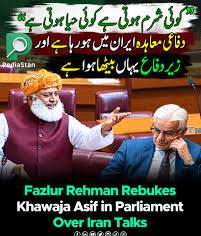
The question is no longer simply whether the government and the Maulana can resolve their political differences. It is whether the Pakistani state possesses the institutional resolve to assert its authority without being intimidated by powerful political personalities.
There is, of course, nothing objectionable about political opposition, public demonstrations or the mobilization of party workers. These are legitimate instruments of democratic politics. Maulana Fazlur Rehman, like every other political leader, has every right to criticize government policies, challenge its decisions and organize peaceful protests. But political influence cannot translate into an exemption from the law. Nor can religious stature confer privileges that ordinary citizens do not enjoy.
There must be a clear distinction between a political party’s lawful security arrangements and the creation of an organization capable of functioning as a private military force. The latter is fundamentally incompatible with a modern constitutional state. Pakistan’s Constitution itself leaves no ambiguity on this question. Article 256 explicitly declares that no private organization capable of functioning as a military organization shall be formed and that any such organization shall be illegal.

Yet constitutional provisions mean little when the state lacks the political will to enforce them. Pakistan has repeatedly witnessed situations in which governments have hesitated to act against powerful individuals and organizations for fear of the political consequences. This reluctance has gradually encouraged a culture in which the ability to bring thousands of people onto the streets, paralyze cities or threaten confrontation becomes a bargaining instrument against the state.
Such an arrangement is neither democracy nor federalism. It is an informal distribution of coercive power that undermines constitutional government. A state cannot selectively enforce its authority. If ordinary citizens are expected to obey the law, political leaders, religious figures and influential organizations must be held to precisely the same standard.
This is where Pakistan needs to reconsider its understanding of state power. A strong state is not necessarily an authoritarian state. It is one whose institutions function effectively, whose laws apply equally and whose authority does not depend on the goodwill of powerful individuals. Its strength comes from institutional legitimacy, professional law enforcement, an independent judiciary and the confidence that constitutional rules will be enforced without discrimination.
Pakistan could draw useful lessons from the transformation undertaken in Saudi Arabia under Crown Prince Mohammed bin Salman. For decades, Saudi Arabia had a system in which powerful religious institutions exercised considerable influence over public life and the enforcement of social norms. MBS moved decisively to centralize authority, curtail the independent coercive powers of the religious police and establish the state’s supremacy over institutions that had previously enjoyed considerable autonomy.

The significance of the Saudi experience lies in the assertion that no institution or influential group can claim an independent mandate to enforce its own interpretation of authority. The state must remain the ultimate source of public order and law enforcement. The changes also demonstrated that entrenched power structures can be challenged when political leadership possesses the determination to undertake institutional reform.
Pakistan should learn from this aspect of the Saudi experience, rather than attempt to replicate its authoritarian political model. Centralizing coercive authority is not a justification for suppressing political opposition, restricting civil liberties or concentrating unchecked power in the hands of one individual. The objective should be to strengthen constitutional institutions, not to replace one set of unaccountable power centers with another.
The government must therefore approach the present confrontation with Maulana Fazlur Rehman with institutional discipline rather than personal animosity. It should neither provoke him unnecessarily nor retreat simply because he commands a substantial political following. If there are violations of building regulations, unlawful security deployments or evidence of private armed formations, the authorities must act in accordance with the law. The same standards must apply to ministers, ruling-party politicians and other influential personalities.
Pakistan needs to move beyond the traditional practice of accommodating powerful individuals at the expense of institutional authority. For too long, successive governments have allowed political expediency to dictate when and against whom the law should be enforced. The consequences are visible in the growing perception that influence, connections and the ability to mobilize crowds can place individuals above ordinary legal constraints.
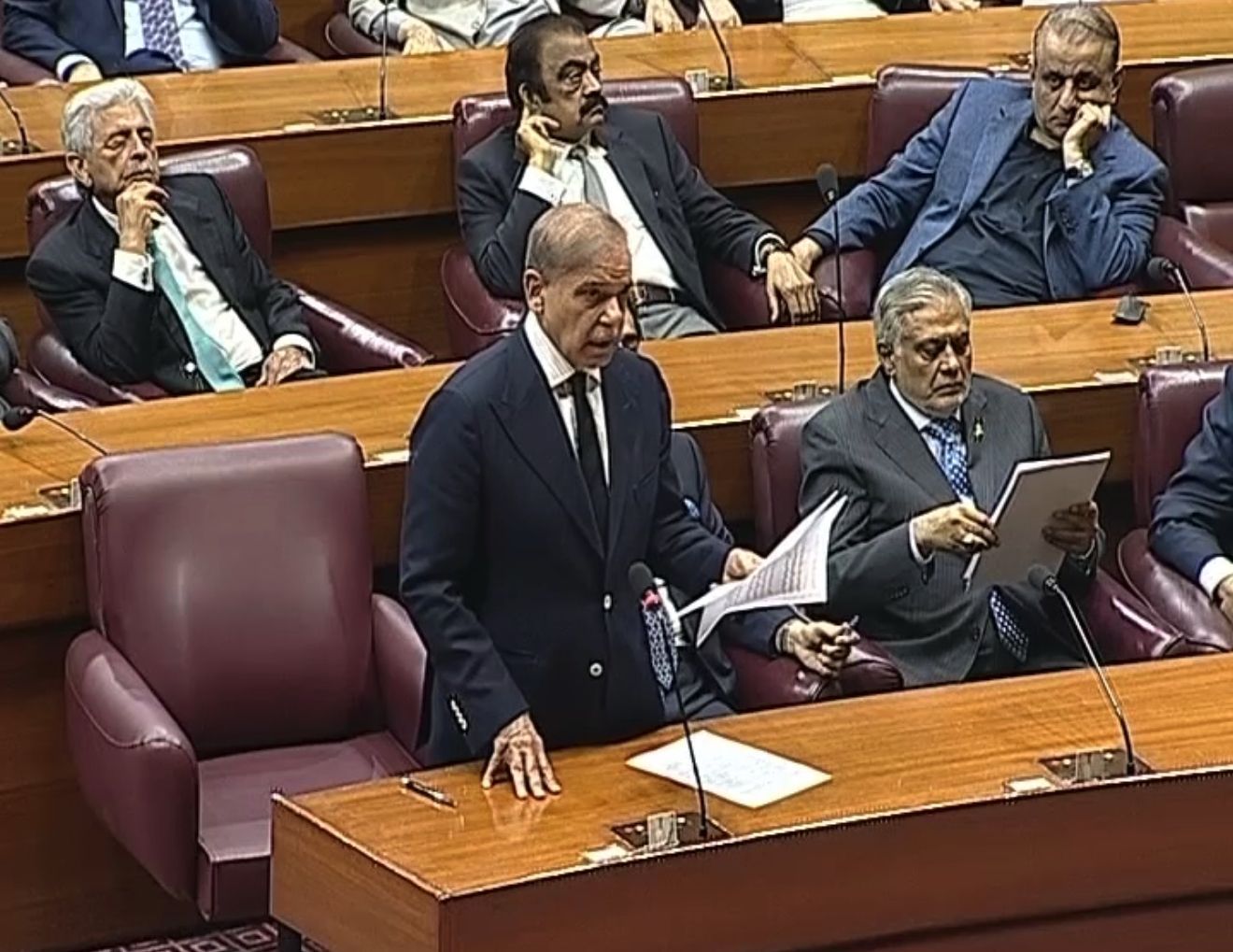
The time has come for Pakistan to become a hard state, but not a hard state against its own citizens. It must be hard against lawlessness, private coercion, impunity and the fragmentation of public authority. It must be firm in protecting citizens’ rights while making it unmistakably clear that no individual, political party, religious organization or militia can operate as a state within a state.
The ultimate test of sovereignty is not how many people a leader can bring onto the streets or how loudly he can challenge the government. It is whether the institutions of the state can enforce the law without fear or favor.
Pakistan cannot afford parallel centers of coercive power any longer. A modern state must have one constitutional authority, one legal framework and one legitimate system of law enforcement. The government must assert that principle — consistently, impartially and without intimidation. Anything less would amount to surrendering the authority of the state to its strongest individuals

