


Political movements often begin with symbols. In recent weeks, India has witnessed the emergence of the “cockroach” as a metaphor for a generation that feels invisible, unwanted and dismissed by those in power. The symbolism is simple: cockroaches are considered insignificant, yet they survive every attempt to eliminate them. The message behind the movement is that ordinary people—particularly young people—may be ignored, but they cannot be ignored forever.
South Asia has already seen what happens when youthful frustration reaches its breaking point. Sri Lanka’s Aragalaya movement brought down a president. Bangladesh witnessed a student-led uprising that fundamentally altered its political landscape. Nepal has repeatedly experienced waves of youth mobilization against political stagnation and institutional failure. While each movement emerged from different political circumstances, they shared one common denominator: a generation that had lost faith in the ability of existing institutions to improve their future.

Pakistan would be mistaken to believe that it is somehow immune to similar pressures. If anything, Pakistan possesses many of the structural conditions that have preceded youth-driven movements elsewhere in the region.
More than 60 percent of Pakistan’s population is below the age of thirty. Economists often describe such demographics as a “youth dividend”—a once-in-a-generation opportunity to accelerate economic growth through a large, productive workforce. But demographic dividends are not automatic. They become demographic liabilities when governments fail to educate, employ and empower young people.
That is precisely the danger confronting Pakistan today. For millions of young Pakistanis, the future has become a narrowing corridor. Secure employment is increasingly scarce. Entrepreneurship is burdened by economic uncertainty, regulatory complexity and limited access to finance. The private sector is struggling to expand, while the public sector can no longer absorb the growing number of graduates entering the labour market each year.
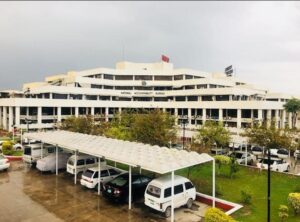
The problem, however, extends far beyond economics. It is increasingly about governance. Young Pakistanis are beginning to question whether the country’s institutions exist primarily to serve citizens or to preserve the privileges of those who already occupy positions of power.
Consider the contrast. While graduates struggle to find employment, public debate frequently revolves around increasing salaries, allowances and benefits for parliamentarians. While ordinary litigants spend years navigating an overburdened judicial system, institutional debates often focus on the judiciary’s own powers, appointments and privileges rather than on improving access to timely justice. While businesses confront excessive paperwork, delayed approvals and regulatory uncertainty, bureaucratic structures remain largely insulated from meaningful reform and continue to expand administrative procedures that make governance slower rather than more effective.
Each institution appears remarkably efficient at protecting itself. Far fewer reforms appear directed towards protecting the citizen. This growing disconnect is producing something far more dangerous than economic dissatisfaction—it is producing political alienation.

Unlike previous generations, Pakistan’s Generation Z has grown up with unrestricted access to the internet. They are no longer comparing themselves with previous generations within Pakistan. They are comparing themselves with young people in Malaysia, Vietnam, Estonia, the Gulf states, Europe and even neighbouring India.
Every day they watch governments investing in artificial intelligence, digital infrastructure, vocational education, startup ecosystems and innovation-driven economies. They see young entrepreneurs building billion-dollar companies from university campuses. They witness merit-based opportunities, expanding digital economies and governments actively competing to retain talent.
Then they look at Pakistan. They see an education system that continues to reward memorisation over creativity, degrees over skills and quantity over quality. Universities produce thousands of graduates every year, yet employers consistently complain that many graduates lack the practical competencies required in today’s labour market. A degree has become increasingly disconnected from employability.
Pakistan’s education system has become one of the country’s greatest governance failures. Instead of preparing young people for the economy of the twenty-first century, it often prepares them for a labour market that no longer exists. Digital skills, critical thinking, entrepreneurship, technical training and industry partnerships remain underdeveloped. The result is a growing mismatch between education and employment.
The consequence is visible across airports rather than universities. Pakistan is experiencing one of the largest waves of brain drain in its history. Doctors, engineers, IT professionals, skilled workers and university graduates continue leaving the country in search of opportunities abroad. Every departure represents not merely the loss of an individual but the loss of public investment, productive capacity and future innovation.
Those unable to leave are increasingly left with frustration. History suggests that prolonged frustration rarely remains confined to social media.
Youth movements rarely begin because of a single event. They emerge after years of accumulated disappointment. They develop when citizens conclude that peaceful participation produces little change, institutions primarily serve themselves, and the political system has ceased responding to ordinary aspirations.
Pakistan’s governing elite should pay close attention to this lesson. The country’s executive, legislature, judiciary and bureaucracy each possess constitutional responsibilities that extend beyond institutional self-preservation. Yet public perception increasingly suggests that all four pillars devote disproportionate attention to protecting their own powers, privileges and influence while ordinary citizens struggle with unemployment, inflation, declining public services and shrinking opportunities.
Whether this perception is entirely accurate is almost secondary. Politics is driven as much by perception as by reality. A generation that believes it has been abandoned eventually begins searching for alternatives outside conventional politics.
The warning signs are already visible. Young Pakistanis are increasingly disengaging from traditional political structures. They organise digitally rather than institutionally. They consume global information rather than state narratives. They question authority more readily than previous generations and possess communication tools capable of mobilising thousands within hours.
This is a generation that cannot simply be told to remain patient indefinitely. Pakistan still possesses enormous strengths. It has one of the youngest populations in Asia, a rapidly expanding digital economy, a vibrant entrepreneurial culture and immense human capital. But demographic advantages translate into national strength only when accompanied by competent governance.
The choice before policymakers is becoming increasingly clear. Either institutions begin prioritising structural reforms over institutional privileges, reform education to match modern economic realities, simplify governance, encourage entrepreneurship, strengthen accountability and create genuine opportunities for young people—or they continue managing decline while assuming public patience is limitless.
South Asia has already demonstrated that it is not. Pakistan’s “cockroach moment” may never arrive. But it would be dangerously complacent to assume it cannot.
If the country’s ruling elite continues treating young Pakistanis as spectators rather than stakeholders, the day may come when the country’s ignored generation decides that the only place left to make itself heard is Islamabad.
When institutions stop listening, history shows that streets often begin speaking. Pakistan would be wise to listen before that happens.

