

Pakistan suffers from a statutory vacuum concerning the immediate physical security and identity verification of infants in healthcare environments. The Newborn infants lifting and theft in hospital by organized mafia or criminal rings is a severe problem that exploits gaps in health care security and relies on the collusion of corrupt hospital staff. Organized child trafficking mafias often target poor people in overcrowded hospitals to steal infants and sell them to wealthy childless couples for money and the couples immediately, get the infant registered through fake/illegal birth certificate and make it a part of FRC in NADRA. The childless couples prefer to hold custody of Newborn infants, specially the male infant. Reportedly, the mafias (nursing staffs) are actively involved in replacing male infants with female infant’s during delivery times.
The criminal rings and Mafias frequently bribe low paid hospital staff, nurses and security guards to gain insider information on delivery schedules, wear fake nurses uniforms or doctor scrubs. They mostly target poor families where multiples families share a large space with no restricted access. Later the aggrieved families have no legal and administrative support to fight back against organized child –lifting rings. The government should make it compulsory for all hospitals to display safety guidelines for the parents in Urdu/English and all other vernaculars languages for the protection of newborn from hospital theft. The government should also start awareness campaign for parents through print and electronic media.
Existing child protection legislation focuses overwhelmingly on older children, destitute minors, street children, or victims of child labor and sexual abuse. These statutes contain zero procedural or statutory provisions regulating maternity wards, neonatal intensive care units (NICUs), delivery verification, biometric foot printing, or infant theft prevention.
Consequently, newborn security is left entirely to the unregulated discretion of hospital administrators, medical professionals, and support staff. This regulatory black hole fosters a shady, doubtful environment where infant misidentification, deliberate baby exchanges, trafficking of male babies, extortion of impoverished parents, and fatal infrastructural accidents occur with near-total impunity. To address this crisis, Pakistan requires a codified statutory framework that bridges healthcare administration, criminal law, personal status law, and modern forensic science. Healthcare institutions to have strong security measures for all newborn babies irrespective of their gender.

The international legal regime protecting the rights of newborn babies is based on the United Nations Convention on the Rights of the Child (UNCRC), adopted in 1989 and ratified by Pakistan in 1990, which creates state obligations in respect of various provisions.
Furthermore, the UN Protocol on Human Trafficking requires states to strictly outlaw moving, holding, or receiving children for abusive or exploitative purposes. The unlawful transfer, exchange or sale of infants by staff of hospitals in exchange for money comes into the scope of the criminal activity defined as child trafficking.
There is strict regulation of hospital infant security around the world through the use of biometrics, active monitoring and stringent administrative protocols based on national directives.
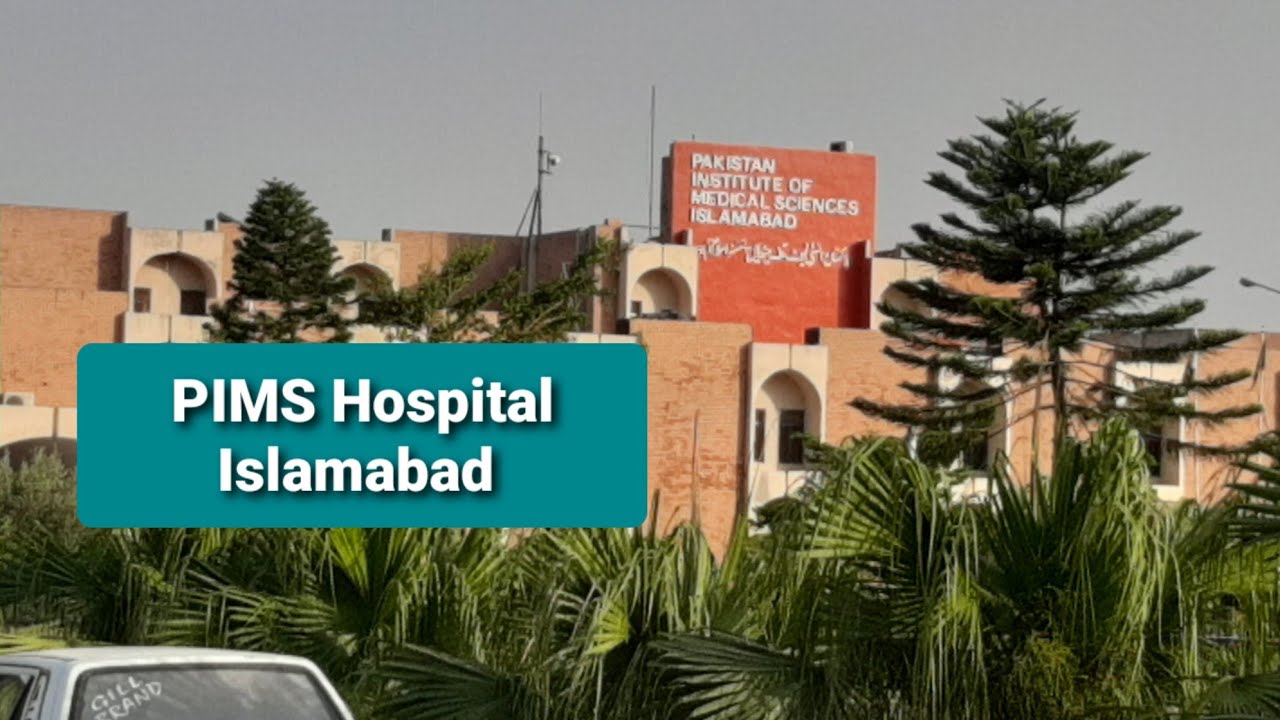
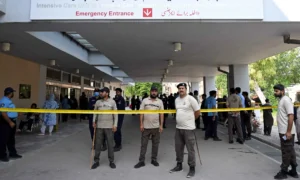
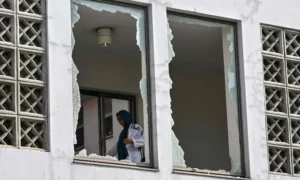
Apart from the intended kidnappings of children by criminals, there are also some severe risks for babies born in Pakistan, due to the negligence in the construction of infrastructure of hospitals. The NICU and the well-baby nursery of the gynecology department of the Pakistan Institute of Medical Sciences, a highly reputed hospital in Islamabad, witnessed a massive fire on the 26th of August 2026.
The high-temperature fire broke out owing to the short-circuiting of the unmonitored air conditioning unit in the nursery housing 15 extremely crucial babies. Since there was no automated fire detection system available in the building, the nursery caught fire in seconds with smoke. The hospital staff saved only one baby while the other 14 babies were left dead.

This accident showed that Pakistani hospitals let their newborn infants down not only in protecting their identity, but in the most fundamental aspect of their constitutional responsibility to protect babies from physical danger. The victim’s families openly refused to accept this an accident and declared it a child lifting conspiracy in the garb of fire short circuiting.
To mitigate all the risks mentioned, Pakistan should have a compulsory statutory mechanism consisting of strict administration procedures, technical identification process, and stringent punishment for responsible people involved in this heinous crimes. The Federal and Provincial governments should introduce these precautionary measures in the hospitals , delivery room rules will require that any normal or elective Cesarean delivery is done in the presence of the husband or an officially authorized close maternal relative such as mother or sister and before the umbilical cord is cut or the child taken out of mother’s view, there is to be a specially designed tamper-proof system linked with national registry which takes a high-resolution digital picture of the face and distinct features of the baby and then four identical tamper evident barcodes are attached to the wrist of the child, the ankle of the child, the mother, and the father or authorized witness.
Secondly, hospitals will have to install a security infrastructure with biometric and technological means, which would include a high-definition digital scanning of the baby’s footprint as well as the mother’s thumbprint and then recording them in an unalterable digital registry of births before moving forward. Maternity wards with ten or more beds will also have to install active Radio Frequency identification-RFID umbilical cord clamps or RFID ankle tags, which are linked to mother’s band using a central server that would control automated magnetic locks at all doors, elevators, and nurseries, thereby immediately setting off alarms, locking doors and freezing elevators whenever there is any unauthorized movement within the perimeter.
Thirdly, includes the physical safety measures, where nurseries and NICUs should have isolated electrical circuitry, with surge protection, medical grade fire-retardant wires and an automatic gas-based clean agent fire suppression system, while ensuring specialized multi-infant evacuation cots with portable oxygen connectors.
In order to ensure seamless implementation in Pakistan, it is imperative for both federal and provincial governments to conduct important strategies by first integrating hospital delivery suites digitally to transfer biometric birth information such as infant digital footprints, high-definition facial photographs, maternal thumb prints and fathers’ CNICs in order to issue Form B immediately after discharge to prevent false documentation. At the same time, it is necessary for provincial Healthcare Commissions in Punjab, Sindh, KP and Baluchistan to impose conditions related to hospital registration every year by means of RFID perimeter lock, CCTV archival capacity, clean agent fire suppression and compliance with four-point barcode standard operating procedures. Provincial forensic departments would need to form teams that resolve hospital baby swapping cases within 48 hours using multi-locus STR DNA typing. At the same time, the Ministry of Information and Broadcasting would coordinate with health care organizations in executing national awareness campaigns on expectant parents regarding their right to presence, photographing, dual barcoding and biometric registration.
A solid legislative and regulatory framework through enactment of the suggested “Newborn Security, Identification and Hospital Safety is imperative in overcoming Pakistan’s regulatory void with respect to the security and identity verification of infants. Through the integration of mandatory multi-point biometrics, radio-frequency identification (RFID) technology, clean agent fire suppression, real-time linkage with NADRA delivery suite and instant forensic DNA profiling, the state will be able to effectively destroy organized criminal networks, avoid dangerous hospital risks, and quickly settle baby-swapping controversies. In the end, implementation of such legal, technological and regulatory measures would ensure that healthcare delivery is done in conformity with basic constitutional rights.
The write is a Founding President of Centre for Rule of Law Islamabad –CROLI, a former Judge and Lawyer based in Islamabad, can be reached at [email protected]

