

Sir Creek Becomes New Battlefield? Pakistan Allegedly Moves Armed Drones, Hovercraft and Commandos Closer to India
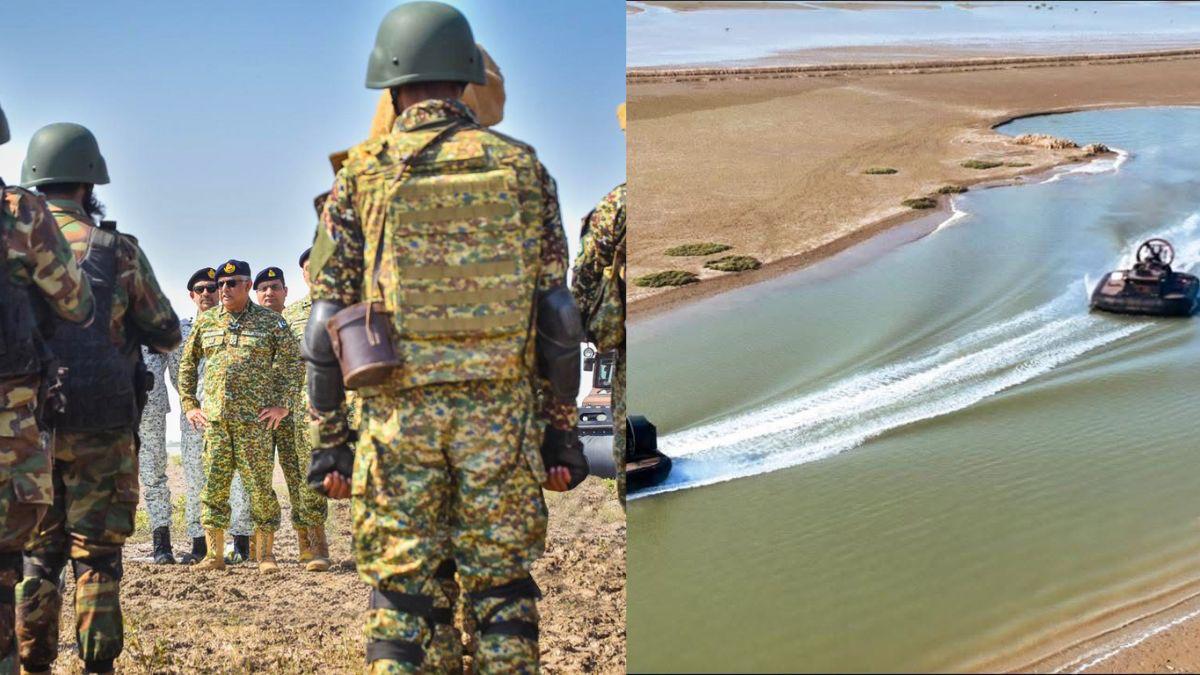
The disputed Sir Creek estuary has long been viewed as a peripheral flashpoint in the broader India-Pakistan rivalry. An earlier statement by Indian Defense Minister Rajnath Singh that “one route to Karachi passes through Sir Creek” injected an element of strategic pressure into the dispute, Yet recent reports surrounding Pakistan’s alleged deployment of special operations forces, armed drones, hovercraft, high-speed patrol craft, and layered coastal defense assets under the banner of Ababeel – The Divine Strike suggest the region may be evolving into one of South Asia’s most strategically significant maritime frontiers.
If the reported deployments are accurate, they represent more than a localized military enhancement. They point toward an emerging Pakistani strategy centered on distributed surveillance, rapid response, and coastal denial capabilities designed to strengthen Islamabad’s position along the maritime boundary with India and expand its operational reach in the northern Arabian Sea.
While independent verification remains limited, reports published in August 2026 claimed that elite personnel from the Pakistan Navy’s Special Service Group-Navy (SSG-N) were operating alongside Turkish drone systems, Chinese-origin equipment, and a newly established Marine position between Bandha Dhora and Harami Dhoro. Official confirmation of the full deployment package has not been provided, making it necessary to distinguish between confirmed modernization efforts and unverified intelligence reporting.
Nevertheless, Pakistan has publicly associated the term “Ababeel” with amphibious and drone warfare operations. A Pakistan Navy promotional video released on July 1, 2026, showcased Marine assault drills, drone employment, coastal landings, and strike scenarios, indicating the existence of a broader operational concept focused on integrating multiple domains of warfare.
The strongest confirmed element of this modernization effort is Pakistan’s induction of three 2400 TD hovercraft for Marine operations. These platforms, officially acknowledged following an inspection by Chief of Naval Staff Admiral Naveed Ashraf in October 2025, provide unique mobility across mudflats, tidal marshes, shallow waterways, and sandbars that conventional patrol boats often struggle to access.
What makes the reported Ababeel concept strategically significant is not any individual platform, but the possibility of integrating drones, special operations forces, unmanned surface systems, coastal defense assets, and rapid-reaction units into a single surveillance-and-response network. Such an architecture could shorten reaction times, improve situational awareness, and enable Pakistan to maintain a persistent presence across the difficult terrain of Sir Creek without relying on large conventional formations.
Why Sir Creek Matters
Although Sir Creek spans only 96 kilometers, its strategic importance extends far beyond the disputed estuary itself. The unresolved maritime boundary influences Exclusive Economic Zone (EEZ) claims, access to offshore resources, maritime jurisdiction, and strategic approaches to both Karachi and Gujarat. Consequently, military developments in the area carry implications for regional security and maritime power projection across the northern Arabian Sea.
The dispute originates from competing interpretations of colonial-era agreements, particularly the 1914 Sindh Resolution and differing views regarding whether the maritime boundary should follow the eastern bank of the creek or the navigable channel under the thalweg principle. Although much of the Rann of Kutch dispute was resolved in 1968, Sir Creek remained unsettled due to shifting waterways, conflicting maps, and differing legal interpretations.
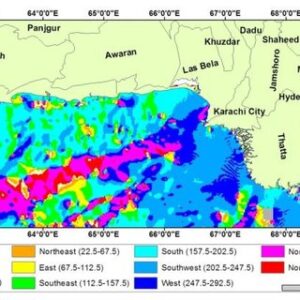
The strategic significance of the area is amplified by geography. Extensive mudflats, shallow channels, tidal creeks, and marshlands limit the effectiveness of heavy conventional forces while favoring agile platforms such as hovercraft, special operations units, drones, and small patrol vessels. In this environment, technological adaptation can generate disproportionate military advantages.
The Rise of Distributed Coastal Warfare
Among the most consequential reports is the alleged deployment of SSG-N commandos within the Sir Creek sector. If confirmed, such a move would represent a qualitative shift in Pakistan’s posture by enabling covert reconnaissance, rapid interception, and distributed surveillance operations across difficult terrain. Operating from concealed locations within the creek network, maritime commandos could support drone missions, gather intelligence, and maintain forward presence while minimizing exposure.
Turkish drone systems reportedly assigned to surveillance and strike missions could significantly expand Pakistan’s observation capabilities beyond fixed positions. Continuous aerial monitoring of waterways, patrol routes, and tidal channels would strengthen maritime domain awareness and improve early-warning capacity. However, the absence of verified information regarding the specific drone models involved leaves important questions unanswered concerning endurance, payload capacity, electronic warfare resilience, and operational range.
The reported introduction of unmanned surface vessels and additional coastal platforms would further reinforce a distributed operational model. Instead of concentrating military assets in large formations, Pakistan appears to be pursuing a networked approach that relies on multiple interconnected systems capable of operating across land, sea, and air domains simultaneously.
Such a strategy aligns with broader global military trends emphasizing unmanned systems, persistent surveillance, and decentralized operations in contested environments.
Hovercraft and Mobility Advantage
The acquisition of 2400 TD hovercraft may ultimately prove to be one of the most important developments in Pakistan’s Sir Creek posture. Unlike conventional patrol boats, hovercraft can traverse shallow waters, mudflats, tidal surfaces, and marshes while carrying personnel, equipment, and supplies. This capability significantly expands operational flexibility in terrain where infrastructure is limited and navigation routes constantly shift.
The platforms support distributed operations by enabling rapid reinforcement of isolated positions, transportation of commandos, and logistical support to remote outposts. Combined with drones and high-speed patrol craft, hovercraft could form part of a multi-domain patrol network in which aerial sensors identify activity; surface assets investigate contacts, and Marines are deployed to otherwise inaccessible areas.
However, hovercraft are not invulnerable. Acoustic signatures, thermal emissions, and visual detection remain significant limitations, particularly in an environment increasingly monitored by drones, electro-optical sensors, and networked surveillance systems. Their greatest value may therefore lie in rapid tactical mobility and logistical flexibility rather than sustained combat operations.
The China-Türkiye Dimension
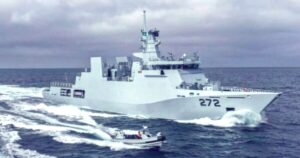
The reported presence of Chinese and Turkish technologies highlights Pakistan’s growing defense diversification strategy. While claims regarding Chinese-origin boats and surveillance platforms operating near Sir Creek remain unverified, Pakistan’s broader naval modernization already includes advanced Chinese-built frigates and Hangor-class submarines, reflecting deepening defense cooperation between Islamabad and Beijing.
Türkiye contributes to a different set of capabilities, particularly in the field of unmanned aviation. Turkish drone technology has gained international attention for its operational performance and relatively cost-effective deployment model. If integrated effectively, such systems could provide Pakistan with persistent surveillance and flexible strike options along contested coastal sectors.
At the same time, operating equipment sourced from multiple suppliers presents challenges. Separate maintenance chains, software ecosystems, training requirements, ammunition inventories, and communications standards can complicate integration. Pakistan’s ability to network Chinese maritime systems, Turkish drones, domestic command structures, and legacy Western equipment will ultimately determine whether Ababeel evolves into a truly integrated combat architecture or remains a collection of individual capabilities.
India’s Response and the Emerging Security Competition
India has already begun adapting to the unique operational environment of Sir Creek. New requirements for locally produced high-speed amphibious combat boats demonstrate New Delhi’s recognition that mobility, rapid interception, and shallow-water operations are becoming increasingly important in the region.
Future Indian responses are likely to extend beyond patrol craft. Countering distributed drone networks and dispersed maritime assets will require enhanced radar coverage, electronic warfare capabilities, electro-optical sensors, secure communications, and improved interagency coordination.
A New Strategic Frontier
The available evidence does not indicate preparations for a large-scale military confrontation. There are no confirmed signs of major force mobilization, artillery concentration, or offensive staging. Instead, the reported developments suggest the emergence of a sophisticated coastal warfare concept focused on deterrence, surveillance dominance, and operational flexibility.
Yet the significance of Ababeel should not be underestimated. Sir Creek is increasingly becoming a laboratory for the future of distributed maritime warfare, where drones, hovercraft, special operations forces, and networked surveillance systems may influence sovereignty disputes, escalation thresholds, and strategic access to the Arabian Sea.
Whether Ababeel ultimately becomes a transformative military capability or remains primarily a strategic signalling tool will depend on the extent of its integration, sustainability, and operational maturity. What is already clear, however, is that technological innovation and evolving partnerships are reshaping the military landscape of one of South Asia’s most sensitive maritime frontiers.

Yousaf Khan: : The author is a defence expert with deep insight in phenomenal developments taking place in field of defence. He is a regular column writer for NEWSMAN. He can be reached out at :
[email protected]

