


After decisively repelling Indian aggression and dismantling its hegemonic designs, Pakistan now stands at a historic crossroads. Providence has presented us with a rare opportunity — not merely to celebrate a military triumph, but to confront the internal rot, complacency, and dysfunction that have crippled this nation for decades. The true war Pakistan must now wage is not against an external adversary, but against its own bloated, corrupt, and unaccountable state apparatus.
The recent meeting between President Donald Trump and Field Marshal General Asim Munir made one thing abundantly clear: the real power in Pakistan does not reside in the corridors of parliament or among a discredited, incompetent and corrupt political elite, but elsewhere. It is time this authority is wielded with clarity, purpose, and national interest in mind — not to prop up inept politicians the people have long rejected, but to chart a new course for Pakistan’s future.
This moment must not be wasted. The parasitic elite — whether they are television anchors, so-called liberals, or beneficiaries of this rotten, corrupt democratic setup — deserve neither attention nor credibility. The nation demands ruthless, unapologetic leadership with the courage to tear down these decaying structures and drag Pakistan out of its misery towards stability, prosperity, and true national dignity.
It’s time to dismantle this rotten system and replace it with a lean, technocratic government — one built on competence, discipline, and national interest. The old order of dynastic politicians, crony bureaucrats, and parasitic institutions must be decisively buried.
Democracy in Pakistan: A Failed, Expensive Experiment
Let’s speak plainly: democracy, as practiced in Pakistan, has become little more than an institutionalized protection racket. Parliament sessions consume millions from the public exchequer while delivering no meaningful reforms or legislation. Development funds, running into billions, are distributed not for the public good but to maintain political loyalties.

Be honest — are even five members of our federal and provincial cabinets genuinely qualified for the portfolios they hold? The answer is both predictable and depressing. The Senate, meanwhile, has turned into a ceremonial clubhouse for political relics and dealmakers. It would serve this nation better repurposed as a national art center, public library, or museum.
The great revolutionary thinker Thomas Paine warned:
“The more complicated the government, the more it is subject to disorder, confusion, and mismanagement.”
Pakistan today is the living embodiment of that cautionary truth.
The Bureaucracy: A Self-Serving Elite
What began as a colonial administrative apparatus has now mutated into a privileged elite, obsessed with personal perks, plots, and protocol rather than public service. The Capital Development Authority (CDA) alone employs over 20,000 people — yet Islamabad, once one of Asia’s most beautiful cities, lies mired in administrative decay, encroachments, and mismanagement.
This bloated agency should be reduced to a skeleton oversight body of no more than 20 qualified managers, with all municipal services outsourced to vetted private firms. The rest should be shown the door. This model of lean oversight and privatized services must be extended to municipal administrations nationwide.
Provinces Are Too Big, Too Dynastic — And Unmanageable
Another vital reform is the administrative restructuring of Pakistan’s provinces. They have grown far too large and unwieldy, serving as breeding grounds for entrenched political dynasties. In Punjab, Sindh, and Balochistan, a handful of families have turned entire regions into personal fiefdoms.
Dividing these oversized provinces into smaller, manageable administrative units would deliver two immediate benefits:
It would shatter the power bases of dynastic families, ending their monopolies over local politics.
It would improve governance, as smaller units are easier to manage, monitor, and audit — ensuring that resources reach the people, not political elites.
Each new administrative division should be led by a competent manager, appointed on merit, and accountable for measurable results.
Redundant Government Institutions That Must Go
Pakistan’s governance is clogged by redundant, overlapping, and obsolete institutions that drain public resources while delivering little or nothing in return. Abolishing or restructuring them is long overdue. Here’s a non-exhaustive list of state bodies that should be dismantled or privatized immediately:
Senate of Pakistan
National & Provincial Assemblies
Capital Development Authority (CDA)
Pakistan Public Works Department (PWD)
Federal Board of Revenue (FBR) — replace with decentralized regional tax authorities overseen by AI-driven digital systems.
Evacuee Trust Property Board (ETPB)
Pakistan Railways — privatize passenger and cargo operations.
Pakistan International Airlines (PIA) — sell to private investors.
National Accountability Bureau (NAB) — replace with an independent anti-corruption tribunal.
Trade Development Authority of Pakistan (TDAP)
Utility Stores Corporation — privatize retail operations.
Pakistan Steel Mills — already defunct, dispose of remaining assets.
Pakistan Tourism Development Corporation (PTDC) — privatize or transfer assets to provincial management.
Zarai Taraqiati Bank Limited (ZTBL) — restructure or privatize agricultural financing.
Pakistan Broadcasting Corporation (PBC) and PTV — modernize under public-private partnerships or dissolve.
Pakistan Mineral Development Corporation (PMDC) — privatize and deregulate.
The result would be billions saved annually, leaner governance, and far better service delivery.
A New Model: Technocratic, Lean, and Accountable.
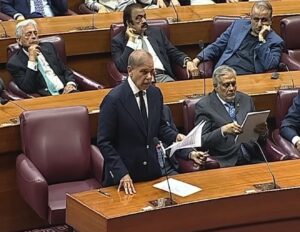
Pakistan’s future lies not in the hands of electables and hereditary politicians but in a government of professionals, each evaluated against clear performance benchmarks. Critical portfolios — health, energy, education, water management, security — must be overseen by experts, not career politicians.
Cut government structures by half. Privatize non-core services. Digitize tax collection and land registries. Privatize transport and airline sectors. Make corruption punishable by life bans and asset seizures. Introduce annual public performance audits for all departments.
This is not radicalism. This is what serious, functioning states do.
Judiciary: A Compromised, Dysfunctional System
No national reform agenda cannot succeed without confronting Pakistan’s compromised, sluggish, and politically manipulated judiciary. Our courts have become notorious for delays, selective justice, and serving elite interests. Cases drag on for decades while petty criminals face swift punishment and politically connected mafias buy impunity.
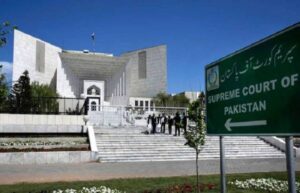
The system must be overhauled. Judges should no longer be appointed through closed-door consultations among a few insiders. Instead:
Judicial appointments should be made through open, transparent selection
processes with mandatory professional evaluations and public scrutiny.
Establish independent, non-political constitutional courts for interpreting laws, while ordinary courts focus solely on civil, criminal, and commercial matters.
Introduce fast-track digital courts for commercial disputes, land issues, and criminal trials, ending decades of backlog.
Implement fixed-term performance audits for judges, linked to case disposal rates and public satisfaction metrics.
Justice delayed is justice denied — and without a competent, apolitical judiciary, no state can prosper.
Now or Never
The responsibility to reform lies squarely on the shoulders of Pakistan’s national leadership, led by Field Marshal Asim Munir. The war against incompetence, corruption, and state inefficiency must begin now. This is a once-in-a-generation opportunity. Either we seize it — or resign ourselves to permanent mediocrity.
As Thomas Paine so rightly observed:
“A government of our own is our natural right: and when a man seriously reflects on the precariousness of human affairs, he will become convinced that it is infinitely wiser and safer to form a government of our own.”
It’s time to build that government. Not of dynasts, not of parasites — but of patriots and professionals.

