

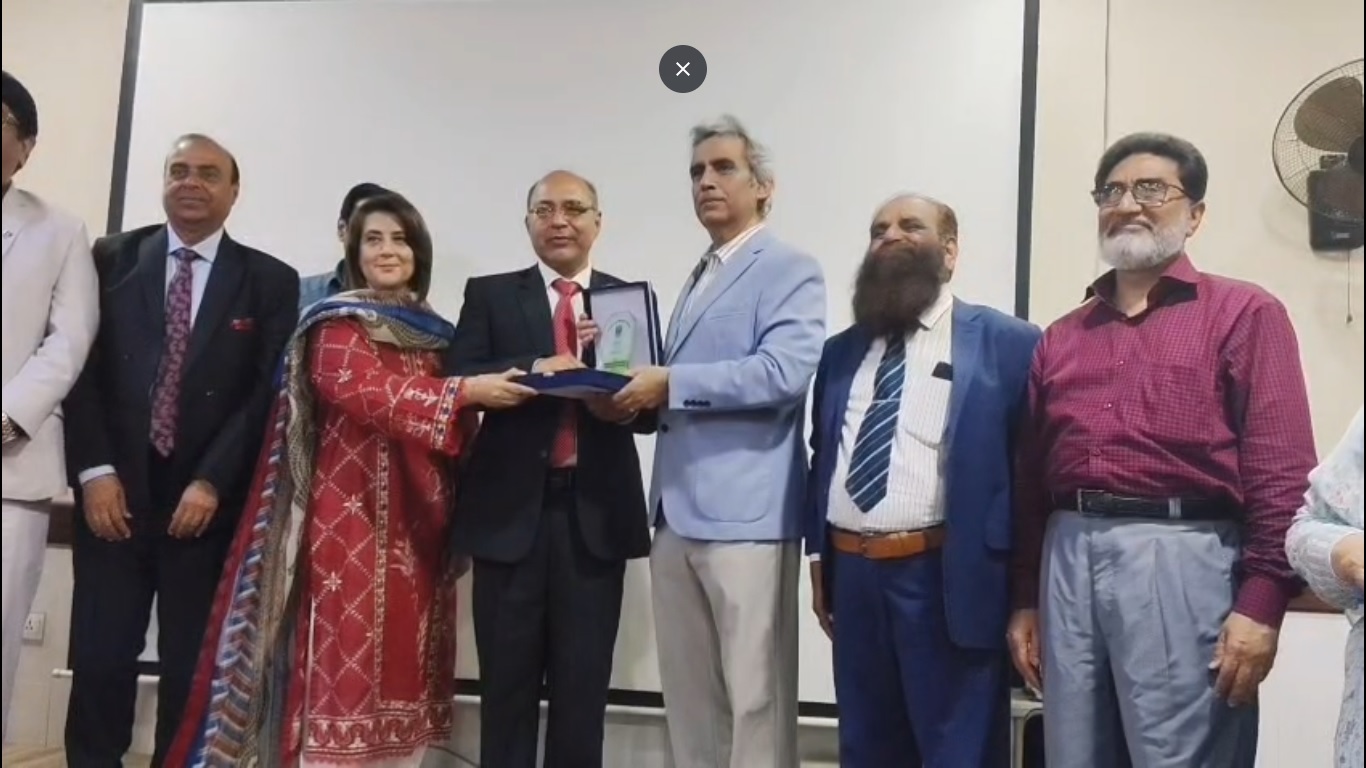
Lahore : World Health Day 2026, observed on April 8 calls on people everywhere to stand with science. Under the theme “Together for health. Stand with science”, this year’s observance launches a year-long campaign celebrating the power of scientific collaboration to protect the health of people, animals, plants, and the planet. The campaign spotlights both scientific achievements and the multilateral cooperation needed to turn evidence into action – through a strong focus on the One Health approach.
Addressing the provincial seminar held under the auspices of General Cadre Doctors Association in collaboration with Continental Medical College and Hayyat Memorial Hospital, Lahore the chairman Continental Medical College Prof Dr Fareed Zafar said that Human health has been profoundly transformed over the past century, largely due to scientific progress and international collaboration.
The global maternal mortality rate has fallen by more than 40% since 2000, and deaths among children under five have been reduced by over 50%. Advances in technology, scientific knowledge and skills, and collaboration between different disciplines, sectors and countries continue to turn once-life-threatening health challenges – such as elevated blood pressure, cancer diagnoses or HIV infection – into manageable health issues, extending and improving lives worldwide. He added that the campaign calls on governments, scientists, health workers, partners, and the public to stand with science by engaging with evidence, facts, and science-based guidance to protect health; rebuild trust in science and public health; and support science-led solutions for a healthier future.
“Science is one of humanity’s most powerful tools for protecting and improving health,” said Dr Masood Sheikh President General Cadre Doctors Association. “People in every country live longer and healthier lives on average today than their ancestors did, thanks to the power of science. Vaccines, penicillin, germ theory, MRI machines and the mapping of the human genome are just some of the achievements that science has delivered that have saved lives and transformed health for billions of people.”
Addressing the provincial seminar, Dr Masood Sheikh highlighted that our health has improved substantially over the past 100 years – thanks to scientific innovations. The future will be shaped based on how we develop and practice science-led approaches for the health of all – not only humans, but also animals, plants, ecosystems and the entire planet – through the One Health approach. Progress in public health is built on global solidarity and collaboration. He added that health threats continue to grow, fuelled by climate impacts, environmental degradation, geopolitical tensions and shifting demographics. These challenges include persistent diseases and strained health systems as well as emerging diseases with epidemic or pandemic potential. Coding the example he added that before modern anesthesia, surgery meant unimaginable pain. Today, safer medicines, affordable technologies and trained specialists allow life-saving operations to be performed while patients sleep comfortably. Scientific progress has helped democratize these advances, making safe surgical care accessible across the world, including in many resource-limited communities; over the past 50 years, global immunization efforts have saved over 154 million children from infectious diseases. Vaccines have contributed to a 40% reduction in infant mortality, with just one vaccine – the measles vaccine – saving over 90 million children; and progress in early screening technologies is transforming health outcomes. From electronic blood pressure monitors to breast cancer screening through mammography, these tools have become life-saving interventions for millions. Across the globe, thousands of scientists are accelerating research and developing policies, tools and innovations needed to protect communities today and safeguard the health of future generations. He added that Scientific innovations are most powerful when they are widely adopted and used. Every success in improving human health reflects the collective work and collaboration of scientific organizations, policy- makers, heath workers and the public.
Speaking on the occasion Ex-Director Hepatitis programme Punjab and Ex MS Dental Hospital Dr Bakhyawer said that WHO, over its 78 years of convening of global scientific organizations, has stood at the forefront of global health and scientific transformation. For example, during the Severe Acute Respiratory Syndrome (SARS) outbreak of 2003, WHO coordinated a global network of laboratories sharing real-time data. This collaboration enabled the rapid identification of the virus causing SARS within two weeks, setting a global model for outbreak detection and response that continues today; in 2009, WHO developed alcohol-based hand-rub formulations and promoted its global adoption in health-care settings. This innovation, along with related infection-prevention strategies, helps protect millions of patients and health workers worldwide from infections and complications, including during the COVID-19 pandemic;
Speaking on the seminar Ex MS Dental Hospital and a renowned Public health expert Dr Bakhtyawer WHO continually identifies emerging challenges to human health, bringing together leading scientists and policy-makers to develop norms and standards that protect communities. For example, WHO’s global air quality guidelines define air quality levels needed to safeguard health from risks such as respiratory infections, asthma, chronic obstructive pulmonary disease (COPD) and lung cancer. WHO’s drinking water standards ensure that the water from our taps is safe, helping prevent diarrheal diseases, including deadly ones such as cholera. “Science transforms uncertainty into understanding and reveals the pathways to protect and heal our communities,”. “Without the clarity of rigorous scientific inquiry, we risk being led by bias and misconception – and too often toward treatments that fail us or even place us in harm’s way. Today, we must stand together with science so that our collaboration is sustained, supported and enhanced for the better health of generations to come.”

