

Islamabad, 20 January 2026 – The Senate Functional Committee on Human Rights, chaired by Senator Samina Mumtaz Zehri, convened at Parliament House to review the status of family planning, reproductive health, and population management in Pakistan.
The meeting was attended by Senators Khalil Tahir, Amir Waliuddin Chishti, Atta ul Haq, Syed Masroor Ahsan, and representatives from the Ministries of Human Rights, Health, Planning, and Religious Affairs, provincial population welfare departments, and the UNFPA Country Representative, alongside other stakeholders.
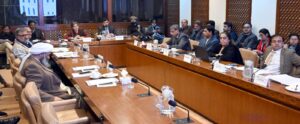
During the discussion, Senator Amir Waliuddin Chishti highlighted the impact of taxation on contraceptives, noting that it has restricted access, leaving many people without essential family planning services. Health officials responded that the matter had previously been reviewed at the Cabinet level and that ongoing efforts are in place to address these issues within the constraints of the IMF program and federal taxation policies.
The role of religious guidance was also discussed. Religious scholars present clarified that they do not oppose family planning or reproductive health initiatives. Their recommendations focus on delivering such messaging in accordance with Islamic teachings, prioritizing the health of children and mothers. They noted that while nikkah procedures currently include verification of age through CNIC, medical tests remain optional and could be incorporated in a recommendatory format to help prevent potential health issues, without imposing compulsion.
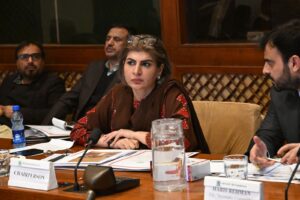
Senator Samina Mumtaz Zehri emphasized that reproductive health and family planning are fundamental human rights.
She underscored the urgent need to implement these programs effectively and ensure they are accessible to all, particularly in schools, where education on puberty, hormonal changes, and family planning must begin early.
The UNFPA Country Representative added that Pakistan experiences approximately nine million pregnancies annually, yet access to services is limited, awareness remains low, and governance gaps impede effective implementation. He highlighted challenges such as a resource allocation formula that incentivizes population growth, fragmented structures, and limited task force engagement. He emphasized that political commitment, accountability, and a unified national vision are essential, citing examples from Saudi Arabia and Bangladesh where strong policy implementation and outreach have successfully managed fertility rates.
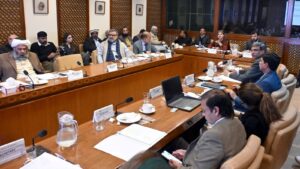
Senator Samina inquired about measures to educate girls and integrate family planning into school curricula, stressing that delayed or inconsistent application hinders behavioral change. She also raised the issue of inter-ministerial coordination, requesting that Health, Education, and Religious Affairs departments align closely for effective implementation.
The committee reviewed presentations from provincial health departments, noting progress in integrating family planning into primary healthcare. Senator Samina noted that despite expanded outreach and facility coverage, capacity limitations and practical implementation challenges remain, emphasizing that the focus must go beyond statistics to ensure services are effectively utilized.
Members proposed holding a joint meeting of Health, Human Rights, Education, and Planning ministries to address these issues collectively, and the committee unanimously decided to convene such a meeting.
Senator Samina underscored that population management requires sustained action through education, empowerment, and active community engagement. She stressed that follow-up meetings should monitor implementation, track outcomes, and ensure that reproductive health services and awareness programs effectively reach all provinces. She emphasized that addressing population challenges holistically is vital for safeguarding reproductive rights and supporting sustainable development across the country.

