


On April 2, petrol hit Rs 458 per litre. High-speed diesel reached Rs 520. Overnight, petrol rose by Rs137, diesel by Rs184. It was the second major fuel price hike in less than a month delivered by a government that, only a week earlier, had promised to shield the public from exactly this shock.
Prime Minister Shehbaz Sharif said the state would absorb the burden. That promise lasted seven days. By some estimates, it cost around Rs129 billion before fiscal reality intervened. Then Petroleum Minister Ali Pervaiz Malik said plainly what governments rarely admit: resources are limited, the war has no clear end, and the subsidy cannot continue.
That, in many ways, is Pakistan’s position. It is a war it did not start, cannot influence, and cannot afford. Yet its costs are now landing directly in the daily lives of Pakistani households.
The fuel price shock is only the most visible wound. In early April, Brent crude traded near $112 a barrel roughly $34 higher than a year ago. During the 2022 crisis, Brent briefly touched $127. We are not there yet, but the direction is worrying.
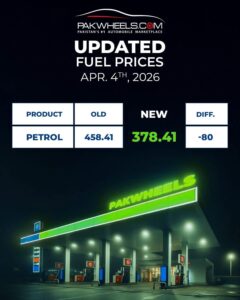
The difference this time is the rupee. Weaker than before, it means the same global oil price hurts more locally. Pakistan’s current IMF programme was built on oil assumptions in the $70–$75 range. That assumption no longer holds. Every dollar above it widens the gap between economic planning and economic reality.
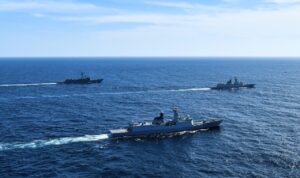
Pakistan’s deeper problem is structural. More than 80 percent of its energy imports pass through the Strait of Hormuz. For Pakistan, this is not just another shipping lane. It is the narrow artery through which the country’s entire energy system flows.
There is no serious fallback route. No meaningful strategic reserve. When Hormuz becomes unstable, Pakistan does not face inconvenience. It faces exposure.
That exposure feeds directly into circular debt Pakistan’s most persistent economic weakness. Even before this shock, the power sector was trapped in a cycle where distribution companies could not pay generators, generators could not pay fuel suppliers, and suppliers struggled to finance the next shipment.
Higher oil prices push the entire system further out of balance. Every additional cost either becomes new circular debt or forces the government to absorb it through unsustainable subsidies. There is no comfortable third option.
Inflation had already reached 7.3 percent in March the highest in 17 months before the latest fuel hike. Gas prices were up 23 percent year-on-year, electricity 14 percent. Those figures now look mild compared to what may follow.
What has not been fully discussed is how electricity tariffs will adjust. Industrial power tariffs in Pakistan are indexed to fuel costs, including furnace oil and diesel. The April fuel shock will not stay confined to petrol pumps. It will appear in factory electricity bills within weeks. That matters because Pakistan’s exports are already struggling to remain competitive. Higher power costs will quietly make that problem worse.
But the real danger lies in the feedback loop between oil prices and the rupee. Higher oil prices expand the import bill. A larger import bill weakens the currency. A weaker rupee makes imported fuel even more expensive locally. The result is a cycle of rising inflation and growing external pressure.
Pakistan has seen this movie before. In 2022, it pushed the country to the edge of default. The trigger then was partly domestic. Now it is external. But the result can look very similar when the economy is fragile enough.
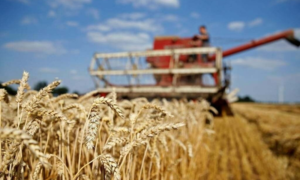
Diesel at Rs520 is not just a transport cost. It is an agricultural cost, a freight cost, and eventually a food cost. The machines harvesting wheat run on diesel. The trucks carrying grain to mills run on diesel. The supply chains that determine what flour costs in Lahore run on diesel.
When diesel rises this sharply, inflation does not stay at the pump. It moves quickly into markets, kitchens, and household budgets.
Farmers are entering the wheat harvest under what may be the highest cost structure they have faced in years. Margins that were already thin will shrink further. Consumers will feel the impact soon through rising food prices. For a country already facing its highest poverty rate in more than a decade, the timing could hardly be worse.
There is also a quieter risk: remittances. More than $30 billion flows into Pakistan each year from workers in the Gulf. That money supports the rupee and sustains millions of households. Regional instability raises costs and delays in Gulf construction and energy projects. If those pipelines slow or labour markets tighten, Pakistan could lose not just foreign exchange but an important cushion of social stability.
Meanwhile, distortions at Pakistan’s own borders continue. Iranian fuel remains cheaper and enters through smuggling routes along the Balochistan frontier. Every litre that enters illegally reduces official sales, cuts government revenue, and distorts demand signals in the domestic fuel market. In quieter times, this leakage might be tolerated. In a crisis, it becomes much more damaging.
Pakistan does have long-term energy alternatives: large coal reserves, significant untapped hydropower, and rapidly falling solar costs. None of these offers relief from an immediate wartime shock. A solar farm cannot power a wheat harvester next week. But the lack of serious planning around energy security strategic reserves, refinery upgrades, diversified supply routes has left the country far more exposed than it needed to be.
To pay for a war Pakistan did not start is unfortunate. To remain this vulnerable to the next one would be a policy failure.
The government’s targeted relief measures for farmers and low-income households may ease some immediate pressure, but they are not a strategy.
What Pakistan now needs are difficult but clear decisions:
· Diversify fuel procurement as much as possible to reduce exposure to a single shipping corridor.
· Engage the IMF early to adjust programme assumptions for what is clearly an external shock. Waiting until numbers deteriorate will only make the adjustment harsher.
· Treat diesel supply to farming districts during the wheat harvest as a matter of economic stability. If harvesting and transport are disrupted now, the inflationary impact will spread rapidly through food markets.
· Protect the most vulnerable households through targeted cash support funded by expenditure cuts elsewhere not through broad subsidies or additional borrowing. Pakistan no longer has the fiscal space for universal relief.
The biggest mistake would be to assume that even a ceasefire will quickly reverse the damage. Shipping insurance premiums do not fall overnight. Supply chains do not reset immediately. Energy markets do not forget disruptions of this scale.
Pakistan is not dealing with a short interruption. It is entering the early phase of a prolonged external shock.
That is why the government’s messaging matters. Last week it promised relief. This week it reversed course. That pattern delay the pain, preserve the optics has become far too familiar.
Pakistan has spent two difficult years rebuilding a measure of economic credibility with international lenders and markets. That credibility is now one of the few buffers the country still has. To lose it through denial, delay, or short-term political optics would be costly.
The bombs fell on Tehran.
The bill arrived in Islamabad.
And as so often in Pakistan, those who had no role in starting the crisis are the ones now being asked to pay for it.

Fazeel Asif
[email protected]

