

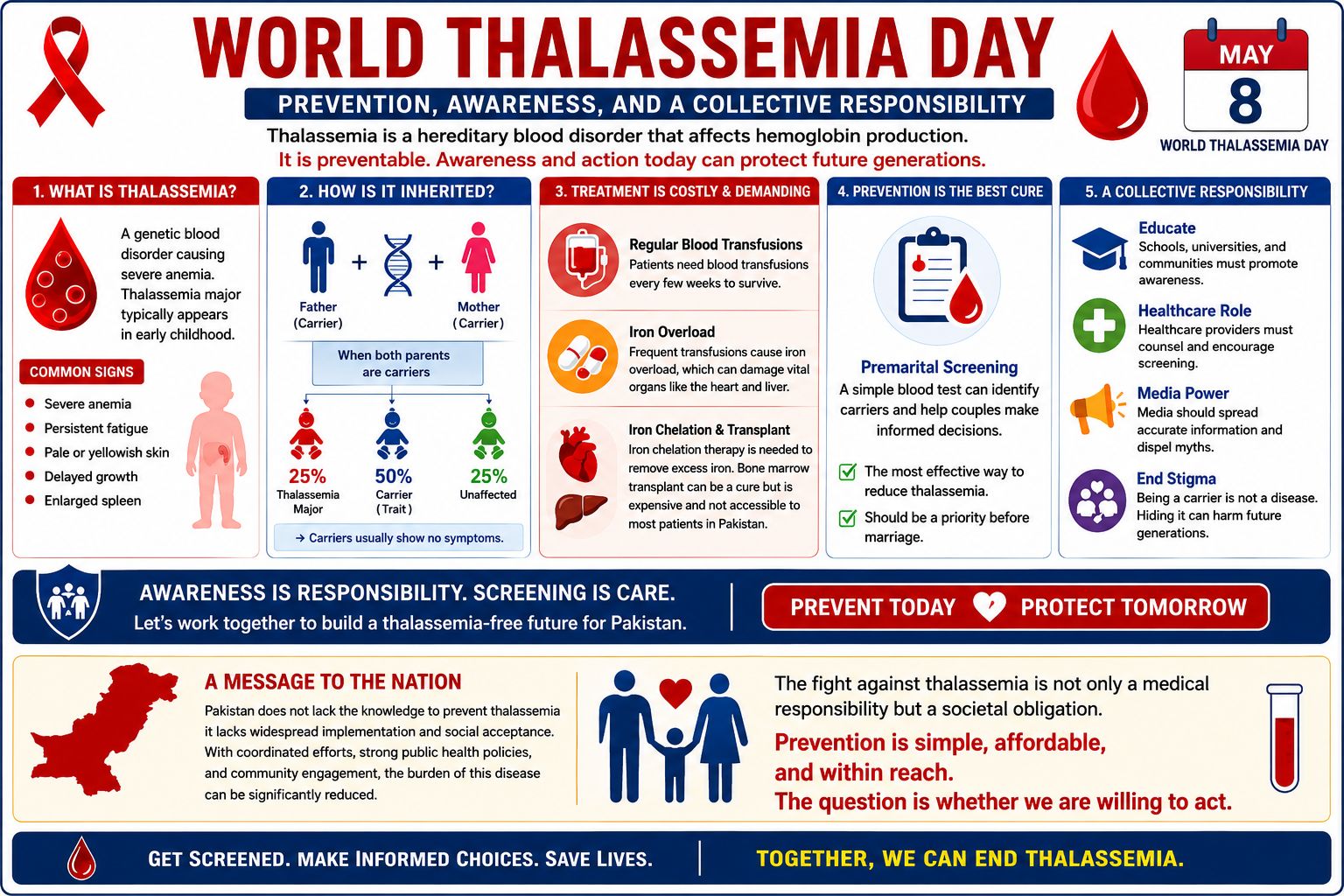
Observed annually on May 8, World Thalassemia Day serves as a reminder of a preventable yet persistent public health challenge in Pakistan. Thalassemia, a hereditary blood disorder, continues to affect thousands of families across the country, placing a heavy emotional and financial burden on an already strained healthcare system.
Thalassemia major typically presents in early childhood. Affected children often suffer from severe anemia, persistent fatigue, pale or yellowish skin, delayed growth, and enlargement of the spleen. Without proper treatment, the disease can lead to serious complications, affecting both quality and life expectancy. For many families, this diagnosis marks the beginning of a long and difficult journey.
The cause of thalassemia lies in genetics. When both parents are carriers of the thalassemia trait, there is a 25 percent chance with each pregnancy that the child will be born with thalassemia major. Alarmingly, carriers themselves usually show no symptoms, making the condition difficult to detect without proper screening. This silent transmission is one of the key reasons behind the continued rise in cases.
Although treatment options exist, they are demanding and costly. Patients require regular blood transfusions to survive, often every few weeks. Over time, these transfusions lead to iron overload, which can damage vital organs such as the heart and liver. To prevent this, iron chelation therapy is necessary. In some cases, bone marrow transplantation offers a potential cure, but it remains expensive and inaccessible for the majority of patients in Pakistan.
Given these challenges, prevention is not just preferable—it is essential. Premarital screening is the most effective way to reduce the incidence of thalassemia. A simple blood test can identify carriers and help individuals make informed decisions. However, despite its importance, screening is neither widely practiced nor socially encouraged in Pakistan.
On this World Thalassemia Day, the message to the people of Pakistan must be clear and uncompromising: awareness is responsibility. Families must prioritize screening before marriage, just as they consider other social and financial factors. Educational institutions, healthcare providers, and media platforms must work together to spread accurate information and dispel harmful myths.
Equally important is breaking the stigma associated with being a carrier. Being a carrier is not a disease, but hiding it can lead to devastating consequences for future generations. Society must move away from silence and denial toward openness and informed decision-making.
Pakistan does not lack the knowledge to prevent thalassemia; rather, it lacks widespread implementation and social acceptance. With coordinated efforts, strong public health policies, and community engagement, the burden of this disease can be significantly reduced.
The fight against thalassemia is not only a medical responsibility but also a societal obligation. Prevention is simple, affordable, and within reach. The real question is whether we are willing to act.

Dr Shahbaz Arif MBBS, MD

