

A new and deeply troubling chapter in Pakistan’s long struggle with militancy is unfolding quietly over the rooftops of Khyber Pakhtunkhwa. This time, the threat does not arrive on motorcycles or in explosives-laden vehicles. It descends from the sky.
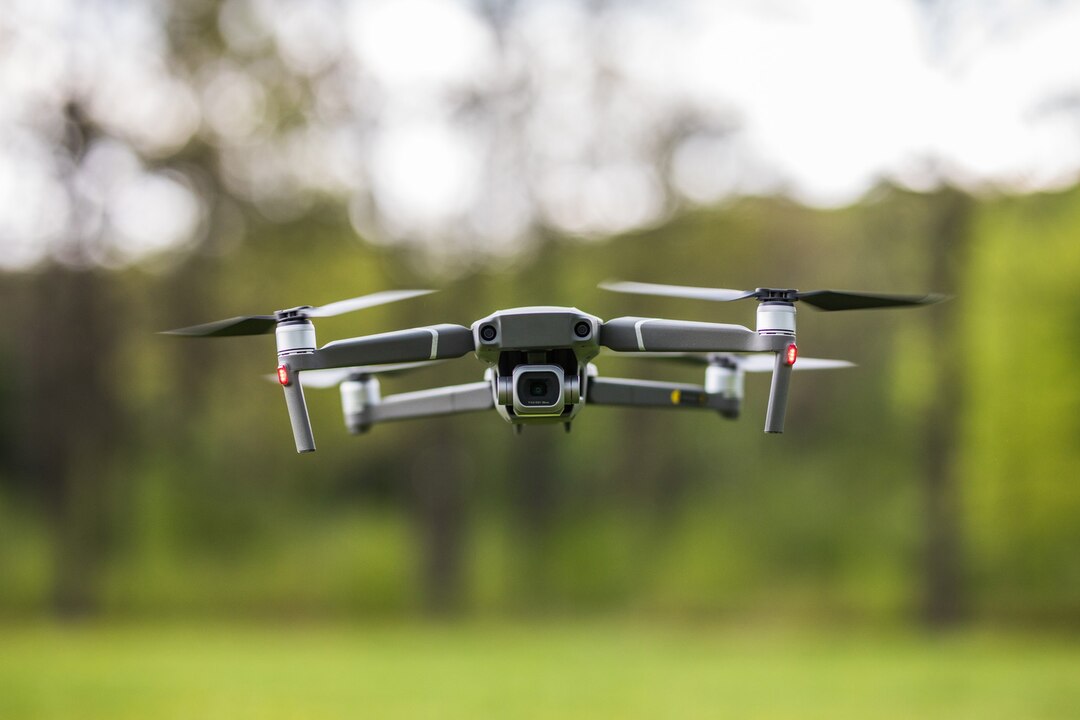
Pakistani police and security officials have confirmed that Islamist militants have begun using commercially available quadcopter drones to attack security forces in the northwest, particularly in Khyber Pakhtunkhwa and the former tribal districts. These are not sophisticated military-grade aircraft. They are small, low-cost drones — the kind easily purchased and modified. Yet in the hands of insurgents, they have become tools of lethal precision.
Officials say these quadcopters are being used to drop improvised explosive devices (IEDs) and small munition payloads packed with ball bearings or metal fragments. Police outposts, security checkpoints and convoys have been targeted. Though no militant group has publicly claimed responsibility for specific drone strikes, authorities and analysts widely link the tactic to the Tehrik-i-Taliban Pakistan (TTP), the dominant insurgent force operating in the region. The group has at times acknowledged trying to acquire drone technology while denying full operational capability — a claim increasingly at odds with what officers on the ground report.

In mid-2025, Bannu district became a stark example of this new reality. Over a span of roughly two and a half months, police recorded at least eight drone attacks targeting police stations and security posts in Bannu and nearby areas. Officers described hearing the faint buzz overhead before explosives were released. In one particularly tragic incident, a quadcopter dropped munitions near a police station, killing a woman and injuring three children.
The symbolism is powerful and disturbing. A police station can be fortified against a ground assault. A convoy can be armored against roadside bombs. But defending against a small device descending silently from above is a different challenge altogether. The psychological impact alone has unsettled officers and residents alike. The sky, once neutral, now feels uncertain.
Similar indicators emerged from North Waziristan. In Spinwam Tehsil, local reporting suggested that militants had developed rudimentary armed quadcopters capable of carrying small explosive payloads. At least one such attack targeted a security forces post, with signs pointing toward TTP involvement, although no official claim followed. Around Mir Ali and Miranshah, observers linked several drone-related incidents to insurgent tactics rather than state operations. Security officials privately describe these episodes as “experimentation” — militants testing range, payload capacity and detonation methods.
If Bannu signaled operational use, Hurmuz village near Mir Ali exposed the human cost. On May 19, 2025, a quadcopter dropped munitions onto a civilian home, killing four children from the same family and injuring five others, including a woman. Conflicting claims quickly followed. Local residents attributed the strike to militants, while the military denied involvement. No group claimed responsibility. But for the affected family, attribution mattered less than the loss itself. The tragedy underscored a grim truth: when aerial explosives are deployed in populated areas, civilians inevitably bear the risk.
The broader implications are sobering. Small commercial quadcopters capable of vertical take-off and landing are widely available. Modifying them to carry IEDs or improvised mortar shells does not require advanced industrial capacity. Compared to assembling a vehicle bomb or organizing a suicide attack, weaponised drones lower operational risk for militants. They allow attackers to strike from a distance and disappear without direct confrontation. The cost is relatively low; the fear generated is disproportionately high.
For law enforcement agencies, this represents a strategic challenge. Most police infrastructure in smaller towns was not designed with aerial defense in mind. Installing counter-drone technology — such as jamming systems or detection radars — across hundreds of stations would require significant financial and technical resources. Even then, complete protection is unlikely.
The civilian dimension is equally worrying. Police stations and checkpoints are often embedded within residential neighborhoods. A drone targeting a security facility can easily overshoot or miscalculate, striking nearby homes or bystanders. The Hurmuz incident is a painful example of how quickly an intended security target can turn into a civilian catastrophe.
One of the most disturbing examples of this emerging tactic was reported from Lakki Marwat, where a quadcopter attack struck a public football ground in the Takhti Khel area. According to police statements carried in media reports in 2025, unidentified individuals used a drone to drop explosive devices over the playground while people — including children — were present. At least eight people were injured, among them three children, and several were shifted to hospital for treatment. Authorities said multiple quadcopter incidents had occurred in the area around the same period and launched an investigation into those responsible.
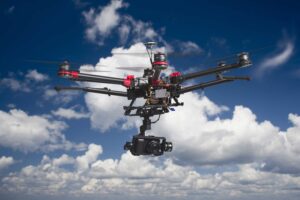
The attack was particularly alarming because it demonstrated that weaponised drones were no longer confined to security targets alone; they had entered civilian recreational spaces, turning an ordinary football match into a scene of panic and bloodshed.
The business community cannot ignore this development either. Markets, transport hubs, fuel depots and small industrial sites in affected districts are vulnerable to disruption from even a single low-cost drone strike. The mere perception of aerial insecurity can dampen investment, increase insurance costs and add another layer of uncertainty to regions already coping with economic fragility.
What makes this evolution particularly dangerous is accessibility. Drone technology is no longer exclusive to state militaries. Tutorials for modification circulate online. Components are available in commercial markets. If one militant network masters the tactic, others may follow. The barrier to entry is low, and the learning curve appears to be shortening.
Pakistan’s security establishment now faces urgent questions. Should drone sales be regulated more tightly? Can electronic countermeasures be deployed around sensitive installations? Is there sufficient coordination between civil aviation authorities and local law enforcement to monitor unauthorized UAV activity? These are not abstract policy debates. They are immediate operational necessities.
For years, drones in Pakistan were associated with state actors and foreign counterterrorism campaigns. Now the technology has shifted into insurgent hands. Even if the current scale of militant drone operations remains limited, the trajectory is unmistakable. Militants are adapting. They are learning. And they have demonstrated that they can strike from above.
When violence comes from the sky, traditional security assumptions begin to erode. The danger is not just in the explosives carried by these small machines, but in the precedent they set. If left unchecked, this new aerial front could expand — altering the security landscape for police, civilians and businesses across the country.
The hum of a quadcopter is easy to ignore on an ordinary day. In parts of northwest Pakistan, it now carries a far more ominous meaning.

