


Asim Riaz
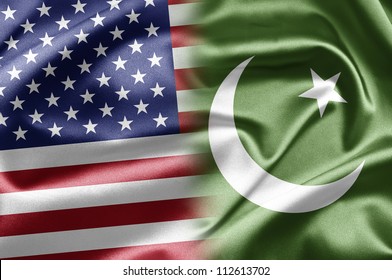
Donald Trump’s tweet suggesting that Pakistan could one day export oil to India exemplifies the deployment of discursive and symbolic power in global politics. Rather than presenting a viable energy policy, the statement operates as rhetorical diplomacy, strategically crafted to reshape regional narratives and apply public pressure on India. The tone and timing reflect a broader realist foreign policy posture, in which public discourse is deployed as a tool of soft power—signaling disapproval, asserting dominance, and attempting to recalibrate strategic alignments.
At the heart of this maneuver lies the friction between India’s growing energy ties with Russia—marked by a post-Ukraine war surge in discounted crude imports—and the U.S.’s ongoing efforts to isolate Moscow economically.
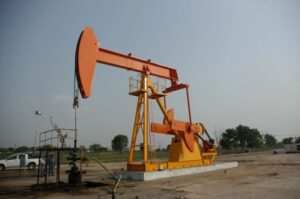
This message becomes more pointed when viewed in the context of the tweet itself. Trump wrote: “We have just concluded a Deal with the Country of Pakistan, whereby Pakistan and the United States will work together on developing their massive Oil Reserves.” This line illustrates the use of discursive power—language used to construct a perception of geopolitical significance. Referring to Pakistan’s reserves as “massive” deliberately exaggerates reality: Pakistan holds just 293 million barrels of recoverable reserves and produces only 26 million barrels annually. The statement is less an empirical assertion than a symbolic gesture, aimed at elevating Pakistan’s perceived energy relevance.
He continues: “We are in the process of choosing the Oil Company that will lead this Partnership.” Here, Trump introduces a layer of performative legitimacy, suggesting structured cooperation and forward momentum. Yet no multinational agreement, infrastructure plan, or energy venture has been formally documented. This type of rhetorical diplomacy bolsters the illusion of engagement—simulating realpolitik through narrative construction. Most striking is the line: “Who knows, maybe they’ll be selling Oil to India some day!” This is a textbook case of symbolic contrast and geopolitical theater, in which Pakistan—an energy-dependent state—is presented as a future supplier to India, a regional energy heavyweight. It functions not as a policy prediction but as a provocative maneuver aimed at undermining India’s strategic autonomy and redirecting global attention.
This geopolitical messaging gains further depth when situated in broader regional dynamics. In 2023, India imported approximately 1.9 million barrels per day of Russian oil, a sharp rise from 2% pre-2022 to over 35% of total imports. This shift has undercut Western sanctions and posed complications for U.S. geopolitical priorities. Trump’s elevation of Pakistan, a traditional rival with negligible energy capacity, was a deliberate contrast. It critiques India’s energy pragmatism as out of alignment with global norms while flattering Pakistan with undeserved strategic significance. The goal was not to propose a policy but to use a symbolic lever—stirring debate, provoking India, and pressuring alignment with Western energy objectives.
From a material perspective, the tweet’s claims collapse under scrutiny. Pakistan’s annual oil consumption reached 15.27 million tonnes in 2023–24, far outpacing domestic production. The country imported 8.2 million tonnes of crude oil and 6.7 million tonnes of refined petroleum, incurring an $11.2 billion USD import bill. Although older projections suggest a geological potential of 27 billion barrels, only a fraction has been developed due to technical, political, and financial limitations. Its refining capacity—20.22 million tonnes per year—is dwarfed by India’s 250 million tonnes. Furthermore, no infrastructure (such as pipelines or secure shipping routes) exists to support sustained oil exports from Pakistan to India.
Taken together, these elements reveal that Trump’s tweet was not a matter of economic planning but a case of symbolic geopolitical theater. It served to challenge India’s growing influence by elevating a strategically weaker rival. For Pakistan, the gesture may offer fleeting symbolic capital, but risks fueling unrealistic public expectations. For India, it reads as a direct affront to its energy sovereignty and foreign policy independence. This tactic aligns with realist international relations theory, which emphasizes state-centric competition, strategic signaling, and the utility of perception management over cooperative institutionalism.
A compelling parallel can be drawn from China’s use of the “peaceful rise” narrative. Like Trump’s framing of Pakistan, China’s terminology masks a more assertive agenda, using discursive and symbolic power to craft an image of benign ascent while expanding its influence in contested regions. Both cases exemplify how rhetoric can operate as an extension of statecraft—shaping international perceptions while reinforcing multipolar competition.
Ultimately, Trump’s tweet exemplifies how rhetoric, narrative framing, and strategic performance have become powerful instruments in global politics. It reflects a world increasingly governed not just by material power, but by the manipulation of symbols and language to assert dominance and realign perceptions. As the international system drifts toward a more fragmented, multipolar order, such tactics are likely to play an ever-larger role in shaping diplomatic behavior, regional alliances, and global norms.

