



Asim Riaz Imran Nasir
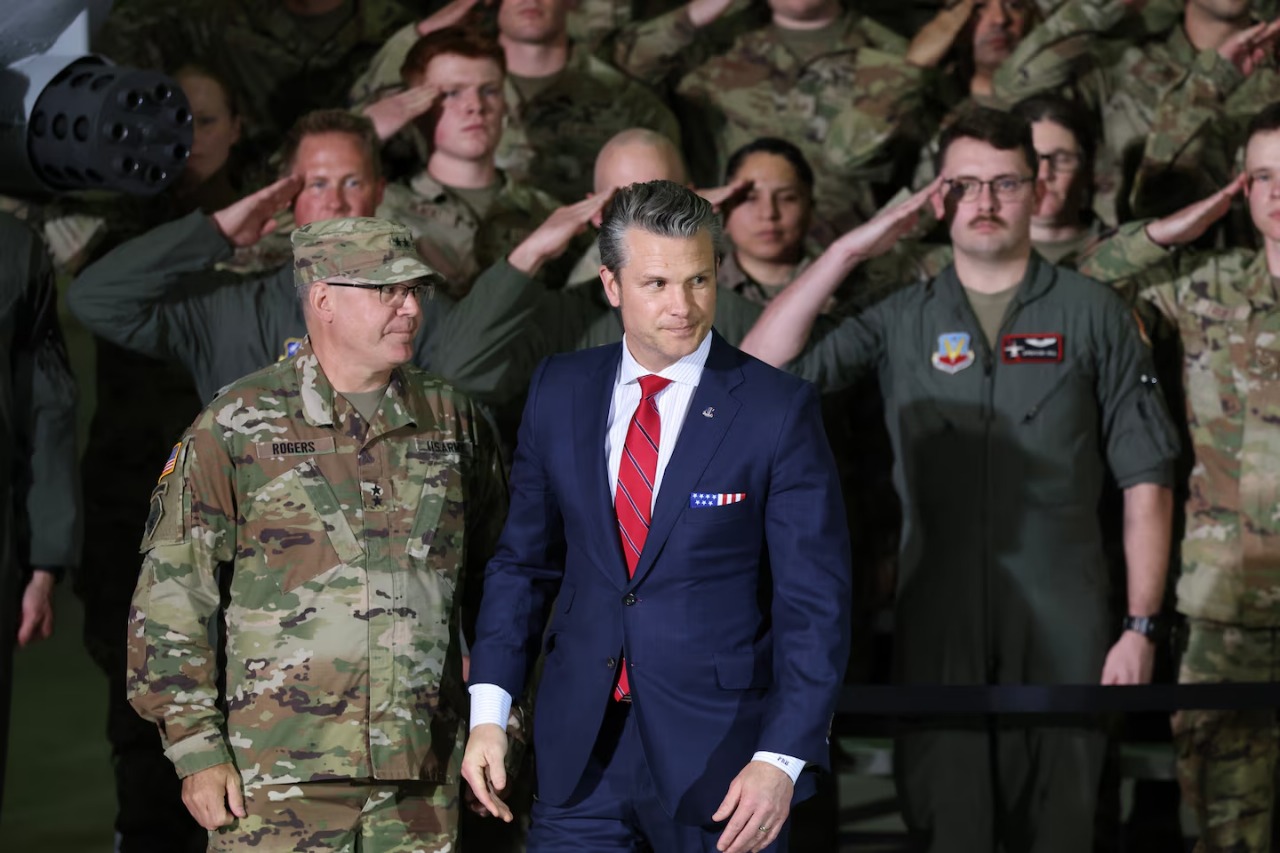
When a defense secretary orders hundreds of one-star-and-above generals and admirals to report in person to Quantico on September 30, 2025, that is not a routine calendar invite. It is a signal. In strategy, signaling is the practice of taking actions so unmistakable they cannot be ignored; in the event of communication failure. Concentrating senior uniformed leadership in one place heightens exposure and risk. It creates security vulnerability and delivers a message before a word is spoken: fall in. In a profession that prides itself on planning and redundancy, summoning global commanders to northern Virginia with minimal detail is a deliberate choice that manufactures unease by design or scalability of upcoming venture.
What stands out is not only the scale but the secrecy for a possible policy shift; much to the disliking of field command. Many flag officers reportedly received the order without an agenda, indicating trust deficit in the OODA loop, a decision-making framework standing for Observe (gather information from the environment), Orient (analyze it based on context, experience, and culture), Decide (select a course of action), and Act (execute the decision), with the goal of cycling through faster than adversaries to gain an edge in uncertain or chaotic situations. In a profession that prides itself on planning and redundancy, summoning global commanders to northern Virginia with minimal detail is a deliberate choice that manufactures unease by design or scalability of upcoming venture.
Subsequent reporting points to a renewed “warrior ethos,” with emphasis on “maximum lethality” and “violent effect.” Definitions matter with distinction between friend and foe. A warrior ethos is a claimed identity that prioritizes courage, cohesion, and the will to close with the enemy. Lethality is a capability, the capacity to impose irreversible harm on an adversary. Strategy is the alignment of ends, ways, and means under risk. Words at this level shape culture and incentives. In recent years, public messaging often highlighted deterrence, alliances, and integrated campaigning. A pivot to “warrior” centers offense, kinetic options, and decisive force. Lethality is essential, but elevating it from means to identity risks narrowing judgment at the echelon where judgment must be widest. Senior leaders must weigh not only how to win fights, but whether to fight, how to deter, and how to uphold law, civilian control, and the duty of care owed to those sent into harm’s way. The identity dilemma is the caveat with national interest being; Supreme.

The insistence on physical presence is itself a statement. This discussion could occur over secure video, yet an in-person requirement creates a visible roll call of who aligns with the new tone and who hesitates, a revealed-preference test, in the backdrop of “agreeing to disagree”. Analysts at major research institutions describe the move as rare and potentially precedent setting, with some reading it as a loyalty probe and a prelude to possible realignments, while some terming it a decisive moment in US history, prior to major undertakings. Prominent commentators have questioned the value of disrupting operations for a brief lecture on ethos, and major outlets note the political resonance such a high-profile address would carry. Whether personnel changes follow or not, an axe need not fall for leaders to hear it being sharpened. A major change to recraft boundaries in the regions of interests, under the garb of a “black swan”, may unveil.
Concentrating the nation’s top command in one place cuts against standard risk dispersion. Adversaries monitor such events, and even robust defenses cannot erase the exposure. This summons appears to prioritize symbolism over caution, a trade the stewards of risk should justify with precision. When leaders put many eggs in one basket, vulnerabilities demand extraordinary mitigation and a compelling operational payoff.
Implications for the force merit close attention. An unqualified call to be “more lethal” can chill dissent. Dissent, properly channeled, is not disloyalty but a safeguard against avoidable mistakes. Civil-military relations may strain if martial rhetoric begins to shape policy rather than inform execution, since the military is charged with carrying out policy, not making it. An aggressive posture can deter, but it can also invite escalation. The difference lies in calibration, not slogans. Leading foreign policy thinkers have long warned that confusing bravado with strategy breeds misperception, and historians of American military engagement caution against normalizing perpetual conflict that erodes the profession’s balance of power and restraint. Rational of irrationality may cut loom, in grey smoke.

Strengthening warfighting capability is necessary. Substituting first principles with intensity is not. Those principles are straightforward but demanding: tie every military action to an articulated political end, preserve legality alongside lethality, integrate operations with allies, industry, and the broader state, reward candor and red-team challenge, and keep options reversible so policy is not trapped by posture. A force that can dominate is one the nation needs. A force taught that domination is its core identity is one the nation should question, because identity outlives prudence and can sideline alliance stewardship, restraint, and accountability to those who bear the cost. After all, regional alignments, as quid-pro-quo, may be the measure of “resistivity” in the offering.
As the global hegemon, even amid relative decline reminiscent of Britain before World War II, the United States must place global energy security at the center of national strategy. This means protecting critical oil and LNG transit routes and managing risk at chokepoints such as the Strait of Hormuz, Bab el-Mandeb, and the Suez Canal; aligning ends, ways, and means with market dynamics; and communicating intent clearly while pairing credible lethality with adherence to international law to safeguard tankers, terminals, pipelines, and critical cyber infrastructure. Sustained deterrence and reversible options, built on enhanced ISR, convoy operations, mine countermeasures, robust regional partnerships, and the strategic use of U.S. LNG exports to strengthen allies and limit adversarial leverage, will keep supply chains resilient and escalation risks contained, in short measure twice and cut once.
The session at Quantico will send a signal across the ranks and to the world. The best outcome is a warrior ethos that prizes discernment and decisiveness, reinforces legality alongside lethality, and keeps faith with the constitutional order. Leaders should state intent plainly to allies and adversaries, align ends, ways, and means, guard against miscalculation, and preserve reversible options so policy is not trapped by posture. In short, measure twice, cut once, because true professionals know that strength is as much about knowing when not to swing as it is about the power of the blow.
***

