

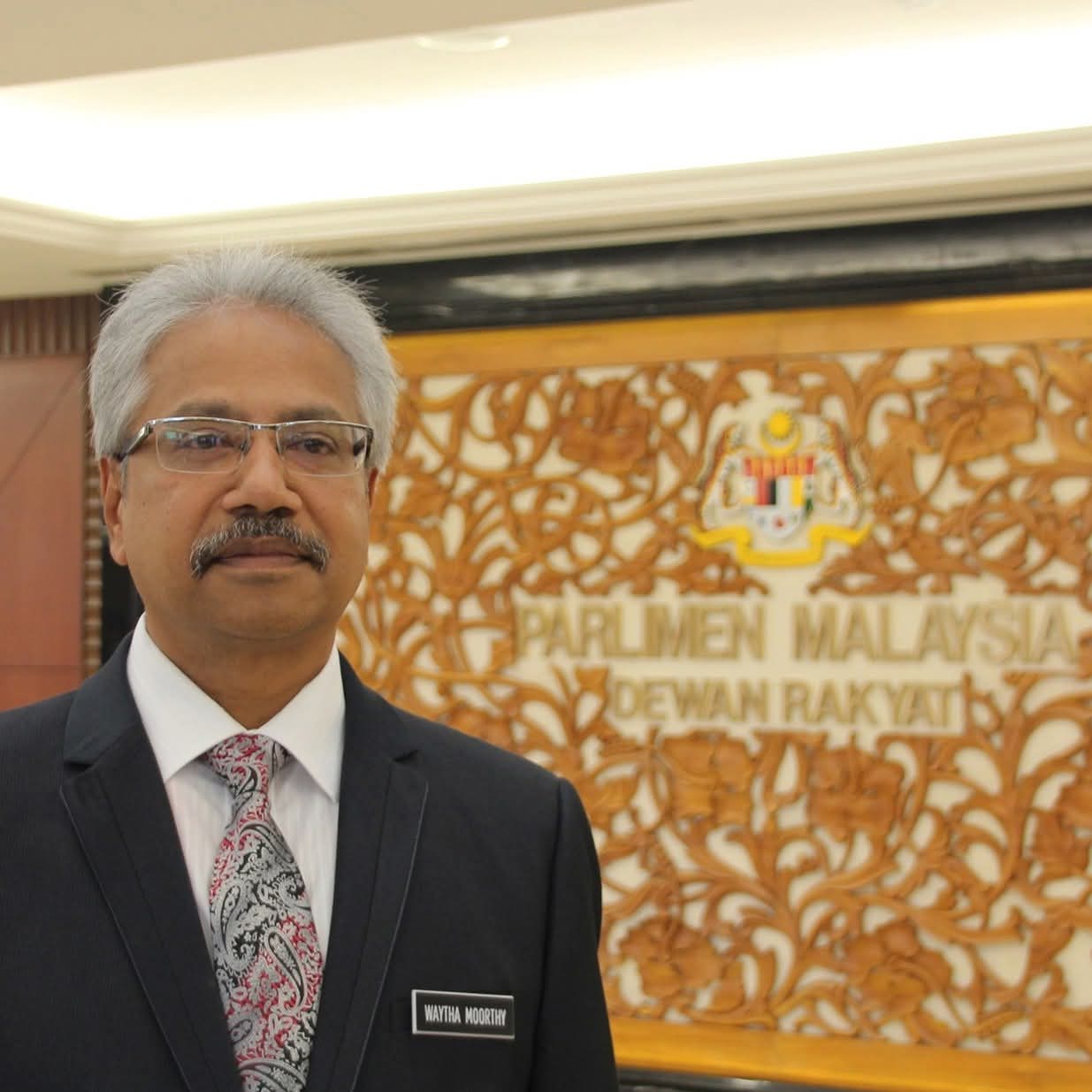
KUALA LUMPUR — In a stinging rebuttal to prominent constitutional scholar Emeritus Professor Datuk Dr. Shad Saleem Faruqi, former minister and lawyer Waytha Moorthy Ponnusamy has accused Pakatan Harapan (PH) leaders and legal advisers of peddling “specious reasoning” to defend Datuk Seri Anwar Ibrahim’s eligibility to contest the last general election. Waytha Moorthy, taking aim at what he calls “convenient distortions” of the Federal Constitution, insists that the Yang di-Pertuan Agong’s 2018 royal pardon for Anwar was not a “free pardon” that would automatically lift all disqualifications under Article 48 of the Constitution. The controversy flared after Prof Shad wrote that once a “free pardon” is granted under Article 42, all disqualifications under Article 48 are extinguished, eliminating the need for any further royal order. Waytha Moorthy says this assertion is constitutionally unsound and omits crucial legal distinctions.
> “Dato’ Anwar was not granted a ‘free pardon’,” Waytha Moorthy declared. “The Pardon Instrument contains no such term. It was a ‘full pardon’—specific to the five-year prison sentence he was serving—not a blanket erasure of all consequences under Article 48.”
Waytha Moorthy points out that the framers of Malaysia’s Constitution deliberately separated the royal pardon power (Article 42) from the parliamentary disqualification provisions (Article 48). Article 48, he says, is a “meticulously detailed safeguard” designed to ensure Parliament is composed of individuals of “unimpeachable integrity and unquestioned credibility.” Under Article 48(1)(e), a person convicted of an offence and sentenced to imprisonment of not less than one year is disqualified from being a Member of Parliament for five years after release—unless granted a free pardon. That specific type of pardon, Waytha Moorthy stresses, is recognised only in Article 48 and is reinforced by Article 48(3), which gives the Agong explicit power to remove such disqualification. Without this express exercise of power, he argues, the five-year disqualification remains in force. Waytha Moorthy accuses PH lawyers and senior PKR figures of wrongly conflating Article 42 and Article 48 to suggest that a general “full pardon” under the former automatically cures disqualifications under the latter.
> “If Article 42 alone were enough to absolve all disqualifications,” he said, “there would be no need for Article 48 in the first place.”
He maintains that Anwar should have sought, or been explicitly granted, a free pardon under Article 48(1)(e) in conjunction with Article 48(3). The absence of such an express decree, he argues, means Anwar was constitutionally ineligible to stand for election at the time. In a blistering conclusion, Waytha Moorthy said the legal position is now “glaringly” clear and the Prime Minister has no moral or constitutional basis to continue in office.
> “The path of honour is no longer a choice but an imperative—he must resign, and he must do so now,” Waytha Moorthy declared.
The remarks are expected to spark renewed debate over the scope of the royal pardon power and the sanctity of constitutional safeguards for parliamentary eligibility—a controversy that may yet have seismic political repercussions.

