

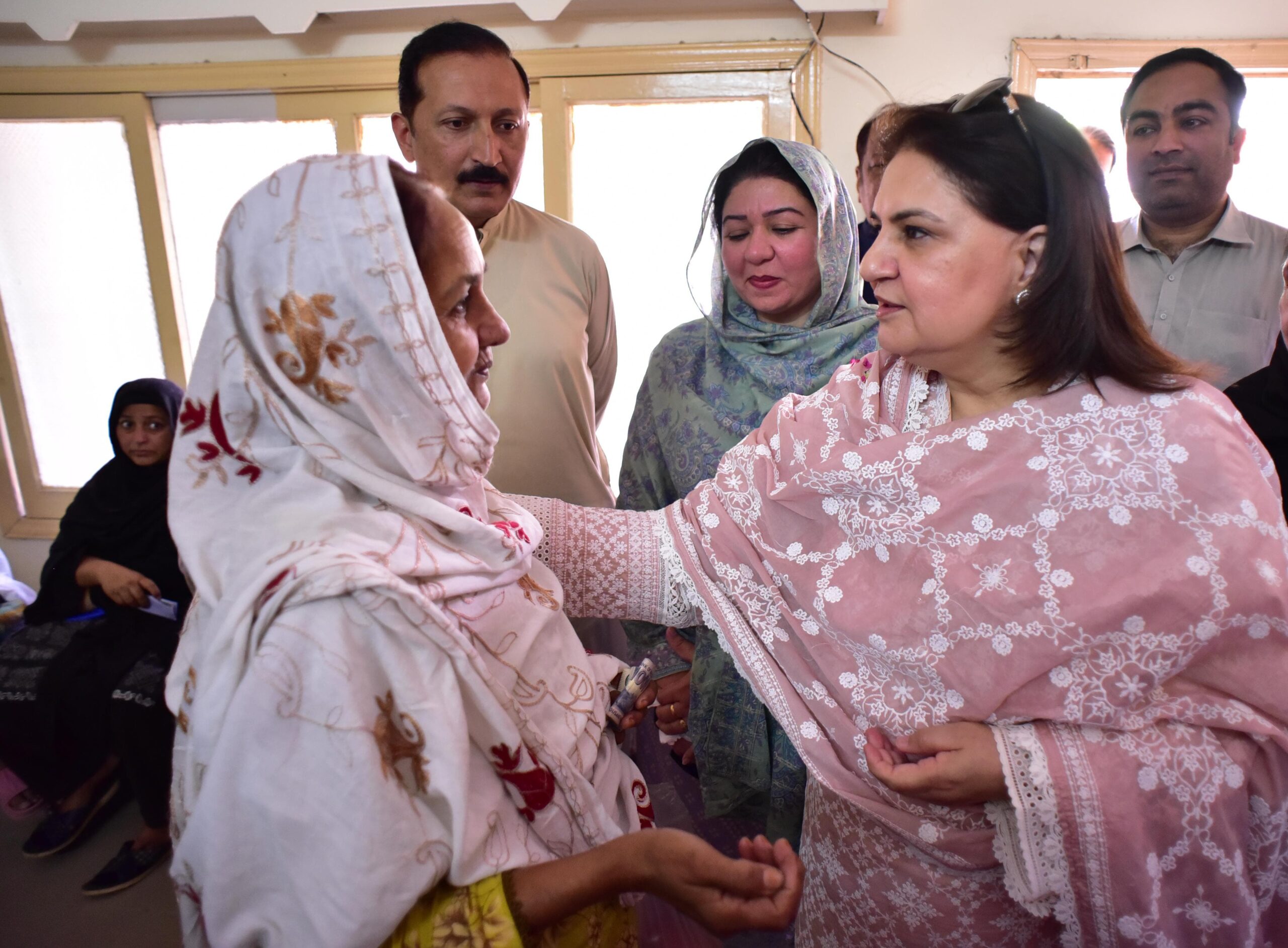
For nearly two decades, Pakistan has relied on the Benazir Income Support Programme (BISP) as its flagship poverty alleviation scheme. Launched in 2008 under the government of Benazir Bhutto’s political legacy, the program was designed to provide direct cash assistance to poor women across Pakistan. Over time, it expanded into one of the largest welfare programs in South Asia.
Today, BISP supports nearly 10 million households and has become a permanent feature of Pakistan’s economic landscape. In the federal budget for FY 2025–26, the government allocated approximately Rs 716 billion to the program — a historic increase from previous years.
Since its launch in 2008, trillions of rupees have been distributed through BISP and related cash-transfer schemes. Yet despite this enormous expenditure, Pakistan remains trapped in poverty,
 unemployment, low female labor participation, and a rapidly growing population. This raises a fundamental question: has Pakistan unintentionally created a dependency economy instead of an empowerment economy?
Across Asia, developing countries such as Bangladesh, India, Sri Lanka, and Vietnam transformed their economies not through endless welfare payments, but by integrating women into the workforce. Bangladesh, in particular, offers the most powerful lesson for Pakistan.
Four decades ago, Bangladesh was poorer than Pakistan. Today, its garment industry employs millions of women and generates tens of billions of dollars in exports annually. Female employment not only boosted household incomes but also reshaped society itself. Women who earned salaries gained greater decision-making power inside families, including over education, healthcare, and family planning. As women entered factories, Bangladesh’s fertility rate sharply declined and social indicators improved dramatically
Pakistan, meanwhile, continues to spend enormous sums on cash assistance while millions of able-bodied women remain outside the productive economy.
The problem is not helping the poor. The problem is limiting assistance to consumption rather than transforming it into production.
Imagine if even a large portion of the Rs 716 billion annual BISP allocation were redirected toward establishing export-oriented industrial zones exclusively designed to employ women. Pakistan could establish hundreds of textile stitching units, food-processing plants, handicraft clusters, pharmaceutical packaging units, digital outsourcing centers, and light manufacturing industries across smaller cities and rural districts.
Such a strategy would create permanent economic assets instead of temporary financial relief.

A modern textile unit employing 1,000 women can generate exports, taxes, skills, and long-term employment. The same money currently distributed as quarterly stipends disappears within days into basic consumption because inflation and poverty quickly absorb it. Industrial investment, on the other hand, multiplies economic activity for decades.
More importantly, employment restores dignity.
A woman earning her own income becomes an active economic participant rather than a passive recipient of aid. She gains bargaining power within the household, contributes to children’s education, and becomes less vulnerable to exploitation. Entire communities change when women become economically productive.
Pakistan’s female labor force participation remains among the lowest in the region. In many conservative areas, women are economically invisible despite possessing enormous untapped potential. Countries that succeeded economically did not wait for social attitudes to change first; industrialization itself changed society
The critics may argue that poor women need immediate financial assistance and that removing BISP would create hardship. That concern is valid. Welfare programs do play an important role during crises, inflation shocks, widowhood, disability, or extreme poverty. However, welfare should function as a temporary safety net, not as a permanent national economic model.
The deeper concern is that massive welfare programs often create political dependency structures. In Pakistan, allegations of misuse, ghost beneficiaries, political influence, corruption in registrations, and administrative leakages have repeatedly surfaced around welfare schemes. Critics argue that such programs create opportunities for local political actors, contractors, middlemen, and sections of bureaucracy to enrich themselves while maintaining a population dependent on state handouts.
Even when funds reach deserving recipients, the broader economic effect remains limited because cash transfers do not create industries, exports, or large-scale employment.
Pakistan urgently needs a shift from “aid economics” to “production economics.”
The country faces a severe balance-of-payments crisis, mounting debt, unemployment, and explosive population growth. No welfare scheme — no matter how large — can sustainably support millions of families indefinitely without generating corresponding economic productivity.
An industrial employment strategy focused on women could instead become Pakistan’s economic turning point.
Special women-only industrial parks could be established in cities like Faisalabad, Multan, Bahawalpur, Mardan, and Hyderabad with secure transportation, daycare facilities, and vocational training centers. Industries linked to exports could absorb hundreds of thousands of women over time. Pakistan already possesses the raw materials, textile base, and labor pool necessary for such a transition
The benefits would extend beyond economics. Female employment is closely associated worldwide with lower fertility rates, improved child nutrition, higher literacy, and greater social stability. Pakistan’s population growth has become one of its greatest long-term threats, placing unbearable pressure on water, infrastructure, jobs, healthcare, and education. Empowering women economically could become one of the most effective population stabilization policies available.
One important structural reform could be incorporated into the proposed 28th Constitutional Amendment: a phased national transition from welfare dependency to productive employment. The amendment should require successive governments to gradually reduce long-term reliance on unconditional cash assistance programs like BISP by linking welfare beneficiaries with employment opportunities created through state-supported industrialization.
Under such a framework, a portion of annual BISP allocations could legally be redirected toward establishing women-focused industrial zones, vocational institutes, export-oriented manufacturing units, and small-scale production clusters across the country. As women become employed and financially independent, cash assistance could be gradually reduced in a structured and humane manner rather than abruptly terminated. This would transform welfare recipients into taxpayers, workers, and contributors to the national economy while ensuring that social protection evolves into economic empowerment.
The choice before Pakistan is not between compassion and development. It is between short-term relief and long-term transformation.
Cash assistance can reduce hunger temporarily. Productive employment can change the destiny of generations.
Pakistan must now decide whether it wants millions of women standing permanently in welfare queues — or walking confidently into factories, offices, and export industries as builders of the nation’s future

