

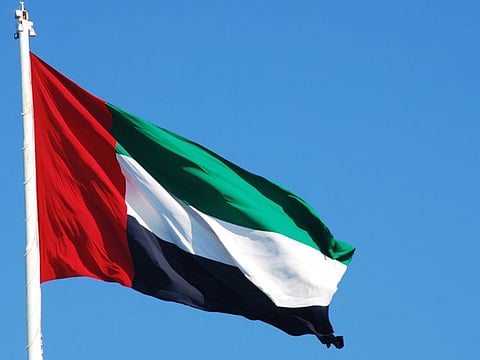
A speculative analysis of how OPEC fractures reshape global oil markets
and geopolitical power. For decades, the Organization of the Petroleum Exporting Countries (OPEC) and its extended family, OPEC+, have been the shadowy puppeteers of the global economy.
They don’t just pump oil; they manage the very price of modern life.
But now the unthinkable has happened. Imagine the seismic shock: the United Arab
Emirates, a core and founding member, has walked out the door.
This isn’t just a policy dispute. It is a messy, high-stakes divorce with the potential to
redraw the world’s energy map. To understand the drama—and the fallout—we first
need to understand the players and the machine the UAE has just stepped away from.
The Old Guard: OPEC’s Hierarchy
Think of OPEC as an exclusive club founded in 1960, a cartel where the world’s major
oil-exporting nations meet to decide how much oil to release into the market. The
founding philosophy is simple: control supply to control price. If prices fall, they cut
production; if they get too high, they open the taps. In this scenario, Saudi Arabia sits as the undisputed chairman of the board, the only member with the massive spare capacity to single-handedly sway the market. The UAE has always been the loyal, capable deputy—the third-largest producer and a key pillar
of the organization. Decisions are meant to be unanimous, but in reality, a quiet hierarchy rules, with
Riyadh’s voice often being the final word.
The Extended Family: Enter OPEC+
In 2016, a classic oil-price war devastated economies. The club realized it needed
muscle from outside, leading to the creation of OPEC+. This was an alliance that
brought in heavy-hitters like Russia, along with Mexico and others.
This new structure effectively became the G20 of oil production, controlling over half of
the world’s supply. The hierarchy got more complex, but the goal was the same: keep
prices stable and profitable, a task they managed through complex, often tense, quota
agreements.
The Breakup: Why the UAE Walked Away
So, why did a founding pillar crack? In this scenario, the reasons are a cocktail of
economics, bruised ego, and geopolitics. For years, Abu Dhabi has reportedly bristled under production quotas led by Saudi Arabia. The UAE has invested billions to increase its capacity to nearly 5 million
barrels per day, much like a business building a huge factory it’s then forbidden to fully
use. Every barrel left un-pumped is revenue lost.
The decision to leave is a strategic declaration: “We will prioritize our own market
share over a group-managed price.”
But the rift runs deeper. The trigger could just as easily be geopolitical. One can
imagine a major security crisis exposing a fault line, with the UAE feeling a lack of
support from fellow Arab and Gulf states. The message would be clear: if collective security isn’t working, why remain bound by collective oil policy? In this speculative world, the divorce is as much about sovereignty and regional influence as it is about crude
The Ripple Effects: A World of Outcomes
In the short term, the immediate impact of such a move may be surprisingly muted. A
more immediate crisis—imagine a disruption of the Strait of Hormuz—would paralyze
shipping, including the UAE’s own exports. You can’t flood the market if you can’t get
the oil out of the neighborhood. This imagined crisis would overshadow the organizational drama, at least for now. The long-term picture, however, is transformative.
• Price Collapse Pressure: Once sea lanes are safe in this scenario, the UAE
would be expected to flex its new freedom and ramp up production. A sudden
injection of millions of extra barrels into a balanced market is a classic recipe for
sinking prices.
• The Hollowing Out of OPEC: Without the UAE, OPEC+ loses a core pillar.
An alliance that commands fear and respect through unity suddenly looks
fragmented. This triggers a domino-effect fear: what if Iraq, also chafing at
quotas, or other ambitious members follow suit?
• Saudi Arabia’s Countermove: The real wildcard becomes Riyadh. Saudi Arabia
can respond quietly through diplomacy—or aggressively through a market-share
war. A calculated Saudi surge in production, aimed at punishing defectors and
deterring imitators, would send an unmistakable message: leaving has
consequences.
• The Age of Volatility: Without its credible referee, the global oil market becomes
a free-for-all. The era of a managed, stable oil price could be replaced by a
volatile era of competition, with wider and more unpredictable price swings.
The Hall of Mirrors:
The Conspiracy Theories That Could Emerge
In a world of shock and mistrust, a straightforward explanation is never enough. An
event like this would be a supernova for conspiracy theories, and here are the
narratives that could fill the void.
• The “Secret Western Pact” Theory: In this narrative, the UAE hasn’t left OPEC;
it has been flipped by the West. The story paints a picture of a covert deal: the
UAE gains security guarantees and advanced U.S. weapons, and in return
becomes an economic weapon. Its imagined job is to flood the market,
deliberately crash prices, and cripple the economies of Western rivals Russia
and Iran—all without a single Western boot on the ground.
• The “Abraham Accords Spy” Theory: Echoing from the region’s critics, this
imagined narrative paints the UAE’s exit as the fulfillment of a long-term plan by
Israel and Washington. The Abraham Accords would be framed as a diplomatic
cover for a deep intelligence operation to infiltrate and shatter the last great
instrument of Arab collective power—the oil weapon—from the inside, with the
UAE cast as the ultimate saboteur.
• The “Eastern Pivot” Reverse Card: What if the UAE isn’t a Western pawn, but
a cunning player pivoting East? This speculative theory suggests a secret pact
with China and India. Leaving OPEC gives the UAE the freedom to ditch the
petrodollar and sell its entire oil output in digital Yuan or Rupees. The chaos in
the Strait of Hormuz is the perfect diversion for the century’s biggest financial
heist: dismantling the dollar’s grip on energy from within.
• The “Palace Coup” Theory: This narrative keeps the drama in the family. The
OPEC exit is portrayed as the final move in a bitter, personal rivalry between Gulf
leaderships. The secret goal is sabotage: a reckless plan to crash oil prices and
derail Saudi Arabia’s Vision 2030, humiliating its architect and proving the UAE’s
more agile model is the only path to regional supremacy.
• The “Mad Dash for the Exit” Theory: The most chilling narrative comes from a
place of cold, dark logic. It posits that UAE analysts have seen secret climate and
resource models showing that peak oil demand will hit far sooner than the public
is told. Oil left in the ground will soon be a worthless, stranded asset. In this
story, the frantic exit from OPEC isn’t political; it’s the opening salvo in a coming
war of liquidation—a race to pump and sell every last profitable barrel before the
world moves on and the music stops for good.
The Real Takeaway
The UAE’s departure is not just an oil headline. It is a crack in the illusion that OPEC
unity is permanent. Cartels survive on discipline, but discipline survives on belief—the belief that everyone will sacrifice their own maximum profit for the group’s long-term power. Now that a
founding member has openly chosen sovereignty over submission, the question
becomes unavoidable
Who follows next?
Because the true threat is not what the UAE pumps tomorrow. It’s what its exit signals
today: that the era of managed oil may be ending, and the era of competitive oil warfare
may be returning.

Barrister Ch Ahsan H Ali
The writer can be reached out at:

